Buyers Guide to California Pt 2 – Demographics

Buyers Guide to California
Buyers Guide to California Pt 2 - Demographics Matter

CALIFORNIA

Californication, Red Hot Chili Peppers

In last week’s “Buyer’s Guide to California Pt 1 – Education Matters,,” we discussed why Education is an important driver of where overseas borrowers choose to invest in real estate. 

In that report, we looked at the top 50 Public, and Private high schools, average ACT/SAT scores, Median Household Income, Average Home Prices, and Rental Yield.

We argued that when looking at where to make your U.S. property investment, the quality of education in the nearby city/area is a factor in the decision since there is always a notion of “can I live there one day” and “maybe my children can go to school there“. Popular cities in the U.S. will undoubtedly have good schools in the city or in the vicinity. 

“Popularity as a living destination” in turn drives demand, home value appreciation, and strong growth in rental income.

This week we focus on Demographics.

An under-appreciated factor in determining where to own is what city has the most culturally similar population. It’s much easier when you have neighbors that speak your language and share similar cultures and values. 

We will answer these questions (and much more)!

  • Which high schools in California has the highest Asian population?
  • Which cities have the most Korean-born residents?
  • Which cities have the highest total Asian population and the respective top schools?
  • Does the highest Asian population determine how home prices will behave?
  • Which California cities have the highest: Hong Kong, China, Taiwan, India, South Korea, and Philippines-BORN residents?

Demographics matter!

In this study, we solely focus on the Asian population in schools. Asians have been the biggest group of immigrants over the last 60++ years, spurred mainly by the Immigration Act of 1965 but also the Taiwan Relations Act of 1979, the Luce-Celler Act of 1946 as well other obvious political issues of the time.

In addition to the above reasons, many immigrants just wanted a better life for their families, they studied hard, and slowly communities grew around the top education destinations.

Here is the Asian population (>40%) for the top 50 Public and Private Schools in California.

You can also see that these cities have the highest Home Price to Median Income ratios, highlighting the center of attraction for Asians moving to the U.S.

Note a common rule for affordability is for a home price to be UNDER 3x your income!

Public High Schools

Public High Schools - Demographics

Private High Schools

Private High Schools - Demographics

Takeaway – You can see cities where the top schools are located have very high Home Price to Income Ratios which highlights the property value growth driven by families moving to these cities, in particular Asians.

The next study is very interesting!

Our team looks at which California cities have the highest overseas-born residents, specifically from:  China, Hong Kong, Taiwan, South Korea, Philippines, Vietnam, and India.

You guessed it, many are in the cities where the top schools are

Top Cities Taiwan & China Born Population
Top Cities Hong-Kong & Phillippines Born Population
Top Cities India & Korea Born Population
Top Cities VietnamesePopulation

We only used cities with over 20,000 population.

*Refer to full chart below

Here is same chart in Alphabetical Order

Illustrating popular cities ranked by multiple demographics

Popular Cities Ranked by Multiple Demographics

Cities in California For Asians
Average Price to Income Ratio

As you may observe in this report, the cities with the highest Asian immigrant population tend to be where the most demand is, especially when compared to household income, and it’s no surprise it’s also where the top high schools are.

That is to say, the schools and cities mentioned in last week’s report on Education being the main driver of price appreciation and rents are very similar to the cities mentioned in this report.

While this study is not meant to be a rigorous analysis by any means, it is close to my heart since I moved from Singapore to San Francisco when I was 16. My parents had the same thought process…strong Hong Kong population and good schools. I ended up finishing high school in San Francisco and attended UCLA.

Stay tuned for the final part of our Buyer’s Guide to California, where we take a quick look at the general carrying costs for a rental property, including taxes, deductions and other administrative costs. 

Finally, we will be hosting a webinar with our California Partner for a real “on-the-ground” discussion along with a panel of real estate experts for the Bay Area, Palo Alto, Los Angeles, and Orange County. We are still finalising the exact details, but this will be in September. 

Have a good weekend!  If you want a copy of the spreadsheet with the data from our research, please contact us. We are happy to share our findings.

www.americamortgages.com

They’re Back! Overseas Buyers of US Real Estate

Overseas Buyers of US Real Estate
They’re Back! Overseas Buyers of US Real Estate

Overseas Buyers of US Real Estate

The past several years have been volatile for all areas of the U.S. economy, but especially the real estate market, which as seen price appreciation from a low-interest rate environment. Anyone who has tried to purchase a new home in the U.S. during this time has learned what it means to be a buyer in a seller’s market, but it wasn’t as bad as it could have been.

As a result of pandemic-related travel restrictions, the true scope of potential foreign buyers into U.S. real estate was not felt. That meant less competition from wealthy, overseas cash buyers. 

However, that’s beginning to change as overseas buyers of US real estate return.

According to a report by the National Association of Realtors (NAR), Non-U.S. citizens comprised $59 billion worth of home purchases in the United States from March 2021 to March 2022, a 9% increase from the previous year and the first increase in three years. 44% of these foreign buyers paid cash and the average price of homes purchased has increased by 18%, nearing $600,000.

All of this comes in the wake of a real estate environment characterized by low mortgage rates that created bidding wars, housing shortages, and price surges across the country. However, the madness may wane as interest rates rise, and an uncertain economy could sideline many potential domestic buyers.

This is good news for foreign buyers making all-cash offers because they are effectively immune from interest rate changes. As pandemic-related travel opens up, more and more foreign buyers can enter the U.S. real estate market.

Who is a foreign buyer? or overseas buyers of US real estate?

According to the NAR, a “foreign buyer” is a non-US citizen with a permanent address in another country. Moreover, 57% of these foreign buyers are non-U.S. citizens and recent immigrants who have been living stateside for less than two years or non-immigrant visa holders who have resided in the U.S. for at least six months. 

Where do most foreign buyers come from?

From March 2021 to March 2022, foreign buyers living abroad spent $24.9 billion on purchasing homes in the United States, an increase of 13.2%.

Canadians have the highest share of existing home sales at 11%, followed by Mexicans (8%), Chinese (6%), Indians (5%), Brazilians (3%), and Colombians (3%).

While Chinese buyers purchased fewer homes than Canadians, the dollar value of their purchases was substantially higher, with $5.5 billion coming from Canada vs $6.1 billion from China.

Which states are they going to?

For the 14th year running, the leading location for foreign buyers was Florida, with 45% of international purchases occurring in the Sunshine State. After Florida were California (11%), Texas (8%), Arizona (7%), New York (4%), and North Carolina (4%).

As domestic buyers are on hold due to an unpredictable economy and rising interest rates, the opportunity for foreign buyers to capture great deals will also increase. If you’re considering purchasing a house in the U.S., you may want to get in early before the rest of the world scrambles to get in on the action.

Whether you want to buy/rent a residential home or invest in U.S. real estate, it is in your best interest to connect with real estate experts committed to seeing your housing dreams come true.

At America Mortgages, we leveraged decades of experience in mortgage lending to match you with our pool of lenders. Our only focus is providing market rate U.S. mortgage financing for foreign nationals and U.S. expats. No one does it better!

Contact us today at [email protected] to find your dream home or learn why you should invest in U.S. real estate market now.

Buyers Guide to California – Education drives prices and rents

Education Drives Prices and Rents

CALIFORNIA

“California, Here we come” Phantom Planet

(click for an awesome Indie rock song from 2002)

We are super excited to kick off our “Buyer’s Guide to U.S. Real Estate” series, where we go in-depth into the main U.S. states for property investment purchases, starting with California!

We also have a surprise guest at the end of the month (see bottom of article)!

What’s not to love about the Bohemian vibes of San Francisco, the technology center-of-the-universe in Palo Alto, wineries in Napa, food in Yountville, golf in Steinbeck country, the quaint and exclusive Montecito, and year around perfect weather in San Diego.  

And finally, Los Angeles – Beverly Hills, Hollywood, Venice Beach, Santa Monica, Bel Air, Pasadena, Orange County – it’s almost endless. 

It’s no surprise that California is a favourite investment destination for our clients, both Overseas Expats and Foreign Nationals, primarily from: the U.K., Canada, Australia, Mexico, China, Hong Kong, Singapore, Philippines, Indonesia, Australia, France, UAE, Germany to name a few.

Want Home Value Appreciation and Rental Income Growth?

Education is key!

Job market growth is certainly a key driver for price appreciation and is normally driven by the new business formation in the area, but popularity as a living destination is driven by things like safety, cost of living, ease of transportation and quality of education, especially for families with young children.   

“Popularity as a living destination” in turn drives demand, home value appreciation, and strong growth in rental income. 

Why is Education important?

In this week’s report, we will take a deep dive into Education – an important (if not the most important) factor for overseas property investors in determining where your next home purchase will be in the U.S.

With Foreign National buyers, in particular, the objective of owning real estate to earn income almost always comes down to “could I live there one day”?   

In Asia, where owning property is ingrained in their culture, it’s common to purchase an investment property “in anticipation” of sending their child to college. They could even live there during or after they graduate, and the price appreciation could even pay for college if they sell the property. Or, if the child decides to get a job in the U.S., they can stay in the apartment as a post-graduation gift to build up their credit or even rent it out to earn income. 

Which are the top high schools in California?

We look at the top 50 high schools in California, both public and private, ranked by average SAT and ACT scores. As you can see, the SAT scores will range from 1300-1500. To get into a top 25 U.S. university, the SAT scores should be at least 1400 as a reference, so these schools are all great.

Why high schools?

Many new immigrants or returning expats will choose to live in areas where there are good schools and a higher population of similar background families (the latter we will investigate next week). High schools are a very important decision since it will determine their experience during these formative years between 14-18 years old but also potential college choices. 

“Popularity as a living destination” drives demand, home value appreciation, and strong growth in rental income. 

Schools with the highest SAT/ACT scores

– Public: Lynbrook High School, San Jose

– Avg SAT 1450 / ACT 33

– Private: The Nueva School in Hillsborough & Basis Independent in San Jose

– Avg SAT 1510 / ACT 34 for both

Household Income, Home Prices, and Rental Yield

We also look at the Median Household Income, Average Home Prices, and Rental yield in each city. When moving to a new city, aside from the quality of education, most will look at how expensive it will be to live there, own a home, and potential rental income potential. 

It’s probably no surprise cities like Palo Alto, San Diego, San Jose, Los Angeles, and others will have higher home prices, but we also look at a rough gauge of affordability which is a “Home Price to Income Ratio,” which tends to be where most immigrant buyers choose as their base.

Cities with the highest Median Income

– $250,000+ per annum income

– Cities: Piedmont, Hillsborough, Los Altos

– Neighbouring schools: Piedmont High School, Los Altos High

Cities with the highest Home Prices

– $2,000,000+ home price

– Cities: Piedmont, Palo Alto, Hillsborough, Ross, Atherton, Los Alto, Saratoga, San Marino

– Neighbouring schools: Piedmont High School, Los Altos High, Palo Alto High, Henry Gunn, Aragon High, Nueva School, Crystal Springs Uplands, The Branson School, Menlo High, Pinewood School, San Marino High

Highest Rental Yield

>5% gross yield: Riverside
>4% gross yield: Lo Jolla, San Diego, San Jose, Fresno, Irvine, San Clarita

– Neighbouring schools: Riverside STEM Academy, Canyon Crest Academy, Torrey Pines High, Westview High, Del Norte High, The Bishops School, La Jolla Country Day School, Francis Parker School, The Harder School, Basis Independent, Bellamine College Prep, Notre Dame High, University High Fresno, University High Irvine, Woodbridge High, Arnold Beckham High, TVT Community Day School, Academy of the Canyons

America Mortgage Concierge Program

We launched this free service last month to connect potential home buyers with our approved panel of realtors in each major U.S. city, which only focuses on overseas buyers. If you would like to learn more, please contact [email protected].

Our surprise guests!

At the end of August, we will be hosting a webinar with our California partner, who will present a “Guide to California Real Estate” along with a panel of the top realtors in Los Angeles, Orange County, and Bay Area to give you a real “on the ground”feel for all the points we discussed above and more.   

Stay tuned…this is going to be amazing! 

Public Schools - Guide to California Real Estate
Private School - Guide to California Real Estate

Sources: Niche, City-Data, US News, OECD data, US Census Bureau and respective school websites

Say Yes to Using Real Estate to Hedge Against Inflation!

Hedging Inflation With Real Estate

Hedging Inflation With Real Estate

While rising inflation and increased U.S. interest rates can cause stress for many, investing in real estate can be the best approach to hedging inflation. With inflation at a nearly 40-year high and the uncertainty in the stock market, investing in real estate is decidedly one of the best approaches to hedge inflation due to the market’s lack of correlation to the volatility of stocks, bonds, and the consistent returns the investment provides.

What does it mean to hedge against inflation?

Hedging is essential to foreign national and U.S. expat investors looking to have a diversified portfolio as it provides some form of protection against losses due to the volatility of markets and inflation. An inflation hedge is an investment that attempts to offset a currency’s value or purchasing power loss. This typically means investing in a ‘real’ asset, like real estate, with a ‘real’ return, which would be your rental yield.

Real estate has an intrinsic value that can provide monthly returns, which is essential in periods of rising inflation. Therefore, as an investor, putting your money into property investment can keep you ahead of inflation and minimize losses.

Investing in real estate is your best option.

Real estate is an excellent hedge against inflation as there is intrinsic value in the property, rental yields provide consistent cash dividends, and it is less affected by the economic climate and inflation. As inflation rises, there will always be a high demand for homes, which means rental prices and yield would also increase. 

The increase in demand for rental properties and low vacancy rates allow investors to increase their rent and stay ahead of inflation. Investors looking to purchase rental properties can capitalize on the increase in demand for rent and the increase in rental prices as you have pricing power, therefore maximizing your rental yield and returns. 

Rents and property values are typically correlated with rising consumer prices, so in a period of high demand and limited supply that we currently are experiencing, real estate has shown to be a wise and profitable investment.

What about increasing mortgage and interest rates?

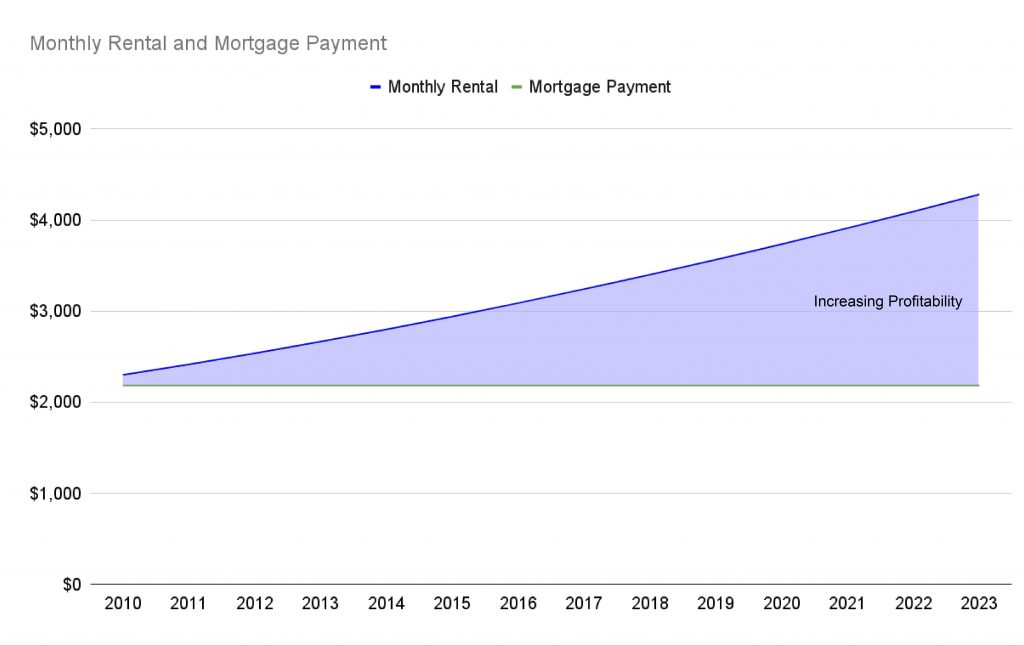
The rise in interest rates has shown to be beneficial to rental property owners as fewer people are looking to purchase homes and would rather rent, causing the rental demand to skyrocket, leaving real estate investors in the perfect position.

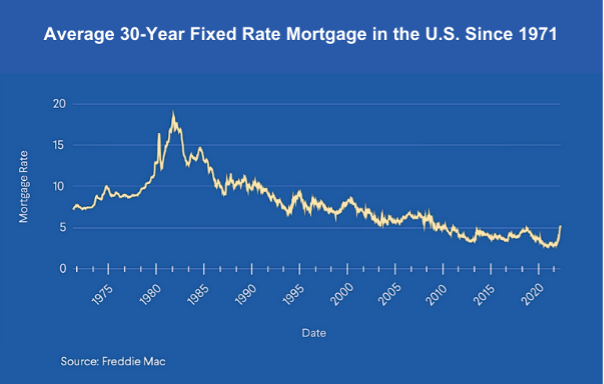
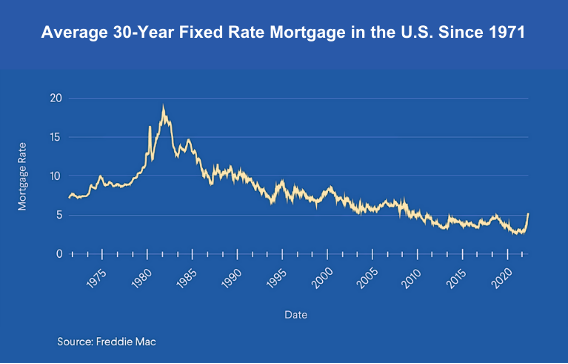
Additionally, even though mortgage rates have gone up recently, they are still historically low; this means if you are a non-resident or U.S. expat investor, now is the time to capitalize on the opportunity and invest in real estate.

With the low supply of properties and the threat of increasing mortgage rates, now is the perfect time to jump on the opportunity and purchase investment properties to add to your portfolio as the rising interest rates make it more expensive to borrow money and push people to rent rather than take out a mortgage and purchase their own property. 

If you have been toying with investing in real estate, the current economic climate shows that now is the perfect time to do so. As a company, America Mortgages’ only focus is providing U.S. mortgage financing for foreign nationals and U.S. expats. 100% of our clients live and work abroad, making us the leading expert in this space. Now is the time to make hay while the sun shines. 

If you’re considering purchasing or cashing out of U.S. real estate, we’d love to hear from you. [email protected].

Now is the Time to Release Equity for Cash: A Global Real Estate Perspective on the Strength of the U.S. Dollar

Now is the Time to Release Equity for Cash
Now is the Time to Release Equity for Cash: A Global Real Estate Perspective on the Strength of the U.S. Dollar

The U.S. dollar has been pushing down the rest of the world’s currencies over the past few months. The Yen is at a 24-year low compared to the dollar, and the Euro and Dollar have not been on par since ’02. Day after day, it proves that it is the world’s most dominant currency, with 88% of transactions having the dollar on one side. In times of confusion, like rising global inflation and precarious geopolitical relationships, investors love the stability and safety that it offers. With the federal reserve increasing rates, even safe investments, such as treasury bonds offer a good return on investment. This has led to investors pouring money into the United States, which has increased the strength of the world’s most dominant and secure currency. 

What is Cash-Out Refinancing?

Cash-out refinancing, if you do not already know, is a method of trading home equity for liquid cash. Here is a thought experiment that might help you understand a little better:

Let’s say you have $200,000 left on your mortgage, and your property is valued at $1,000,000; you would have 80% equity in that property, or $800,000. Lenders typically make you keep at least 20% in equity ($200,000), so you could borrow $600,000[1], usually at a lower rate and on different terms[2]. America Mortgages lets you cash out up to 70%. You would then pay it off like a regular mortgage with monthly instalments under a new agreement. This $600,000 is now a liquid asset that you can use at your discretion. With such a strong dollar, it means that there are lucrative investment opportunities at your fingertips with the extra cash. 

Pros and Cons

There are pros and cons to cash-out refinancing, especially with a strong dollar. 

Pros:

  • Access to a large amount of liquid cash.
  • This can be used for investments, refurbishing/remodelling, or for pleasure. Upgrades like refurbishing can boost your home value, and these investments mean you can make money in different sectors.
  • When living abroad and your living expenses are in currencies other than USD, this is a perfect time to take advantage of the strong U.S. dollar.
  • America Mortgages Loan Officers are with you from day one and beyond. We keep you updated with competitive rates because it is not just your journey; it is ours as well.
  • Even though rates have increased, historically, they are still low.
  • 30-year fixed rates and interest-only options are available regardless of age.  

Cons: 

  • You need to have equity to qualify.
  • You may owe more as you would be refinancing your existing mortgage. 
  • Your rate may be higher than what you currently have in place.

What does this mean for global real estate investors? 

Cash-out refinancing has never proved to be more useful to real estate investors until recently. With cash-out refinancing, you can trade home equity for cash and invest it into other ventures, experiences, local currency, or products, such as treasury bonds, taking your dream trip to Mykonos, or buying that designer bag from foreign fashion houses.

With the rest of the world being so affordable, it is a great time to hold onto U.S. Dollars. Let your money make you money with America Mortgages cash-out refinancing. Contact us today to speak to one of our loan officers: [email protected].

www.americamortgages.com

[1] There are final closing costs, so this number would be lower typically; for the sake of simplicity, they’re being ignored in this thought experiment. 

[2] Contingent on the lender and Cash-out refinance plan

Liquidity Issues? AM Bridge Loans to the Rescue!

Liquidity Issues

The housing market has seen intense competition, massive price surges, and dwindling inventory since 2020 – But if you’re a real estate investor, all of that may be about to change, and for the better. 

Mortgage rates are rising. In mid-June of 2022, the 30-year fixed-rate mortgage averaged 5.81%. That may seem high; however, rates now are where they were right after the financial crisis of 2008, when many people were actively trying to obtain a mortgage. 

What makes this type of market great for real estate investors? These higher rates make it more difficult for would-be home buyers to afford new homes. It’s not that people are trying to buy extravagant houses, but that a modest home with an increase of $50 a month in mortgage payments could be the difference between buying or renting. 

These higher costs are putting pressure on the housing market. It has already led to a decrease in mortgage applications to purchase and refinance for owner-occupied property, but an increase in investor mortgage applications getting in on high rental prices, demand, and lack of available rentals. What once was a seller’s market is shifting slightly, causing properties to stay on the market longer. For some, this has resulted in a liquidity issue for investors looking to sell their properties quickly to buy additional properties.

Luckily, there is a relatively simple and easy financing solution – AM bridge loans

What is a Bridge Loan?

Investors use real estate bridge loans as a short-term financing tool to bridge gaps in financing. For example, an investor might take out a bridge loan against a property they are selling in order to purchase or act on another investment property immediately. 

In this case, the homeowner may need the money before their property sells. They can now use an AM Bridge loan to extract equity today while waiting for the right price to sell.

Bridge loans can be secured quickly, often closing within a week to 10 days, and with little paperwork, because lenders are more interested in the collateral (i.e., a house) than a credit score or cash flow.

How to Use Bridge Loans to Free up Liquidity 

Bridge loans allow investors to quickly free up liquidity using their real estate assets as collateral. This is a quick asset-backed mortgage where your financials or credit are not the primary underwriting criteria; the asset is. In order to better understand how this works, let’s take a look at two examples;

1. Waiting for a property to sell at the right price:

You’re selling a property but waiting for the right price. Another investment property becomes available that is too good to pass up, but you won’t have the available funds until after you sell the existing property. No problem. Extract the equity from the property you’re selling. Take advantage of the new investment. Wait for your property to sell and pay off the bridge. It’s that easy and quick! 

2. Financial strain:

Often, unpredictable circumstances can impact our financial position. The equity in your property can be the perfect way to ride out the storm without worrying if you’ll qualify for a “conventional” mortgage loan. It is easy, quick, and straightforward to release up to 70% equity from your property based on the asset value alone. We can also structure these loans to where you do not have to make any monthly debt servicing for up to 12 months. This allows you to get the liquidity you need and then relax, reset and focus on your situation at hand. 

When do Bridge Loans Benefit Investors? 

As explained above, bridge loans are a great way to free up liquidity. A bridge loan may also be a good fit for you if you:

  • Need to free up liquidity in a fast-moving market
  • Can’t afford to take out a mortgage on a new property without selling your other property.
  • Need to secure funds to acquire or renovate real estate quickly.
  • Already purchased a property, but you can’t sell your current property quickly enough.
  • Financial strain where conventional financing won’t work or is difficult to obtain. 

The housing market is evolving rapidly. Investors would be wise to understand their options so that they are able to adapt, take advantage of opportunities, and free up liquidity when they need it. 

As a company, our only focus is providing U.S. market-rate mortgages for Foreign national and U.S. expat investors. Get in touch with us today to learn more about the structures and options of short-term bridge financing solutions [email protected].

www.americamortgages.com

Rising interest rates are a good thing for U.S. Real Estate Investors

Looking for passive income? Now is the time to strike!
Rising interest rates are a good thing for U.S. Real Estate Investors

Are you an overseas non-resident investor looking to purchase property in the U.S. but are thinking twice because of the increase in interest rates? Let’s break it down.

Let’s face it, interest rates are high, but if you are looking for passive income and long-term investment, we know now is the time to strike. 

When interest rates are high, it is actually more beneficial to residential rental property owners because the demand for rental homes and apartments increases as many people that once were looking will not be able to qualify for a mortgage. Individuals and families who have put off their house hunting will need a place to live. When this happens, the rental demand skyrockets, and – this is the sign you’ve been looking for –the opportunity for real estate investors looking to purchase rental property is here!

What makes American Mortgages loans unique is the rate can be fixed for 30 years regardless of the borrower’s age. Your rate today will be the same 30 years for now, but the rent you will receive will likely be significantly more! Want an even better yield? Try our 10 year fixed interest only loan program that converts to a 30 year fixed without a rate adjustment. Total tenure of 40 years!

As a foreign national or U.S. expat investor, there are a few things to consider when you want to purchase a property in the U.S. There is no denying that the interest rates have increased, but if you are looking at real estate investment, you have to consider its long-term benefits – mainly building equity and wealth, property cash flow, and rental yield.

Build Equity and Wealth

Did you know that real estate remains a wealth-building tool for the majority of moguls? An estimated 90% of millionaires were created through real estate investing. Most High-Net-Worth individuals in the U.S. or around the globe invest in real estate in some form or the other.

As you pay a property mortgage, you build equity—an asset that’s part of your net worth. As you build equity, you have the leverage to buy more properties which in turn will increase your cash flow and wealth even more. America Mortgages has no limitation on the number of mortgages one investor can have. Portfolio loans are also available.

Why Rental Yield is so Important

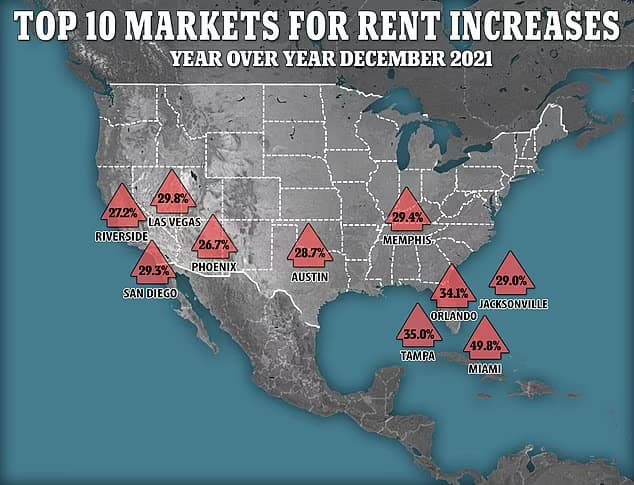
Rental prices are soaring in many parts of the U.S. According to Government consumer price data, the average rent that the typical Americans actually pay rose 4.8% over the past year – a higher than the average rate of increase. According to Redfin, the average monthly rent rose to $1,985 in November – an increase of 6.8% monthly and 20.5% annually. The median rent nationwide in May reached $2,000 monthly, according to Redfin.

If you are keen to invest in U.S. real estate but have not found a property yet, AM Concierge ‘Property finder’ services can help you secure your dream home. Once you have purchased the property and your tenants are in place, your rental should run on autopilot. Our America Mortgages loan officer are with you for the long run. In the event rates change, special rate promotions or new loan programs, you’ll know first.

Real Estate Cash flow

How do real estate investors get so much cash flow? You probably read a million times that “real estate is a classic wealth-building technique.” Most investments don’t provide cash flow. Take, for example, stocks -you invest and leave without accessing them until you sell them. However, when you put resources into buy and hold real estate, you bring in cash flow monthly when you have tenants paying rent. The difference between the rent collected and your expenses is your income. You can utilize it to cover your bills, save for the future, or even make a greater real estate portfolio. Passive income is the income you can survive with, regardless of whether your other investments work out or not.

Now is the time to strike while the iron is hot. If you are still on the fence about investing in U.S. real estate, speak to our mortgage specialist to discover your options. 100% of our clients are living abroad. This is all we do, and no one does it better. [email protected]

www.americamortgages.com

Introducing America Mortgages U.S. Property Finder Concierge Service

International Mortgage Loans

Many of you have asked for a “full-service” solution when investing in U.S. real estate. Getting a mortgage is only one step in the process. Often, finding the perfect property represented by a realtor with your interest in mind is the missing piece of the puzzle. You’ve asked… We’ve delivered! America Mortgages is excited to launch a full-service mortgage and real estate solution for you, AM Concierge!

Upon being pre-approved for your mortgage, if requested you will be teamed up with a Certified International Property Specialists to help you with a key step of the transaction – finding the perfect property! This is NOT a requirement. If you already have a realtor you are working with or prefer to find a realtor on your own; please continue to do so. This is only an “extra tool” to assist if required. 

At America Mortgages, we believe that as a foreign investor there is more to finding a perfect investment property than most people think:


1. A mortgage loan tailored to your needs through a firm that are experts in non-resident, foreign national, and U.S. expat mortgage lending.

2. A great realtor will not only send you pictures and details about the home but look for and spot issues on the property you may not know exist. Someone that also understands non-resident, foreign national, and U.S. expat intricacies, will represent YOU and negotiate in your best interests only! 

Keep in mind, in the U.S. the buyer does not pay for the realtor’s commission. This is paid by the seller. It costs you nothing to have someone represent you in the transaction. 

Similar to America Mortgages, these realtors specialise in non-resident clients. They not only represent you in the transaction but understand the nuances of international buyers and will help you to navigate and negotiate the contract for your property.  

The best part about our AM Concierge service is that there is NO cost to you!

Whether you’re looking for a luxury summer home in the Hamptons or a rental apartment in the middle of the university area in Austin, Texas, reach out to us at America Mortgages to discuss how to get pre-approved for a U.S. mortgage loan. America Mortgages offers pre-approved U.S. mortgage loans normally within 72 hours after application and document submission. Once you have your pre-approval, you are ready to begin the search for your dream international property. 

At AM Concierge Service, we have a vetted and approved network of realtors in all 50 states that can assist you when buying a home as a foreign national, non-resident, or a U.S. expat. Our agents are friendly, compassionate, and understand the process of international home buying. These agents will work in your time zone and in your language to find a property that fits your requirements. 

Your perfect investment property does not have to wait any longer – contact us today and ask us about our AM Concierge Service. 

[email protected]

How Equity Rich Homeowners are Cashing In

Equity Rich Homeowners
How Equity Rich Homeowners are Cashing In

U.S. homeowners have seen their equity increase by over 32.2% since the first quarter of 2021. That’s a year-over-year gain of over $3.8 trillion. This significant increase in home equity has provided many homeowners with the opportunities to cash in through home equity loans, cash-out refinancing, or home equity lines of credit (HELOC). 

What Does it Mean to be Equity Rich?

Equity is the market value of your home minus your mortgage balance. Homeowners are considered equity rich when they have a minimum of 50% equity in their homes. The number of equity-rich homeowners typically increases as property values soar because the market value of people’s homes is increasing while the amount they owe does not. 

Understanding the tremendous increase in property value across the United States over the past year, it’s only logical that there would be a steep increase in equity-rich homeowners. 

Why is Home Equity Important?

Home equity is an excellent long-term wealth-building strategy. To demonstrate just how true this is, let’s compare an auto loan to a mortgage. When you take out an auto loan, you are paying interest on an asset that depreciates in value as soon as you drive it off the lot. That means that when you’ve paid off the loan, the car will most likely be worth less than your purchase price and you will have paid interest. 

In contrast, mortgage payments reduce your debt while your home increases in value. Of course, property values could drop, but that is unlikely to happen over the long term. One very financially powerful aspect of this is that you don’t need to sell your home to profit from it. 

How to Access Home Equity

  1. Home Equity Loan — Think of this as taking out a second mortgage for a fixed rate that must be repaid within a set period. Home equity loans often have slightly higher interest rates than primary mortgages because if a home is foreclosed, the primary lender must be repaid first.
  2. HELOC — Like a home equity loan, a home equity line of credit (HELOC) acts like a second mortgage, but it provides more flexibility for the borrower. That’s because HELOCs have a revolving balance like a low-interest rate credit card—you can borrow what you need, repay it, and borrow again. There are usually no closing costs, and HELOCs typically have adjustable rates that vary with the prime rate.
  3. Cash-Out Refinance — This option leaves homeowners with less equityin their home because you are refinancing your home for a larger amount and taking the difference in cash. Banks typically see this as riskier, meaning that closing costs can be higher. 

The best for cashing in on your equity depends on your goals. For example, a home equity loan would be great for medical fees, educational expenses, and debt consolidation because you have immediate access to the money. 

In contrast, a homeowner who needs money periodically for home improvements or a business might opt for a HELOC, and a cash-out refinance is typically best for those who need cash immediately. 

Should Equity Rich Homeowners Buy or Sell?

Both buying, selling, and staying in a home with untapped equity could be beneficial. Homeowners who want to sell can purchase another property and use a HELOC to make renovations on their first home while they live in their second. They could also take an equity line of credit to make a downpayment on a new home. 

However, staying in an equity-rich home can also be a wise financial decision. You can still cash in on the equity and enjoy the increasing value of the home. Keep in mind that if you sell a home in an up market, you will have to buy a home in an up market. 

Interested in releasing equity? America Mortgages has a 97% approval rate for both U.S. Citizens & Foreign Nationals. As a company our only focus is providing market rate U.S. mortgage financing for foreign nationals and U.S. expats. No one does it better!

Schedule a call with us at [email protected] today! 

www.americamortgages.com