09:22
Robert Chadwick
Hi, everybody, this is Robert Chadwick with America Mortgages. Thank you for joining another one of our webinar series. This time it will be on property management in the US. We will be joined by Phil Gerathy. Phil is the CEO and managing director of Austplan, which is very similar to us, a foreign national and expat-focused property management company in the US. What that means is their main focus is providing US real estate or property management in particular for foreigners that are investing globally. So, Phil, maybe you need to turn your camera on and welcome.
10:24
Phil Gerathy
Thank you, Robert.
10:25
Robert Chadwick
Yeah, thank you for joining us once again. We appreciate it. Why don’t you kind of introduce yourself and give us an idea of what you do, and what Austplan does, then I’ll share your website, and then we can go through the slides and you can talk a little bit more in detail.
10:47
Phil Gerathy
Thank you. So, my name is Phil Gerathy. I’m the CEO and managing director of Austplan Management. We are an international property management company specializing in the United States. So we manage properties on behalf of expat US citizens, as well as citizens of several other countries. Our specialty is unique. If we could start the slides of the website, Robert.
11:33
Phil Gerathy
There we go. So one of the unique factors of Austplan management as a management company is to demonstrate to owners of properties that we are absolutely in their corner, that their properties are being professionally managed, and that even though they may be living in Singapore or Hong Kong or China or wherever they can go to bed in the evening and confident that their property has been managed by a company with over 50 years of property management experience throughout the United States. So we’re actually in most major states, as you can see by this slide, in Washington state, in California, Texas, Florida, New York, New Jersey, Michigan. So we are, if you like, in the major areas or states of the US that offer great value for money for investment properties.
12:43
Phil Gerathy
And the total number of assets under management last year in 2023 was over $100 million of assets under management. That will certainly increase again this year as we are constantly receiving referrals from our clients to manage additional properties on behalf of those folks and additional people.
13:11
Robert Chadwick
Thanks, Phil. I think for us, because our clients are only foreign nationals and expats, the biggest concern is always, if I buy this property, I’m able to obtain financing, how am I going to manage it? So I’ll start the slides now and you can discuss how seamless this is and how easy and hassle-free that you at Austplan make this. So let me share your slides. One second here, a little bit of technical difficulties. Phil, there you go. The floor is yours.
14:14
Phil Gerathy
Okay, so as I said in the introduction, Austplan Management is a company that was started 16 years ago and has been in business constantly since then, and has grown exponentially throughout the United States and manages properties all over the US as I mentioned. Robert mentioned a moment ago the fact that whilst obtaining mortgage finance is relatively easy for expat investors in the US for property investment, one of the key issues that come up regularly is, well, how do I know my property is being managed professionally in a way that I am confident that my return on investment is going to be generated and that I can be confident that I have contact with people anytime I would like and I can go to bed at night sleeping in peace, knowing that my asset is growing in value? Thanks, Robert.
15:22
Phil Gerathy
Austplan management is, as Robert mentioned, a seamless process. We’re, if you like, a one-stop service management company. We’re a little unique in this space. Most other management companies in the US and other parts of the world just specialize in management, that is, obtaining a tenant and putting them into the property, collecting the rent, and distributing the rent. We provide a service that covers a whole range of issues. For example, before your property is about to close, we’ll provide a full rental and market analysis. We’ll attempt to find a tenant before the closing. We’ll attempt to sign a lease agreement and of course complete a detailed walkthrough of the property to make sure that before the tenant moves in, the property is in excellent condition now. After the close, that’s when the real work starts.
16:23
Phil Gerathy
That is we provide the financial support, that is the accounting financial support, the hands-on management, and then the value-added services kick in. If you want to sell the property at some point down the track as an investment property sale, then our role is to analyze the market for you, provide any of the renovations or repairs that are necessary to bring it back to first-class condition, prepare your tax return, put it on the market, and sell it for you. So it is a seamless process within our organization. This gives you a summary of what were just talking about.
17:11
Phil Gerathy
So all of these particular items, if you like, are free and we provide them as part of the service in that seamless process, the free walkthrough before the closing to ensure your property is in first-class condition before it’s handed over to you. In some cases, the homeowners association requires approval for tenants. That’s our job to make sure that we do that and that we get the necessary approval from the HOAs. We research the rental market. We’re looking for the maximum that we can obtain in rent to maximize the return on investment. The ongoing management also is a process where we’re in constant contact with the tenant, of course, as well as the owner. Because we deal with the extensions of leases, people from time to time want to extend their lease beyond one, two, or three years.
18:14
Phil Gerathy
Our role is to facilitate that on your behalf and of course, to obtain rental increases as we go along year on year. The process is two-pronged if you like. That is our main priority is the property owner. We are managing the property on behalf of the property owner so that the property owner is confident that this place is being looked after. But also on the other side, we have to have regular contact and communication with our tenants. This, of course, aims to resolve any conflicts that might occur with the tenant or any other issues that might crop up from time to time that we can resolve so that you as the owner have no concerns or issues that you have to contend with.
19:11
Phil Gerathy
Maintenance services. As a professional manager, we have to provide ongoing and hands-on management, not only from an accounting viewpoint, but also from a repair, if you like, and maintenance issue. So we start with, of course, the lease agreement and make sure that the tenant is compliant with the lease agreement. We provide regular maintenance as and when required. We provide regular inspections of the property, which are usually done every six months. Any renovations that may be required from time to time, we handle and manage that process. And again, that’s a free service. Emergency repairs might crop up from time to time. And the last thing you as the owner want to be worrying about is emergency repairs.
20:04
Phil Gerathy
Our job is to jump onto that very quickly and have those emergency repairs resolved so that your property is maintained in the way that it was at the very beginning. Repair costs, we provide an audit on those and we make sure that the dollar amounts that are being spent, you are the one that is making, obviously, or giving us the approval, but we provide a complete audit of that. On the financial side of it, we’ve got this three-pronged attack, if you like. At the very beginning, it is identifying the property for you, looking for a way to facilitate the purchase of an investment property, closing the investment property, looking for the tenant, securing the tenant, and then ongoing management. But the other side of it, of course, is accounting, and this is very important.
21:03
Phil Gerathy
So first of all, if necessary, we can arrange an LLC, if that’s the way that you would prefer to be done, or if in fact, the mortgage lender would prefer an LLC. Our in-house accountant will provide profit and loss statements every month, which will provide you with income and expenditure each month, and that report will be sent to you via email. That accountant will also complete your tax return at the end of the financial year, which is December of each year. Of course, the returns are done in March. We hold a security deposit for all tenants, and that’s in our security deposit account, which is reconciled monthly.
21:51
Phil Gerathy
And if a tenant is either slow on paying their rent or behind on their rent or requires some work to be done to the house after the tenant’s vacated, that security deposit is used to cover those costs. We can arrange an ITIN number if necessary, or a Social Security number if you don’t have one. But an ITIN number is sufficient to make sure that from a tax viewpoint, you can dilute your tax liability as best you possibly can. Remembering that from a tax viewpoint, we’re aiming for a zero tax at the end of certainly the first two or three years. As I said, the profit loss statement will detail that each month, as your income comes in and your expenditure goes out. This is the value-added service. This is very important.
22:48
Phil Gerathy
So it’s about balancing the relationship between the owner of the property, but also the tenant. And we try very hard to make sure that the balancing process is equal in terms of the return that we’re looking for on investment, but also that you, as the owner, are deemed to be the most important part of that process. We represent you at any meetings that might be held by the homeowners association. They happen from time to time, and if necessary, we attend those meetings on behalf of the owners. Of course, naturally, we arrange your property insurance with reputable insurance companies in the event of a claim. We manage that process totally, so there’s no involvement in terms of your hands-on work. We do everything in terms of insurance. Regular market reports, usually we provide these every year.
23:48
Phil Gerathy
So we give you an update on what your property is valued at, so you can see that your capital growth is moving in the right direction. One very important thing that several property managers fall on, and that is communication. Our whole focus is communication with the owner. Now, because we have offices in China, Australia and Southeast Asia, and the United States, of course, it doesn’t matter what time zone you live in. There is always somebody that you can talk to, either by telephone, email, WhatsApp, or whatever other communication platform you may use. So you always have access to somebody in real time to talk to.
24:33
Phil Gerathy
And on the odd occasion where we have to evict a tenant, which I must say hasn’t in all the years that I’ve been doing this, it doesn’t happen very often, but when it does, we represent you in court. You don’t have to come to the United States. We act on your behalf. We do what the court requires of us, and we usually are successful in evicting the tenant, and we use the security deposit to cover costs. Legal services. One of the, of course, important legal services is to set up an LLC if that’s required, an LLC being a limited liability company, which you would be the member and you would own, if that’s required. And our in-house attorney would provide that service at the same time from time to time.
25:25
Phil Gerathy
Some of our clients like to transfer titles, for example, to a sibling or a son or a daughter, so we can facilitate that process as well. Of course, naturally, I talked earlier about eviction, that part of the legal process that we offer, and any other issues that may be required from a legal standpoint down to immigration, we can provide those legal services for you. Now, all of these additional services, naturally, the legal advice, of course, is charged by the attorney. However, as the manager, we don’t charge anything at all to coordinate that whole process. So this is, I guess, our competitive advantage over and above most other management companies in the United States, and for that matter, other parts of the world. We have combined over 30 years of real estate investment experience.
26:32
Phil Gerathy
We’re now in our 16th year of property management experience. So we understand the market both in terms of the value of a property, the facilitation and purchase of a property, the sale of a property, and the tenants into a property, but also understand totally how important hands-on management is to an owner, and we charge zero extra costs regarding those items. Automated management services. A whole process in terms of management is when we say automation, it’s automated in terms of the platforms that we use. So you have access via a management platform that gives you the ability to go into a portal and own a portal at any time you like.
27:25
Phil Gerathy
And you can look at your property, you can look at the financial situation, you can look at your dollars in and dollars out, you can look at the value of the property so you have complete access. Language is no barrier, of course. As I said earlier, we treat the owner’s interest as our number one priority, and that’s very important. And that one ability to talk is what we call humanized. And offering owners investment consultation? This is the process where we essentially identify the opportunities for people. When they say, I’d like to buy an investment property, where should I buy it? What sort of property should I buy? What sort of return on investment should I expect, and what’s the ongoing process? So that’s the one-stop shop, if you like, that makes Austplan management unique in this market.
28:26
Phil Gerathy
Here are just some examples of areas, as I mentioned earlier on the website, and I’d welcome you to visit our website because it will give you a far more detailed analysis and understanding of Austplan management. But here are some interesting areas that we currently manage in Irvine California, which is just south of Los Angeles, the great park in Irvine. Now, that photograph doesn’t do it justice, because now it’s a huge community, and we manage many properties in that particular community. Frisco in Dallas., it’s part of the DFW metroplex. Frisco has been one of the fastest-growing cities in the United States. We now manage many properties in that Frisco area. Miami and Florida, we manage numerous properties in the greater Miami area. The Doral Park, of course, is downtown, but most of our properties in Miami, we manage north of the city.
29:39
Phil Gerathy
So this is a little bit of a snapshot. We started the business in Michigan, in the United States. We still have an office in Southfield Michigan. That was back in 2008. We have an office in California, in Irvine. We have an office in McKinney Texas. We have an office in Shanghai, China, and we have an office in Australia for our Australian clients, of which we have numerous as well. Thank you, Robert.
30:19
Robert Chadwick
Thanks, Phil. That was, as always, super informative, and very interesting. I think probably one of the biggest concerns for investors who are buying US properties for the first time, regardless of where they are, is the property management portion of it. And we’ve spent a lot of time looking at various property management companies. One of the reasons why we partnered with Phil’s company was because much like us, their primary focus is on foreigners or US expats owning and managing US real estate. And I think it’s a crucial factor in investing. But I think if you use a company like Austplan, I think, as Phil had said, you can sleep at night. And Phil maybe we can discuss this a little bit.
31:23
Robert Chadwick
But if you think about if you’re investing in real estate, even in your home country, unless you’re buying down the street, your access to that property is probably not as available as it would be. So to me, whether a borrower lives in Berlin or they live in Brisbane, and they’re buying US real estate, as long as they have a property management company, it shouldn’t be an issue. And it’s almost as equal as if they were to buy something in their own country. I don’t know if you want to add.
32:00
Phil Gerathy
Yes, I think that’s viable. Clients, for example, many of our clients are in Asia. So for example, Hong Kong, Shanghai, Macau. Now, those folks, of course, are a long way from the United States. The key issue to those folks is the ability to communicate, the ability to pick up the telephone and talk to somebody live. Considering that the time zone in those particular areas, of course, is a day ahead. Now, that’s very important. We get that feedback regularly, and that’s the reason why we receive numerous referrals regularly, simply because of that ability to communicate and the ability to offer complete confidence that the properties are being managed in a way that alleviates any concern.
33:03
Robert Chadwick
Excellent. Okay, so I will start my portion of the webinar. We’ll talk about U. S. Mortgages, and how to qualify, and then at the end of this webinar, we’ll have a question-and-answer box. If you look on your Zoom, there’s a place where you can ask questions in the Q&A. If you also look into the chat section, you will see a link for both Phil’s company and also America Mortgages, where you can schedule a time to speak to somebody, whether it is about a US mortgage or it is about US property management. So, Phil, we’ll see you in about ten minutes for the questions.
33:45
Phil Gerathy
Thank you, Robert.
33:54
Robert Chadwick
So again, thank you, everybody, for joining. If you haven’t been attending one of our webinars before, my name is Robert Chadwick, I’m one of the co-founders of America Mortgages. We are 100% focused on foreign nationals and US expats. Basically what that means is all of our clients are living and working abroad. But obtaining a US mortgage, whether it’s for purchase or refinance. I honestly believe, that because this is all that we deal with, nobody does this type of mortgage lending better. And to highlight some of the general mortgage overviews for American mortgages, of course, none of our mortgages require US credit. If you’re a US expat, it’s fantastic if you have US credit. However, we understand that some expats have been abroad for many years and no longer maintain credit. That is still absolutely possible.
35:01
Robert Chadwick
It’s advantageous if you have a credit report from your home country. But if there is no credit reporting agency in your country, that is not a problem as well. What makes us very unique, no assets under management are required. So unlike certain major banks that may do US mortgages, we do not require you to put a certain sum or a certain amount into a US bank account while you have this mortgage. You can obtain the mortgage without any requirement for that. Foreign income is allowed. So regardless of where you earn your income, we treat it the same. Loan programs in all 50 US states. If you’re a foreign national, meaning you’re not a US citizen, you can get up to 75% financing on a purchase and up to 70% cash out on a refinance.
36:01
Robert Chadwick
If you’re a US expat, we try to make it exactly as if you walked into a US bank. You can qualify for up to 80% financing just as you would for a US investment property. Normally, once you submit your documentation, we can get you loan approval within 72 hours. Once you are issued loan approval, if you’re making a purchase, we issue you a letter. Once you have this letter, you can go shopping. When you find a property that you like, you must have a pre-approval letter to submit with your offer. It shows the realtor and the buyer on the other side that you’re serious and you’ve already obtained your financing. On average in the US, closing times are between 30 and 45 days. You can sign your closing documents in most countries.
36:56
Robert Chadwick
What makes this unique, and again, because this is all we do, we have at least four different ways that you can sign your closing documents in the country that you live in without ever having traveled to the US. We offer 30-year fixed mortgages regardless of the borrower’s age. I know this is something very unique to the US and really what it comes down to is antidiscrimination. The US feels that if a 19-year-old should be able to qualify for a 30-year mortgage, so should a 99-year-old. There can’t be any difference in the way that mortgage lending is obtained. So whether you’re 19 or 99, a 30-year amortization is available. We have a great program, especially interest rates are a little bit higher now than what we would like.
37:50
Robert Chadwick
We have a program that is a fixed ten-year interest only that converts into a 30-year fixed after the ten years. How it works is, it’s very slick. Say you have a fixed rate. I’m just using this as an example of, say, 7%. You have a 7% interest-only loan for ten years. The rate does not change in those ten years. You would expect that rate to reset. However, it does not. It stays at that 7%. But now you’re just servicing the principal and interest. It’s a really good way, if you never refinance, to know exactly what you’re paying over the lifetime of the loan. So a really good way to calculate passive income. We have loan programs that are common sense underwriting. What does that mean?
38:44
Robert Chadwick
Well, if you were to buy a commercial building, certainly you would not qualify off of your rental or your personal earned income. And this is how we treat the investment properties. There are programs, certainly where you can provide your income documents. However, our most popular programs qualify on the rental income of the property. I mean, it makes sense. If you’re buying an investment property, it should qualify on the cash flow of the property. Super easy program, and we’ll go over that in a little bit down the slides. Something that we are very proud of, 97% of our loan applications are approved. Normally, if it’s not approved, it doesn’t have anything to do with the borrower. It’s more property-related issues.
39:37
Robert Chadwick
As Phil had mentioned, and this is something unique to his country, we realize that we have clients all over the world, whether it’s a language issue or a time zone issue, we do not expect you to stay up at three in the morning trying to reach somebody in New York to find out about your mortgage. We offer 24/7 services with 30 loan officers spread across twelve different countries. We speak your language and are in your time zone. So the loan programs are quite simple. The first one that I wanted to talk about is the loan program which is the most popular. No personal income is required.
40:23
Robert Chadwick
Now, again, I think a lot of people would question this, but if you think about it in a common-sense underwriting manner, if you qualify only on the projected rental income of the property, you know exactly how that mortgage is going to be paid. No US credit or residency is required. Loan amounts from $150,000 to $3 million. What that means is if we have 75% financing in all 50 states, the purchase price of a property needs to be only $200,000. The down payment would be $50,000, which makes real estate property or building a portfolio obtainable for almost anybody. 30-year fixed and interest only available. And of course, 30 to 45-day closing. How this works, if you’re curious about how the rental coverage loan works, so say you have an expected rental income of $2,400.
41:31
Robert Chadwick
And just so you know, how we get this number is when we order your appraisal and your valuation report. We request the appraiser to do also an analysis of the rent. That analysis, which is built into the appraisal, will be used as the income to qualify for the loan. So as long as the rental amount covers the principal, the interest, the taxes, and insurance, which if you know anything about us mortgages, is actually what your mortgage payment is, then the loan qualifies. It’s normally on a one-to-one basis. However, we do have loan programs with reduced loan values that will qualify even if the rental income is still short on qualifying for the payments. So AM investor plus, this is the one that you can use your income to qualify to potentially be able to get a slightly better rate.
42:36
Robert Chadwick
Now, again, because we do loans for clients all over the world, you can imagine the hassle or the difficulty it would be of trying to read everybody’s income tax returns. They could be in a variety of languages or structures. So instead of doing this, we don’t ask for your tax returns. If you’re employed, we want a letter from your employer on the employer’s letterhead. If you’re self-employed, it needs to be from your accountant. That letter merely states two years of income and the current year-to-date salary or income obtained. Now, this is a template that we have, and when you apply for a loan, we send you this template and you just have to have either your employer or your accountant follow it. Very simple, and straightforward.
43:25
Robert Chadwick
Again, no US credit or residency is required, and loan amounts as low as $150,000 up to $3,000,000. 30-year fixed, 75% financing foreign nationals. And again, very quick, easy closings. How does this work? If you are going to use income to qualify, we go off of a debt-to-income ratio. So in this example, the debt-to-income ratio has to be no greater than 43% of your gross income. So obviously your pretax income. So in this example, if your pretax income is $10,000 a month and your mortgage payment is $4,300 a month or less, the loan qualifies.
44:22
Robert Chadwick
If you’re a US expat, and that’s a considerable amount of our business, as you know, when you’re living abroad, and we have clients like this all the time, they call the bank that they had a mortgage with, or they still have a mortgage with, and they start going through the process, and then the bank finds out, wait, you’re earning your income in Hong Kong dollars or euros, whatever it may be, and they say, “I’m sorry, we cannot do the loan.” Again because 100% of our clients are either foreign nationals or expats. This is not an issue with us. We will not go through the process and turn down your loans. All we want is two years of your tax returns. You’re going to qualify the same as if you lived and worked in the US. However, we do not require a W-2.
45:12
Robert Chadwick
And for those of you who are foreigners, a W-2 is the end-of-year statement that most US employers will file. Again, no US residency is needed. You can do this from any country. We would like if you had at least a 680 credit score. And that is so you can qualify for better rates. Again, loan amounts are as low as $150,000. And for a US citizen, for this particular program, we go as high as $5 million. And again, a 30 to 45-day closing, whether it’s both a purchase or refinance. Very similar to our AM plus loan, you’re qualifying on the debt-to-income ratio. And again, 43% or less is needed based on your gross income pretax.
46:12
Robert Chadwick
So we work with a lot of private banks, as probably a lot of people that are watching maybe were referred from. We have very specific loan programs. This makes us very unique. We can do loan amounts on residential properties as high as $100 million. What makes these loan programs, again, unique is we do not require personal income. We realize that high net-worth clients have very complicated and often multi-jurisdictional tax returns. So to qualify for these loans, all we want to do is get two months of statements of your portfolio. That portfolio could be stocks, bonds, crypto, cash, whatever that may be. We’re going to take a two-month average, and we’re going to use that as qualifying as if you were to divest out of this portfolio.
47:15
Robert Chadwick
The great thing about this loan program is there is no encumbrance on the portfolio. Once the loan closes, you’re able to cash out of that portfolio, trade it, whatever you would like to do. There is no requirement to maintain that. It is only used to qualify. An example of that, say you have a two-month portfolio average of $5 million. What we’re going to do and how we’re going to calculate the income is we’re going to look at the fixed term of the loan, you do a 30-year amortization. Maybe you only want a fixed term of say 60 months, which is five years. We’ll take those 60 months, divide it over the two-month average of the portfolio and you would use that income to qualify.
48:06
Robert Chadwick
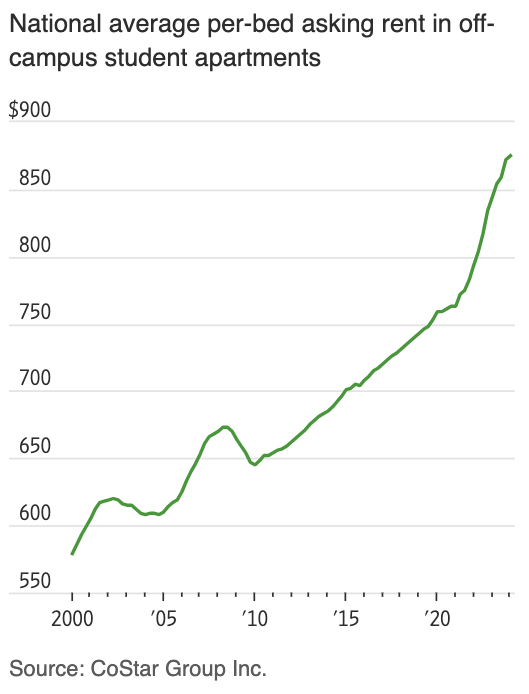
In this case, it’s $83,00.0 and as long as your mortgage payment is below that, then you qualify. It’s really on a one-to-one basis. There is no debt-to-income ratio on these loan programs, which makes it a great way to qualify, whether you’re a private bank client or a private banker. I don’t know if you follow our newsletters, but there have been more students attending universities in the US last year than there have ever been, ever recorded. So we launched this program a few months ago and it’s been fantastic. So if you have a student that is attending a university in the US and you would prefer that they don’t live in the dorm, we have a loan program that works very much like our rental coverage plus loan where you’re going to qualify on the rental income of the property.
49:13
Robert Chadwick
Even though your child is going to be living on the property. It’s a clever way to get the loan qualified without having to worry about your debt to income qualifying when you have another asset that you’re paying monthly on. It’s also quite a unique way. If we can add the student or your child to the loan and they just have to be over 18 years old, it’s a good way for them to start obtaining US credit, which if they choose to live and work in the US, it’s paramount to have that. So again, how it works is very similar to the rental coverage program. If the rental income or the projected rental income covers, then the loan qualifies. So that’s our presentation. Thank you very much for joining and staying through the process. We have an office located in Texas.
50:20
Robert Chadwick
We also have our Asia office where I’m located, which is in Singapore. You can scan the QR code and that will give you all the contact information, whether it’s emails or phone numbers. Again, there is a link in the chat where you can book an appointment, whether it is with Phil’s team or with the America Mortgage team. Phil, why don’t you join us again? Yeah, great. It looks like we already have quite a few questions. So what I will do, I’ll read the questions and then if it’s pertaining to me, I’ll answer it. And if it’s something pertaining to you, then you can take it and then we can kind of discuss this openly. So, first question. A friend of mine had an investment property in the US. However, communication was a problem. Can I be assured of ease of communication? Phil, I believe that would be you.
51:29
Phil Gerathy
Thank you, Robert. Yes, I think I addressed that particular issue earlier in the presentation, but yes, this is a key issue. It does come up regularly. As I said earlier, we have offices in Southeast Asia, Australia, and the United States. It doesn’t matter what time zone you’re in. You can be assured that somebody is available to talk to you. For Asian people, several people use WeChat. If not WeChat, it’ll be WhatsApp. If not WhatsApp, it’ll be telephone. If not telephone, or email. But somebody will physically talk to you. So that’s not an issue at all.
52:08
Robert Chadwick
Great. Thank you, Phil. Next question. This may sound like a basic question, but how can you assure me I won’t have to worry about my property?
52:20
Phil Gerathy
Experience. After 16 years of doing this, I think we know how to give you peace of mind or give the owner peace of mind. That’s what it comes down to and the infrastructure. That is that, as I said earlier, the communication tool, that is, people can talk to somebody on the telephone. But the experience that we have and the referrals that we receive, which are regularly, is a clear indication that our clients acknowledge the confidence that we suggest we can deliver.
52:58
Robert Chadwick
Excellent. Next question. Can you tell me the most asked question by foreign investment property buyers? So I’ll address it on my side, Phil, and then perhaps maybe you can address the property. So I think when it comes to obtaining a mortgage, obviously most of the people on this webinar probably have talked to a loan officer in our company. So they do realize that obtaining a mortgage with an experienced company like America Mortgages is easier than they would expect. So I think the main question that we get foreigners is how do I qualify and can I qualify?
53:39
Robert Chadwick
And I think if you were to schedule an appointment, and again, there is a link in the chat with one of our loan officers, you can see how easy it is to qualify for our mortgage in any of the states in up to 75% financing. And Phil, maybe you can address this. When it comes to property management, what seems to be the main question that a foreigner would have for property management?
54:04
Phil Gerathy
The main question we get, Robert, is how do I get started? I live in Singapore. I live in Hong Kong. I live in Shanghai, I live in Sydney, but I want a property in Dallas, Texas. What do I do? How do I get started? Who do I talk to? And 16 years ago when Austplan management was established, that was an interesting exercise in gaining experience as we went along. But essentially to say, you talk to us. We’ll get you started, we’ll show you how to start the process, we’ll deliver the investment property for you and then we’ll manage it for you in a very professional way.
54:47
Robert Chadwick
Thank you, Phil. And just to add to that, in my opinion, and I think actually in most investors’ opinion, the most important thing is to get pre-approved for a mortgage loan first and there’s no cost to get pre-approved. It’s very quick. We can do it normally in less than a couple of days. And then once you have that letter, you can go to Phil and you can say these are my requirements from the property that I’m looking at and he can help you sort something as well as manage it. So next question. How exactly do you deploy people all over the US? If I have something in San Francisco and you don’t have someone in San Francisco, you have someone in LA, you mentioned. Phil, I believe that’s you.
55:35
Phil Gerathy
Okay, that’s an interesting question and one that we have received regularly, particularly with referral clients. A referral client might have a property in, as you say, San Francisco, where we don’t have a resident office. What we usually do in that situation is call upon our closest individual. So that would be a lady in Los Angeles. She would then identify one of her colleagues in San Francisco. We would then build the infrastructure around the management of that property. And the infrastructure is essentially the process of day-to-day maintenance if that’s required. However, the actual management of the property in terms of accounting and legal can still be conducted and done from our head office in Dallas, Texas.
56:28
Robert Chadwick
Very good answer. Next question. I am ready to go, but my wife is extremely risk-averse. Do you have references or referrals of happy clients that we can communicate with for both the mortgage and the property management service? So I can tell you on the mortgage side, besides looking at our Google reviews, which I believe is five stars, we do hundreds of loans. And most of the clients, as they’re buying investment properties, they can tend to be a little bit, I guess, private. But depending on where you’re at, we do always have clients that have been very happy with our service and as long as they don’t mind, we’re happy to put you in touch with somebody. And Phil, I believe, probably very similar to you.
57:22
Phil Gerathy
Absolutely. So again, there are two parts to that. First of all, we would be more than happy to give you references or nominate clients who would be happy to talk to you. That’s the first part of it. But the second part of it is that, again, and this is something that I regularly talk about, if weren’t doing our job in a very professional way, we would not be receiving the referral sources that we receive every month. So, two parts to that.
57:55
Robert Chadwick
Excellent. Next question. This would be for me, can you do 30-year variable rates? We can. So most of our loans are 30-year fixes. There are, again, as I had discussed earlier, we have a ten-year interest-only loan program that converts into a 30-year fixed with a 40-year tenure. But the difference right now between, a five-year fix and a 30-year fix is so small and insignificant in the rate that it doesn’t make sense to take that risk. But certainly, if that’s your requirement, we’re happy to place it. Next question. Which states do you manage property in?
58:43
Phil Gerathy
I would direct you to our website. You can click on each state in which we currently manage properties. But we manage properties in the west coast states, across into Dallas, Texas. Well, all of the DFW area across into Florida, up into New York and New Jersey, across into Michigan and Washington state, of course.
59:12
Robert Chadwick
Excellent. Next question. Can I visit your team in Dubai? If you would like to meet with somebody in Dubai? We do have people there, and that’s not an issue. I think it probably best to email me or somebody in our office and we can connect you with the members in Dubai. Next question. Is there an issue with purchasing a couple of low-value properties that would total a similar amount to $200,000? That is an excellent question, and we get it often. There are potential loan programs that would allow that. We would have to discuss that with one of the loan officers. But if that is something that you’re interested in doing, it may be possible. Next question. Do you offer HELOCs for foreign nationals wanting to purchase in the US?
01:00:10
Robert Chadwick
Unfortunately, HELOCs, which is a home equity line of credit or a second mortgage, are not available to foreigners. We may have the option if you’re a US expat, but for a foreign national, there is nothing available. Next question. American citizen living overseas for 20-plus years with no US credit any longer. Which program would apply to me? US expat or foreign investor? Again, a very good question. This is not uncommon. You have a unique advantage being a US citizen who no longer has credit. So you can qualify using whatever country that you’ve been living in for the last 20 years. You can qualify using that credit.
01:01:04
Robert Chadwick
But what makes this unique is once you reestablish your US credit, then you can go back and you can qualify as a US expat. And as a US expat or a US citizen to a foreign national rate, there is a little bit better pricing, so you have kind of the best of both worlds. You certainly can qualify, and at some point, you could refinance into a US citizen rate. Next question. This one’s a little bit long. It says, hi, folks. Firstly, thank you for the presentation. Just wondering about the deal for tenants. What is the standard renovation deal for tenants? Two years, or if I have intentions to move to the US in the short term, can I request my property before the end of the term? And can I sell my property to buy a new one?
01:02:01
Robert Chadwick
So I think this is three parts, Phil. But if you can see that question, perhaps I think this is more directed to you.
You can answer.
01:02:14
Phil Gerathy
well, I can’t see the question, but I’ll try and remember the part.
01:02:16
Robert Chadwick
Okay. I’ll read the first part. What is the standard renovation deal for tenants?
01:02:30
Phil Gerathy
Is he talking about the standard lease period?
01:02:33
Robert Chadwick
I believe that’s what is referred to.
01:02:35
Phil Gerathy
Okay. The standard lease period ranges from either one or two years. It’s 50-50. Some people will sign a one-year lease and then extend, and that process means that we get involved in the negotiation to increase the rent in the second year, some tenants will sign a two-year lease where we’ll lock in a rate, but that’s higher than what it would be if it was a one year lease. Rarely, do we get much past a two-year lease, but we do have several people that will stay on and we have tenants that have been in houses for three and four years. We just continually renew the lease and adjust the rent.
01:03:16
Robert Chadwick
Okay, thank you. The next part of that is, if I have the intention to move to the US, can I request my property, I guess, to be vacant before I move there?
01:03:27
Phil Gerathy
Yes. Well, you can. There are certain requirements that you have to meet before you can ask a tenant to leave if that is before the expiry of the lease, that could be that you want to sell the property, in which case the lease agreement gives you that option to request the tenant to leave and you have to give the tenant usually 60 days notice in that process generally. However, if you simply want to return to the United States and live in the property and it’s within still the current lease, that can be difficult.
01:04:07
Robert Chadwick
Okay. And I think his last question, I can probably answer this. Can I sell the property and buy a new one straight away? Absolutely. There are a lot of unique advantages in the US, too, that other countries don’t have that can help you avoid having to pay any capital gains tax. It’s called a 1031 exchange. If you have further questions on it, I’m happy to put you in touch with one of our accountant partners who can assist you with it. When it comes to mortgages, there are no restrictions on the number of properties that you can own, and you can leverage it up to the highest amount.
01:04:49
Robert Chadwick
One thing, and I think, Phil, you can probably agree with this, what a lot of people do is maybe rather than selling the property, they will refinance it, say, after one or two years, and then pull the equity out and then use that equity to buy another property. So it’s a great way to build a portfolio. You don’t have to worry about cooling measures or stamp duties and so forth. And this is my opinion, I think it’s sort of shared. But I do think that now is the best time to buy. Because interest rates are still on the higher side, we do expect, as we get closer to the elections, that the interest rates will be used as a tool to boost the economy.
01:05:39
Robert Chadwick
And when interest rates go down, all these owner-occupied borrowers that are sitting on the sidelines right now because they are either unable to afford a property or they feel like they’re sitting on a 3% rate and want something similar, as soon as interest rates go down, these buyers will dive back into the market, which will create another frenzy. And I think we’ll see immediate equity in people that are buying properties now.
01:06:08
Phil Gerathy
Absolutely. Totally agree.
01:06:10
Robert Chadwick
Okay, next question. Should I get an IPA before I buy this property? IPA, I’m assuming you want a pre-approval. That’s what we call it in the US. I think there are a couple of reasons why. One, you want to know what the current rates are and what the mortgage payment will be. And again, because we can fix these over a long ten years, it gives you a very clear picture of what the payments will be. But before you can put an offer in on a property, you need to show that you’ve been pre-approved for a mortgage, unless you’re paying cash. So it’s very important to get the approval before starting shopping. Approximate rates for the programs at the moment. So if you’re a US citizen, it’s market rate, I believe it’s around 7% now for a 30-year fix.
01:07:11
Robert Chadwick
If you are an expat or a foreign national, you’re normally going to be about three-quarters of a point to 1% higher on rate, which, if you look at global markets, is quite good when it comes to foreigners with no credit question. Application fees, I believe this is for me. We do not charge a fee to complete the application. Once you talk to a loan officer, if you want to get started immediately, they can do it immediately during the call, but they can take the application, they can send you the documents that are requested, and then once you send that in, we could start the pre-approval process, which normally takes about 72 hours. And all of that is completely free.
01:08:03
Robert Chadwick
The only time we get paid on a transaction which is industry standard is at the close of the transaction and it depends on the loan size, but normally it’s 2% of the loan amount. Next question. I have 21 condos, all in the Fort Lauderdale area. Nine different complexes. What is the cost of property management for each? all of these units? Phil?
01:08:34
Phil Gerathy
The property management fee is based on the gross rent per month. Now, that can vary depending on the quantity. For example, in one property, our standard property management fee is 8% of the gross monthly rent. However, for multiple properties, we certainly would negotiate, and usually, the fee would be somewhere between 5% and 8%, depending on the quantum. Based on that question, the number would be closer to 5 than 8.
01:09:08
Robert Chadwick
That’s super competitive. I have properties and we pay anywhere from 10% to 12% for property management fees. So I think what you’re offering for the services that you’re offering is fantastic. Next question. Which is actually what you just said, the property management fees and rates. So I think you just covered that. Next question. How can I help my kids build a credit score if I only buy one property? Again, it’s going to depend on how you structure the loan. But if that is a requirement of the loan, we will add the child to the loan, as long as they obtain an ITIN, which is a tax identification number, they can use to start building credit.
01:10:06
Robert Chadwick
If they ever intend to live in the US or go to school in the US, whatever it may be, it’s very important to have US credit. Next question. Are we able to speak to a few current long-term customers or their experience using your property management? I think that was covered before, but if you want to touch on it again, you can.
01:10:29
Phil Gerathy
Yes, absolutely, Robert. First of all, I would encourage you to review our website and take a look at that, and that will give you significant confidence in what I meant to say earlier. But absolutely, I am more than happy to provide you with several people that you could talk to to confirm the comments that I’ve been making over the last hour.
01:10:58
Robert Chadwick
Okay. And I think the next four questions are all about fees for property management. Why don’t you just sort of cover that in a broad range so everybody kind of has just a clearer idea?
01:11:18
Phil Gerathy
The management fees?
01:11:20
Robert Chadwick
Management fees and what normally you would charge and what it includes.
01:11:24
Phil Gerathy
Well, we don’t charge any fees for hands-on management of the property, or day-to-day management of the property. We charge one fee, and that’s a monthly management fee based on the gross rent that we receive. If the property is not tenanted, we don’t charge the management fee. We only charge a management fee once the tenant has been located and has moved in. The management fee, as I said, varies from a single property, for example, at 8% of the gross monthly rent. But as the portfolio grows, as we have multiple property owners, that fee can usually come down to around 6%. But the starting point for one property is 8% of the gross management fee, and that’s it. There are no additional fees.
01:12:14
Robert Chadwick
Excellent. Next question. Austplan office in Dubai? Mr. Phil mentioned he has an office there. I’m not sure if you mentioned that you have an office in Dubai.
01:12:26
Phil Gerathy
No, we don’t have an office in Dubai. We’ve presented in Dubai via seminar. But unfortunately, no, we don’t. We have an office in Shanghai, an office in Australia, of course, an office in the United States. But at this point, not in Dubai.
01:12:48
Robert Chadwick
we have people in Dubai. So if you want to sit down and talk about a mortgage, we can certainly assist with that. Next question. Can the New York office manage or sublet management properties in Philadelphia? Maintenance and eviction with city-specific laws? Very good question.
01:13:06
Phil Gerathy
The answer to that question is unequivocally yes.
01:13:11
Robert Chadwick
Okay. And I would assume it’s just based on your years of experience in linking up with people in that state or that.
01:13:22
Phil Gerathy
So the actual accounting and legal management is done from our office. It’s actually in New Jersey Dallas or Michigan. But from time to time, where maintenance is required, we have people, we would appoint people on the ground to manage the property or to at least look after that property, but the actual management process of dealing with the cities, dealing with the state, dealing with any issues that are specific to that particular neck of the woods, we handle quite easily from our New Jersey or our Dallas office.
01:14:05
Robert Chadwick
Next question. How often do you make regular site visits to properties under your management?
01:14:13
Phil Gerathy
Six monthly. Sometimes we do it more frequently, depending on the tenant or the HOA, the homeowners association. For example, some homeowner’s associations are very finicky when it comes to maintaining the outside of a property, which means that we perhaps would visit that property more frequently. But generally, once every six months, we would do a full internal visit.
01:14:43
Robert Chadwick
Excellent. Next question. What is the average amount of expenses paid before the property has positive cash flow? Management, taxes, insurance, maintenance, and other costs.
01:14:55
Phil Gerathy
Well, excluding interest on borrowings, you would have positive cash flow from the second month of a tenant moving into your property.
01:15:06
Robert Chadwick
And I think one thing too, to also discuss, again, because 100% of our clients are foreign nationals and ex-pats, is our goal at America Mortgages is to partner with companies like Austplan and Phil, but we also partner with CPAs and attorneys that again, specialize on foreign nationals and US expats. The goal of any investment property, regardless of what country you’re in, is to not pay taxes on the rental income earned. And I think because in the US, regardless if you’re a foreigner or a US citizen, you have the same tax advantages. I think often you can obtain that and you can even show a loss which can carry forward and help mitigate any capital gains taxes or whatever. But I don’t want to give any tax advice, but I think it’s very important. If anybody is thinking of investing in US real estate, the US probably has to be, even though it has a bad rep, it has to be one of the best tax locations of any international investment properties, just from the savings that you can get.
01:16:23
Phil Gerathy
That’s absolutely correct. Whilst I say cash flow positive, you will be cash flow positive in the second month. But using all of the deductions available and the tools that we have, generally, we can show a tax loss leading into the third year. But again, that’s an accounting issue that we’re not qualified to give you at this point. But usually, that’s the situation.
01:16:46
Robert Chadwick
Excellent. Next question. Since the current interest-only mortgage rates are high, why would I want to go for a fixed rate over five or ten years? How do I take advantage of these drops in two to three years? Excellent question. And it’s something that is asked often. Again, what makes the US unique is the long-duration mortgages. So the long amortization periods that you can have regardless of the age of the borrower. Why most people will choose a 30-year fix is certainly we do think rates will go down and you can refinance when rates go down. That’s not a problem. Our loan officers are here for the entire journey, not just to do one transaction. So if we see an interest rate drop and we think it makes sense, we will calculate it out for you.
01:17:41
Robert Chadwick
And you can see when your break-even point is, and you can choose if that is the right option. If you intend to exit a property, say, in five years, then sure, a five-year fixed is probably maybe a better alternative for you. But the surety of a 30-year mortgage is only available in the US. And it’s a fantastic way to think if you’re going to hold the properties long. Certainly, we expect and we hope interest rates go down. But if they don’t, as Phil likes to say, you can sleep easy at night. Next question. Do you help manage short-term rentals such as Airbnb?
01:18:28
Phil Gerathy
That question comes up regularly. The short answer to that is, at this point, no. One of the reasons for that is that homeowners associations, particularly with their covenants, generally prohibit Airbnb. The other reason is that the management of an Airbnb is on a day-to-day basis, and we are concerned that the quality of people who lease or rent an Airbnb may be questionable. Now, having said that, we’re exploring that with one particular client at the moment, with some town homes, that are slightly different than a single-family home. So right now we’re in the early stages of exploring that.
01:19:19
Robert Chadwick
Okay, next question. Can you manage large multifamily or apartments with a lot of units? If so, max number of units, and how would that work with the rates?
01:19:33
Phil Gerathy
Well, I think I probably addressed that earlier. The answer to that question is yes, of course. So we have numerous what we call six plex, ten plex, twelve plex. We have several properties that are multi-units. We are currently looking and negotiating with an apartment building in Brooklyn that has something, I think, around 400 apartments within that building. So there are two parts to that. The first part is that we require for large multiple buildings, on-site management, not off-site management, and that’s part of the process. But the second part to that question is in terms of the management fee, which usually, again, gets back to a figure of around 5% gross.
01:20:25
Robert Chadwick
And I think as well, in the chat, you’ll see a link for both America mortgages and for Austplan. I think something that’s maybe a little bit more in-depth is probably good to speak with Phil directly.
01:20:40
Phil Gerathy
Yes, absolutely.
01:20:42
Robert Chadwick
Another question. Are management fees tax deductible?
01:20:46
Phil Gerathy
Absolutely, yes. So in the process of determining tax liability at the end of the financial year, you would look at depreciation, of course, which is factored into your property, but any other expense that you incur along the way, one of which is management fees. But remember that what we’re aiming for in the early years is a tax loss for you, but you will be cash flow positive in the second month.
01:21:14
Robert Chadwick
And we hear this a lot, I don’t know how this reputation came about, but the US sort of has its reputation as being a very bad tax regime, but it’s just the opposite. And I think once you start investing and if you’re a sophisticated investor in US real estate, you realize there’s no better market than the US when it comes to taxes. I mean, you’re in Australia, I’m in Singapore currently, and we can see how the taxes are collected in both of these countries. If you’re not invested in the US yet, you really should, because I think once you start understanding how taxes work in the US, you’re going to be completely blown away.
01:22:05
Phil Gerathy
That’s correct, Robert.
01:22:07
Robert Chadwick
Next question. How do you manage repairs and repair costs?
01:22:13
Phil Gerathy
again, in each state and city where we manage properties, we have a panel of repairers. That panel consists of various trades, right down to cleaners and general occupational trades, but electricians, plumbers, and the like. We have a management platform that has a tenant portal. When something needs to be done, the tenant will access the portal. That will then immediately trigger a maintenance request. Our office will determine what’s required, who’s required, and that necessary trade will be deployed. If the cost of the repair is above $300, we will notify the owner for approval. If it’s below $300, generally we’ll move ahead, get it done, pay the bill on behalf of the owner, and then that appears on the profit and loss statement at the end of the month.
01:23:18
Robert Chadwick
Okay, next question. Can you manage properties in Austin, Texas, Atlanta, Georgia, Nashville, Tennessee Charlotte and Raleigh, North Carolina, Indianapolis, Indiana, and three cities in Florida?
01:23:34
Phil Gerathy
Well, first of all, in Texas, yes. The answer, of course, is yes. We manage properties in Austin and manage properties in Houston. The question then, of course, let me give you an example. We had a Chinese owner developer that has an apartment building in Seattle. Twelve months ago, were approached to manage a number of the apartments in that building in Seattle. Now, our closest office to Seattle is in California, but we now successfully manage that building, or at least those apartments, simply by identifying a person on the ground who can do the hands-on listing and leasing for us. We have a panel, again, of tradespeople that are required from time to time for repairs and maintenance.
01:24:29
Phil Gerathy
And then the accounting and legal and other issues to do with the city and the state are handled out of, in that particular instance, from our Michigan office. Our website and our management platform are very sophisticated. If you were to have a look on the website, you’d be able to access our management platform and see how that actually would then facilitate managing properties in numerous other states.
01:25:00
Robert Chadwick
Excellent. Okay, next question. This is finally for me. It is the cost to refinance a property to lower a rate. Again, it depends on what your current rate is. When you talk to a loan officer, and it’s about lowering the interest rate, right now, interest rates are a little bit on the higher side. I do believe that they will be going down shortly. But the most important thing is to realize the costs that are involved in the loan. Certainly, we do have a brokerage fee, but there also are other costs that are fixed depending on the state. It’s title, insurance, appraisal, et cetera. But we have a way to break that down to where you can see if lowering the rate makes sense what the costs are and at what point in time is the breakeven point. And I think once you see that and once you understand it and it’s explained properly, it makes sense. Next question. Phil, I guess somebody recognized your accent. Are you based in Brisbane?
01:26:11
Phil Gerathy
I am based in Brisbane, yes. But I lived in the United States for several years and came back to Australia not that long ago so that my two teenage kids could finish their high school education here. I’ve now decided for the last two years I’ve been post-COVID commuting. So every month I’m in all of our offices in the United States. Tomorrow morning I’m leaving to go back to New York, New Jersey, Dallas, and then up to Michigan. But yes, I live in Brisbane Australia.
01:26:46
Robert Chadwick
Excellent. And if you want to reach out and have coffee with Phil in Brisbane when he’s there, you can reach out for that.
01:26:52
Phil Gerathy
Absolutely.
01:26:55
Robert Chadwick
Last question. I know this is gone for almost an hour and a half, so I appreciate everybody. Do you process a loan for a foreign national under my LLC, registered in Delaware instead of under my individual name? Excellent question. Asked often. So, in the US, you can hold idle in an LLC? That’s absolutely possible. It’s very common. But there has to be a borrower. So as the individual, you are responsible for the loan, but for the ownership of the property, for a variety of reasons, from tax to security, you can hold the title or the ownership under the LLC, and I believe that is it. So, Phil, thank you, as always, for joining us. I know this went probably longer than you were expecting, but I think were able to address a lot of concerns that our clients have.
01:27:55
Robert Chadwick
And I think if anybody missed anything in the webinar, once it’s edited, it’ll be sent out to everybody who has attended, everybody who signed up and maybe didn’t get a chance to attend. And then, of course, you get it in our weekly newsletter, which I hope everybody does enjoy. Phil, do you have any parting words before we say goodbye?
01:28:18
Phil Gerathy
Well, my parting words would be if you’re an existing property owner in the United States, and you would like a very professional and extremely competitive property manager, talk to me. And if you’re not, and you’re looking to get in, and you’re asking the question, where do I start? Talk to Austplan management and talk to America Mortgages.
01:28:37
Robert Chadwick
Fantastic. Thank you, Phil. So we’ll have another webinar in, I believe, two weeks. The date will be announced soon, and I think you’re going to love it because we are going to announce some exciting new loan programs. So we hope that we see everybody that is on this webinar on the next. Thank you again, everybody. Good day, or good night?
01:28:58
Phil Gerathy
Thank you. Bye.
01:28:59
Robert Chadwick
Bye.
Disclaimer: This transcript is AI-generated, so kindly pardon any transcription or grammatical errors that may be present.