
Foreign nationals can generally buy real estate in Hawaii without US citizenship or permanent residency. However, buyers should be aware of the laws governing property ownership, mortgage issues, and taxes. Planning ahead will assist foreign buyers in selecting proper properties.
There is a variety of property available in Hawaii, from condo units in Honolulu to coastal houses and even investment properties that can be rented out. Costs vary, as do insurance and rental regulations. So, make sure you know the market situation and the property uses allowed by law.
Financing also deserves early attention, especially if you live overseas or lack US credit history. You can learn more about buying property in Hawaii as an investment to understand the market and its financial considerations. America Mortgages can help you explore mortgage options for eligible international buyers purchasing US property.
Can Foreign Nationals Buy Real Estate in Hawaii?
Hawaii generally permits foreign investors to buy residential real estate based on the laws and other specific rules applicable. When you sign up, make sure that you understand the financial issues involved and your taxation requirements as well. Note that buying a house does not guarantee any US visa or green card.
| Ownership consideration | Key details |
| Property ownership | Foreign nationals can generally purchase residential properties, subject to applicable laws. |
| Property types | Options include houses, condominiums, and certain leasehold properties. |
| Immigration status | Buying property does not provide a visa or green card. |
| Financing eligibility | Specialist lenders may consider overseas income and international credit history. |
| Legal restrictions | Buyers should verify current laws and property-specific conditions before signing. |
According to a 2026 guide for the real estate law in Hawaii by Chambers and Partners, foreign individuals can buy property in Hawaii. There are, however, certain exemptions in this regard, especially concerning the buying of properties in sensitive locations.
How Should Foreign Buyers Choose a Property in Hawaii?
Foreign buyers are advised to make comparisons regarding the cost, location, expenses, and regulations on renting of properties before purchasing a house in Hawaii. The islands present unique advantages and pricing. Therefore, analyzing recent market statistics can assist buyers in making choices based on their budgets and future plans.
According to housing statistics for February 2026 from Hawaii REALTORS, median prices of single-family homes were very varied depending on the island.
| Island | Median single-family home price |
| Kauai | $1,369,000 |
| Maui | $1,250,000 |
| Oahu | $1,205,000 |
| Hawaii Island | $575,000 |
The following are some of the major considerations when comparing the different properties:
- Location: Compare the ease of access to transport, health care, shopping facilities, and other amenities.
- Property type: Determine the type of property, be it a condo, a detached home, or a leasehold property.
- Ownership costs: Prepare yourself for the expenses incurred in owning the property such as taxes, insurance, and maintenance.
- Leasehold potential: Consider the zoning laws of the area regarding rental permits.
Lastly, compare the costs of owning the asset rather than looking at the asking price alone. Make sure to look into recent sales and insurance coverage prior to purchase. This will ensure that your purchasing decision is an informed one.
How Can Foreign Nationals Finance a Hawaii Property?
Foreign nationals can finance a Hawaii property through specialist mortgage programs, eligible conventional loans, or cash purchases.The process will depend on several factors such as income level, credit rating, available finances, and lender’s criteria. A comparison between various financing methods will allow an individual to determine their lending capacity.
Explore Mortgage Programs for Foreign Nationals
The specialized lenders may take into account foreign income, international credit history, and foreign bank accounts. However, the conditions will differ from one financing method to another.
Prepare Your Financial Documentation
Have your passport, bank statements, tax returns, and documentation of your down payment handy. Some loan providers will allow a credit report from outside of the country to be used in place of a credit report within the U.S.
Compare Loan Terms and Interest Rates
Consider interest rates, the duration of repayments, fees associated with the lending institution, and whether the rate is fixed or adjustable. You should also consider pre-payment penalties and interest-only periods.
Calculate your down payment and monthly mortgage
Take a property in Hawaii that costs $500,000 with 30% down payment. You pay $150,000 while taking out $350,000 as loan at a hypothetical 7% fixed rate for 30 years to have $2,329 as the monthly cost of interest and principal payments. Other costs like property taxes and insurance will make your costs even higher.
Consider Cash Buys and Extra Costs
The cash buy avoids mortgage interest and approval. However, it needs you to have extra money upfront. Have funds aside from buying to cater for the costs after the transaction.
Before selecting a mortgage, look into the early repayment penalties as well as the effect of fluctuating currencies since your salary is received from another country. It will influence your repayment expenses and budgets. More details on qualification, requirements, and funding for the mortgage application can be found in guide to applying for US mortgage as a foreign national.
What Legal, Tax, and Closing Steps Must Foreign Buyers Complete?
Foreign purchasers will have to confirm ownership, conduct legal research, secure financing, and be aware of any US taxes on real estate in Hawaii. Good preparation will help avoid problems. It will also ensure that buyers know what is expected of them before signing any documents.
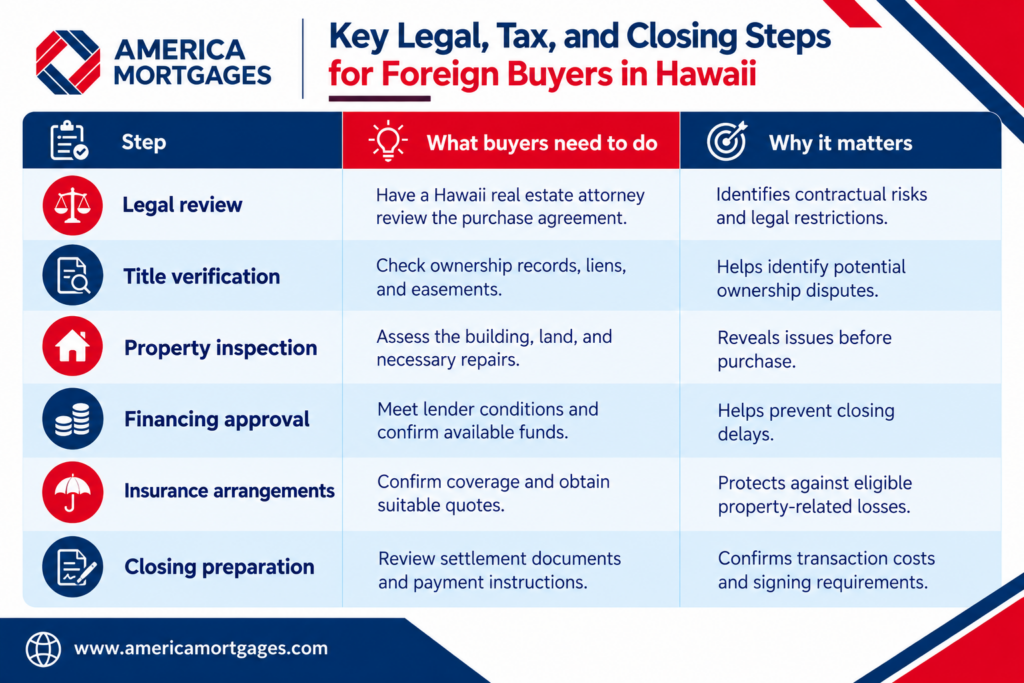
Foreign purchasers are advised to be aware of FIRPTA prior to selling their US real property. According to 26 U.S.C. § 1445, buyers are supposed to withhold 15% of the amount realized on sale of an interest in US real property by a foreign person. In some cases, certain exceptions and lower rates might be considered based on the transaction.
Before completing the transaction, check all closing documents with your lawyer and escrow agent. Ensure that the money has been received, and all signing conditions are fulfilled. For those who purchase property from overseas, make sure that you have everything sorted beforehand. Last but not least, keep records of the transaction for future tax purposes.
Case Study: How a Foreign Investor Purchased US Real Estate Without US Credit
In June 2026, America Mortgages released recent case studies regarding loans to foreign nationals for properties across borders. In one such case, an investor from the UK was acquiring a $3.9 million condo located in Miami. The investor had no established credit score in the US and required financing that would be independent of the traditional credit criteria in the US.
America Mortgages provided financing for the purchase through a foreign national bridge loan through asset based underwriting of the deal. The case study shows that specialized financing can be made available to eligible foreign investors. It should be noted that although the financing occurred in Florida instead of Hawaii, it is relatively recent evidence of foreign property financing.
Explore Your Hawaii Property Financing Options with America Mortgages
Property buying in Hawaii for a foreign national needs detailed financial planning. You should be aware of your mortgage eligibility, down payment requirement, and loan options. Your financing approach would depend on your income, credit history, and purpose for purchasing the property.
Some lenders may reject your foreign income and your international credit history. However, there are special mortgage programs that can offer you alternative solutions. Comparing lenders will help you in understanding different options available and prepare for your purchase.
America Mortgages assists foreign nationals in discovering mortgage options for properties in the US. With over 150 mortgage programs from various US lenders, the specialists of America Mortgages will assist you in assessing your situation and discussing solutions. For more information, contact America Mortgages today at +1 (845) 583-0830, or write to [email protected].
FAQs
Q1: Can I buy a house in Hawaii remotely from another country?
Yes, foreign buyers have the ability to buy real estate in Hawaii from another country. This would be facilitated by a local realtor and attorney. However, there might be a need for notarization or other forms of certification on some forms. It is important to confirm signing requirements from your escrow firm before wiring any money.
Q2: Can foreign nationals get a mortgage in Hawaii without a US Social Security number?
Yes, there are some specialist mortgage lenders that will lend without a US Social Security number. But it all depends on the lender and the mortgage program. You can require passports, foreign credit history, proof of income, and bank statements to qualify for the loan.
Q3: How much deposit does a foreign buyer need to buy a house in Hawaii?
The amount of deposit to be made will depend on the cost of the property, the lending institution, and the profile of the borrower. Some foreign national mortgages may ask for 30% or even more deposit at the beginning. This means, for example, that a $500,000 property may entail a deposit of $150,000.
Q4: Can I use my foreign bank account to buy property in Hawaii?
Yes, an overseas account could very well be able to finance the purchase of property. The recipient bank or escrow agency may even ask for evidence of the funds and their transactions. Foreign exchange fees may be incurred with international money transfers as well.
Q5: Do foreign property owners in Hawaii need to file US tax returns?
Yes, foreign owners may have to file taxes in the U.S. in case they derive rental income or sell property. The requirements will be determined by the amount of income earned, type of ownership, and tax status. Rental income may attract federal tax.
Share this article
Ready to get started?
Speak with our U.S. mortgage specialists today and discover your options.
Schedule a call