
Refinance Now: Smart Signals That Show the Right Time to Act

Refinance
Woman working with finances on the table. Money, papers

Why Many Investors Are Moving Now, Not Later

Every investor wants to catch the bottom of the interest rate cycle. In reality, the “perfect” moment is only obvious in hindsight, and by then the best opportunities are usually gone.

Right now, U.S. mortgage rates have started to ease, and refinance applications are picking up while purchase activity remains more subdued. That combination tells a clear story: some owners are already making their move, but the broader buying crowd has not yet returned.

For investors, the right time to refinance is often when rates are heading down but before prices move sharply up. That is the window we are in today.

When rates fall further and sentiment turns, more buyers enter the market, competition intensifies, and prices begin to climb. The duplex you can buy for $300,000 today can quickly become a $400,000 property once bidding wars and aggressive offers return. At that point, even slightly lower interest rates may not compensate for the higher purchase price.

Refinancing earlier in the cycle allows you to do two things at once:

  1. Lock in a more attractive rate.
  2. Release equity while prices are still relatively reasonable.

For many America Mortgages clients, the primary goal is not just to reduce monthly payments. It is to free up capital so they can buy another investment property – or even more than one – while prices remain comparatively low. In other words, they are using today’s refinancing environment to position themselves for tomorrow’s growth.

This is particularly relevant for foreign nationals and U.S. expats who already own U.S. property but may have found traditional refinancing routes difficult. Conventional lenders often require U.S. tax returns, W-2 income and a domestic credit profile, which many overseas investors simply do not have.

That is where our dedicated refinance solution comes in.

The AM Cash-Out Refinance Loan Program

The AM Cash-Out Refinance loan program is designed specifically for foreign nationals and U.S. expats who want to unlock the equity in their U.S. properties and redeploy it into new opportunities.

Key Loan Highlights:

  • No Personal Income Required – Ideal for foreign nationals & U.S. expats
  • No U.S. Credit History Needed – Simplified approval process
  • Loan Amounts – Starting from US$100,000
  • Loan-to-Value (LTV) – Up to 80% for U.S. citizens and 75% for foreign nationals
  • Closing Time – Typically 30–45 days
  • Payment OptionsAmortizing or Interest-only

For many of our clients, that means they can refinance an existing U.S. property, pull out six figures in cash, and then use that capital as the down payment on another home, condo, or duplex – at today’s prices, not tomorrow’s.

Refine the Rate, Recycle the Equity

The investors who tend to come out ahead in each cycle follow a simple pattern. They refinance when rates start to improve, not when the headlines say “lowest in years”. They release equity while valuations are still sensible. And they use that equity to expand their portfolios before the next broad-based price surge.

If you wait until everyone is talking about how “cheap” money is again, you are usually buying in a $400,000 market instead of a $300,000 one.

The right time to refinance is rarely about perfection. It is about getting ahead of the next move – securing a better rate, recycling your equity, and putting that capital to work in additional investments while you still have a pricing advantage.

Refinance now, buy more while prices are still relatively low, and let the next phase of appreciation work for you, not against you.

Ready to Refinance, Unlock Equity, and Scale Your U.S. Property Portfolio?

America Mortgages can structure a straightforward path from a single property to a multi-property portfolio through our Cash Out Refinance solutions.

Contact: [email protected]

Website: www.americamortgages.com

Speak to a U.S. Loan Expert 24 hours a day / 7 days a week: +1 845-583-0830

Need help getting started? Use their 24/7 online booking tool to schedule a free, no-obligation consultation with a licensed U.S. mortgage advisor.
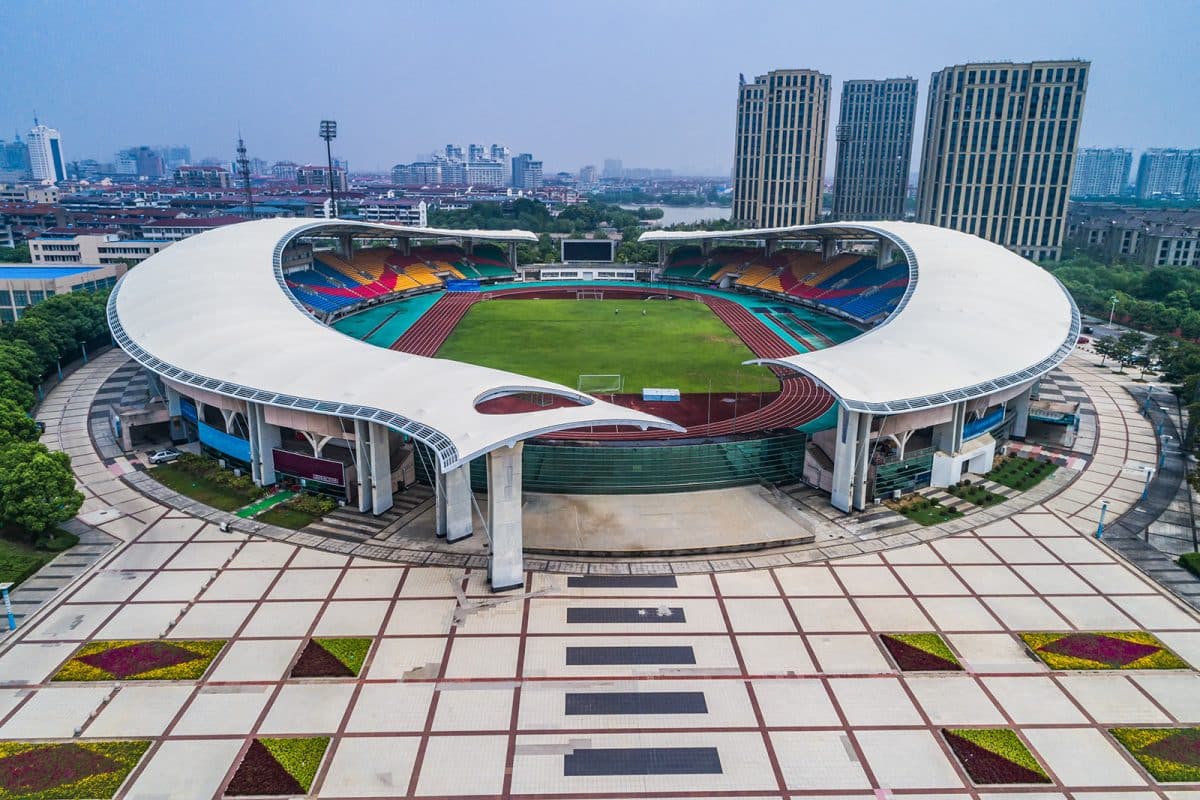
2026 FIFA World Cup: How Successful Investors Time Real Estate Opportunities

2026 FIFA World Cup real estate investment timeline and strategy
Sports center

What You Will Learn

  • How to structure a real estate investment timeline before, during, and after the 2026 FIFA World Cup
  • When investors historically capture the strongest returns around FIFA World Cup host cycles
  • Which strategies support long-term appreciation versus short-term income
  • How financing and liquidity planning affect FIFA World Cup-driven investments
  • Common mistakes investors make when timing real estate purchases around global events

2026 FIFA World Cup Real Estate Investment Timeline and Strategy

For real estate investors, the 2026 FIFA World Cup is not a single moment. It represents a multi-year investment cycle that begins well before kickoff and continues long after the final match.

Investors researching World Cup real estate investment opportunities in host countries often focus too narrowly on event timing. In practice, successful outcomes depend on when capital is deployed, how risk is managed, and whether post-event fundamentals remain strong.

This guide breaks the World Cup investment window into a practical, investor-grade timeline, supported by lessons from previous tournaments and current U.S. housing conditions.

How World Cup Investment Cycles Typically Play Out

Across past tournaments, real estate markets follow a familiar pattern:

  • Early movers benefit from infrastructure announcements and rezoning
  • Mid-cycle buyers face rising prices and compressed yields
  • Late entrants often encounter peak pricing with limited upside

Research from the Lincoln Institute of Land Policy’s assessment of mega-event infrastructure impacts shows that long-term property gains are most consistent when event-related infrastructure spending reinforces existing employment centers, transport connectivity, and housing demand, rather than relying primarily on short-term tourism activity.

This pattern was visible in Brazil’s 2014 World Cup cycle, where price growth accelerated years before the tournament in select cities and normalized afterward once speculative demand faded.

Phase 1: Early Positioning (18–36 Months Before 2026)

This is the phase where institutional capital and disciplined private investors typically move first.

What Happens in This Phase

  • Infrastructure budgets and transit corridors become defined
  • Redevelopment zones gain clarity
  • Financing conditions still allow negotiation leverage

Investors often anchor decisions using macro indicators highlighted in the U.S. real estate market outlook for 2026, ensuring the World Cup acts as a catalyst rather than the sole investment thesis.

Best strategies in Phase 1

  • Buy-and-hold residential assets
  • Value-add properties in growth corridors
  • Multifamily near employment hubs

Primary risk: misjudging infrastructure delivery timelines

Phase 2: Pre-Event Acceleration (6–18 Months Before 2026)

This phase attracts broader investor attention and rising competition.

What Changes

  • Media coverage expands
  • Pricing increasingly reflects future expectations
  • “World Cup proximity” narratives gain traction

Investors searching for real estate strategies for investors during World Cup tournaments often enter here, but discipline is critical. Paying for speculative upside rather than proven demand can reduce long-term performance.

This is also when many overseas buyers evaluate financing options. Contrary to common assumptions, cash is not always required. Structured lending remains available, including programs explained in how U.S. expats buy real estate back home without U.S. income or credit.

Best strategies in Phase 2

  • Defensive acquisitions in proven neighborhoods
  • Locking longer-term financing to preserve liquidity

Primary risk: overpaying based on short-term narratives

Phase 3: Tournament Window (During 2026)

During the World Cup itself, visibility peaks, but fundamentals do not change overnight.

Short-Term Effects

  • Temporary rental demand increases
  • Elevated transaction inquiries
  • Increased international buyer interest

Data from Qatar’s 2022 cycle shows rental prices surged in the lead-up to the event before stabilizing. Similar patterns occurred during Brazil 2014, reinforcing that short-term income does not guarantee long-term appreciation.

For investors focused on maximizing rental yields in world cup host cities, this phase may supplement income but should not define the investment thesis.

Best strategies in Phase 3

  • Stabilize operations
  • Maintain pricing discipline
  • Avoid emotional buying decisions

Phase 4: Post-Event Consolidation (1–5 Years After)

This phase often delivers the most reliable long-term outcomes.

Why This Phase Matters

  • Speculative demand exists
  • True housing demand becomes clearer
  • Infrastructure investments are fully operational

The long-term property price effects after hosting the FIFA World Cup depend on sustained job growth, population inflows, and housing supply constraints. Markets with global liquidity and premium demand often retain value well beyond the event, a trend also reflected in why global investors continue buying U.S. luxury property.

Best strategies in Phase 4

  • Refinance where appropriate
  • Optimize long-term tenancy
  • Consider selective exits in highly liquid markets

Financing Strategy Across the World Cup Timeline

Financing should evolve alongside the investment cycle:

  • Early phase: flexibility and leverage matter most
  • Pre-event: rate protection and loan structure become critical
  • Post-event: refinancing and equity optimization take priority

Extended amortization discussions, including those explored in what 50-year mortgage proposals could mean for investors, highlight how financing structure can influence long-term affordability and exit strategies.

Align Your Timing, Market, and Financing Strategy

Successful World Cup real estate investments are rarely about speed. They are about entering at the right phase, in the right market, with financing that supports long-term ownership.

America Mortgages works with international investors and U.S. expats to structure financing strategies aligned with multi-year investment timelines. To explore your options ahead of 2026, visit America Mortgages, connect through our contact page, or email [email protected] for a confidential discussion.

Summary

The 2026 FIFA World Cup creates a multi-year real estate investment cycle, not a single opportunity. Investors who focus on early positioning, disciplined underwriting, and post-event fundamentals are best positioned to benefit. Timing, financing, and market selection consistently matter more than short-term demand spikes.

Frequently Asked Questions

Q1: When is the best time to invest before the 2026 FIFA World Cup?

Historically, the strongest positioning occurs 18–36 months before the event, when infrastructure plans are clear but pricing has not fully adjusted.

Q2: Do property prices peak during the World Cup?

In many past host cities, prices peaked before the event and stabilized afterward. Long-term growth depends on local fundamentals.

Q3: Is short-term rental income reliable during the FIFA World Cup?

Rental demand can spike temporarily, but regulation and normalization risks make long-term strategies more stable.

Q4: Can international investors finance U.S. properties during this cycle?

Yes. Many programs allow financing using foreign income or asset-based structures, even without U.S. credit history.