DSCR loans for primary residence are generally not available because these loans are designed for investment properties. Instead of reviewing your personal income, lenders mainly evaluate the property’s rental income. Therefore, buyers who want to live in the home usually need a different mortgage option.
Every mortgage program has different eligibility requirements. DSCR loans are designed for investment properties, while traditional mortgages are intended for primary residences. For a detailed comparison, read the DSCR loan vs other mortgage loans guide.
If you are exploring a DSCR loan for a primary residence, America Mortgages is here to help. Our lending specialists will review your financial situation, explain your available loan options, and help you choose a financing solution that aligns with your homeownership goals.

Why Aren’t DSCR Loans Available for Primary Residences?
DSCR loans for primary residence are generally not available because they are designed for investment properties. DSCR lenders qualify borrowers using rental income instead of personal income. Since a primary residence usually does not produce rental income, it does not meet the requirements for DSCR lending.
The main reasons include:
- Rental income is the main qualifying factor.
- Primary homes are meant for owner occupancy.
- Traditional loans use personal income and debt-to-income ratio.
- Investment properties follow different underwriting rules.
- Lenders evaluate rental and owner-occupied homes differently.
A debt service coverage ratio mortgage is based on property cash flow. Lenders review expected rental income instead of your salary or tax returns. They also assess property performance before making a decision. In the DSCR loan required documents guide you can also explore which paperwork is needed. You can also explore DSCR loans for Airbnb properties for short-term rental financing.
U.S. mortgage guidelines also support this approach. Fannie Mae also distinguishes principal residences, second homes, and investment properties under separate occupancy guidelines. Because DSCR loans rely on rental income, they are typically used for investment properties instead of owner-occupied homes.
How Does a Debt Service Coverage Ratio Mortgage Work?
A debt service coverage ratio mortgage qualifies borrowers based on a property’s rental income instead of personal income. The lender checks whether the property’s cash flow can cover its mortgage payments. Therefore, DSCR loans are mainly used to finance income-producing investment properties.
| Step | Description |
| Estimate Rental Income | The lender reviews the property’s current or expected rental income. |
| Calculate DSCR | DSCR = Annual Net Operating Income (NOI) ÷ Annual Debt Service |
| Example | $72,000 NOI ÷ $60,000 Annual Debt Service = 1.20 DSCR |
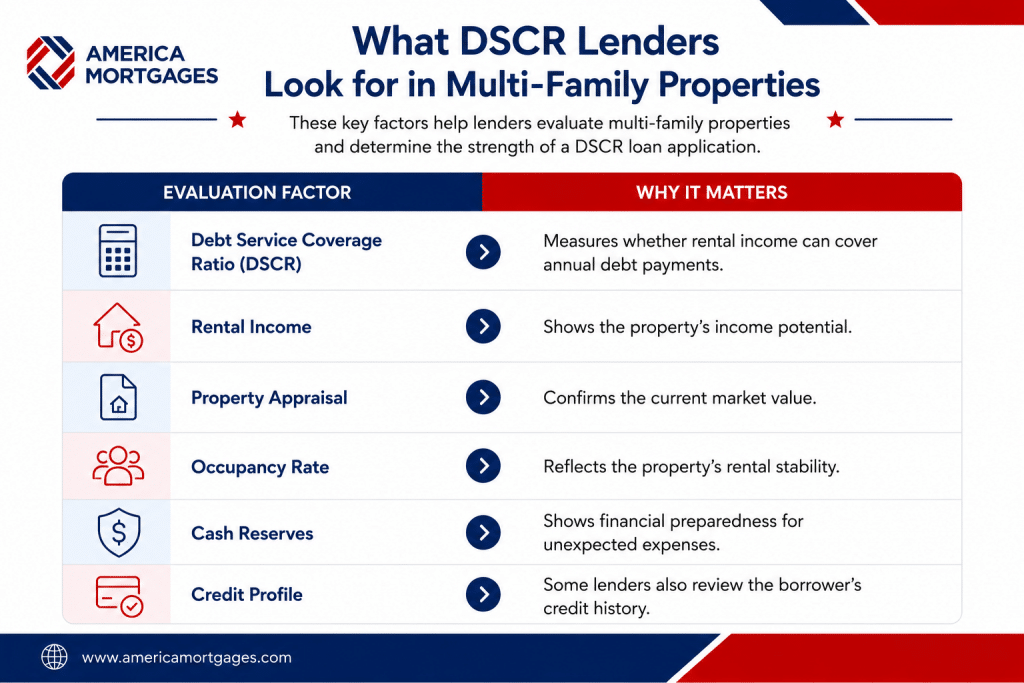
| Review Other Factors | The lender also reviews your credit profile, cash reserves, and down payment. |
| Final Decision | Approval depends on the lender’s minimum DSCR requirement and underwriting guidelines. |
A DSCR of 1.20 means the property earns 20% more income than it needs to cover its annual mortgage payments. In contrast, a DSCR below 1.00 means the property does not generate enough income to cover its debt. However, the minimum DSCR loan requirement varies by lender and loan program.
In addition to the DSCR calculation, lenders also review the property’s condition, credit profile, and available cash reserves. Some lenders may also consider the property’s appraisal and projected rental income before making a final decision. Understanding these requirements can help you prepare before applying. Learn more in the DSCR loan required documents guide. You can also read a DSCR loan term sheet to understand the key loan terms and conditions.
What Financing Options Can You Choose Instead?
If DSCR loans for primary residence are not available, you still have other mortgage options. Each loan has different requirements. The right choice depends on your income, residency status, and property type. This helps you choose financing that fits your needs.
The following financing options may be suitable, depending on your situation:
- Conventional Loans: Best for borrowers with stable employment and standard income documents.
- Bank Statement Loans: A good option for self-employed borrowers who qualify using bank statements.
- Foreign National Mortgages: Designed for non-U.S. residents purchasing eligible U.S. properties.
- U.S. Citizen Abroad Mortgages: Created for U.S. citizens living overseas who want to finance property in the United States.
- Asset Utilization Loans: Allow eligible borrowers to qualify using liquid assets instead of regular employment income.
Unlike a debt service coverage ratio mortgage, these loan programs focus on the borrower’s financial profile instead of the property’s rental income. Lenders may review your employment history, debt-to-income ratio, assets, credit score, and available funds for the down payment. Therefore, each mortgage program has different qualification requirements.
Each mortgage program has different qualification requirements and long-term costs. Therefore, compare your options carefully before applying. If you are still exploring DSCR loans, read pros and cons of DSCR loans to understand where this financing works best. If you plan to build a rental property portfolio in the future, the DSCR loans real estate investors guide explains how this loan program supports real estate investors.
When Should You Consider a DSCR Loan Instead?
You should consider DSCR loans when buying an investment property that will generate rental income. These loans are not designed for primary homes. Instead, DSCR lenders focus on the property’s cash flow when reviewing your loan application.
Long-Term Rental Properties
A debt service coverage ratio mortgage is a good choice for long-term rental properties. Steady rental income can support the mortgage payments. This makes it easier for lenders to assess the property’s ability to cover its debt.
Short-Term Rental Investments
Some investors use DSCR lending to finance eligible vacation homes or short-term rentals. However, rental income must meet the lender’s requirements. Property location and rental history may also affect the loan decision.
Growing a Real Estate Portfolio
Many investors choose DSCR loans when purchasing additional rental properties. This financing option helps expand a real estate portfolio without relying mainly on personal income documents. Each property is usually evaluated on its own cash flow.
Self-Employed Investors
Self-employed investors may benefit from a debt service coverage ratio mortgage if they have non-traditional income. In many cases, lenders place greater importance on the property’s rental income than on employment earnings.
Every DSCR lender has different underwriting guidelines. Therefore, compare loan terms, reserve requirements, and property eligibility before applying. If you are buying a vacation rental, explore DSCR loans for short-term rental properties. This guide explains how these properties may qualify for financing.
It is also important to estimate the property’s expected cash flow before choosing DSCR lending. A stronger ratio can improve financing opportunities and support long-term investment plans. Learn more about how to improve the DSCR ratio to understand the factors that can strengthen a property’s financial profile.
Build Your U.S. Investment Strategy with America Mortgages
Buying a U.S. property starts with choosing the right loan. If a DSCR loan is not the right fit for your primary residence, you still have other financing options. Understanding these options can help you make a better decision.
At America Mortgages, we help foreign nationals and U.S. citizens living abroad find the right mortgage solution. We also explain how DSCR loans work for investment properties and when another loan may be a better choice. Our team keeps the process simple and clear.
If you are ready to buy a U.S. property, America Mortgages is here to help. Contact our team to discuss your mortgage pre-approval and financing needs. Email us at [email protected] or call +1 (845) 583-0830 to speak with an experienced lending specialist. We will help you find the financing solution that best fits your goals.
FAQs
Q1: Are interest rates higher on DSCR loans?
Yes, DSCR loans may have higher interest rates than some traditional mortgages. However, rates vary by lender and loan terms. They may also depend on your credit profile, down payment, property type, and the property’s cash flow.
Q2: Are reserves required for a debt service coverage ratio mortgage?
Yes, many debt service coverage ratio mortgage programs require cash reserves after closing. However, the amount varies by lender. These reserves show that you can continue making payments if rental income or unexpected expenses change.
Q3: Can first-time real estate investors apply for DSCR loans?
Yes, some DSCR lenders allow first-time real estate investors to apply for DSCR loans. However, approval varies by lender. It also depends on the property’s rental income, available cash reserves, and your loan application.
Q4: Can you have multiple DSCR loans at the same time?
Yes, you can have multiple DSCR loans at the same time if you meet the lender’s requirements. Each property is reviewed separately. However, lenders may also evaluate your credit, cash reserves, and the rental income of each investment property.
Q5: Do DSCR loans have prepayment penalties?
Yes, some DSCR loans include prepayment penalties, while others do not. The terms depend on the lender and loan program. Before closing, review your loan agreement carefully so you understand any fees for paying off the mortgage early.