Luxury real estate financed through asset-based lending for high-net-worth investors

The term “hard money” undersells what the world’s most sophisticated investors actually use. Asset-backed real estate financing for HNW and UHNW investors is fast, discreet, and structurally superior to any conventional alternative. America Mortgages delivers it, globally.

A hard money real estate loan for high-net-worth investors is an asset-backed, short-term financing facility secured against the property’s value, not the borrower’s income, credit score, or documentation profile. While “hard money” historically carried associations with high rates and distressed borrowers, in the HNW context it describes the most sophisticated form of private real estate credit: fast, discreet, globally structured, and sized for luxury assets. America Mortgages, backed by Singapore-headquartered Global Mortgage Group (GMG), provides this lending category exclusively for non-resident, expat, and international HNW clients.

The phrase “hard money” was coined in a different era of real estate finance.

It described lenders of last resort, expensive, fast, and accessible only to borrowers who had run out of conventional options. The loan was “hard” because the collateral was real estate. The borrower profile was often distressed.

That definition is outdated. In 2025, the global private credit market has reached approximately $2 trillion in assets (up from $1.75 trillion in 2024), institutional capital from Blackstone, Apollo, and global family offices has transformed the private lending landscape, and the most sophisticated real estate investors in the world: HNW family offices, UHNW individuals, and internationally mobile investors, are using asset-backed lending not as a last resort but as a deliberate, strategic choice.

The real question for a high-net-worth investor is not “should I use hard money?” It is: “Who in the market has the capital relationships, the global network, and the underwriting expertise to structure this correctly for my profile?”

The answer, for international HNW investors requiring U.S. real estate financing, is America Mortgages, backed by the Singapore-headquartered Global Mortgage Group.

  • $2T – Global private credit market size (2025)
  • 94% – DSCR / asset-based loan volume growth YoY (2025, HousingWire)
  • 43% – Commercial loan applications denied by U.S. banks (Q1 2025, FDIC)
  • 68% – Borrowers who select lenders based on closing speed

Hard Money Redefined: The HNW Asset-Based Lending Framework

One-sentence definition: For high-net-worth investors, “hard money” real estate lending is asset-backed private credit that qualifies on property value and LTV alone, making it the only viable U.S. financing route for internationally structured wealth.

What Has Changed in the Hard Money Market

FACTORHARD MONEY: THEN (PRE-2020)HARD MONEY: NOW (2025)
Borrower profileDistressed, last resortSophisticated investors by choice
Capital sourceIndividual private lendersInstitutional private credit, family offices, global funds
Rates12–18%+ (high risk premium)8–12% (competitive; narrowing to bank rates)
Market sizeNiche, informal~$2 trillion globally; institutional infrastructure
HNW adoptionRare; stigmatisedPrimary tool for internationally mobile investors
Regulatory frameworkVariable, inconsistentProfessional lenders with institutional underwriting standards

Why HNW Investors Specifically Choose Asset-Based Lending

For the high-net-worth investor segment, the choice of asset-based lending is almost never driven by credit problems. It is driven by structural incompatibility between how global wealth is held and how U.S. banks underwrite.

  • Wealth held offshore: Trusts, BVI companies, family limited partnerships, and international holding structures don’t produce W-2s or U.S. tax returns, the primary documents conventional banks require
  • Foreign income structures: Business owners, royalty recipients, overseas dividend income, legitimate and substantial, but unprocessable by most U.S. underwriters
  • Speed requirements: Trophy property markets move in days. Bank approvals move in months. The incompatibility is absolute.
  • Discretion: Not every UHNW individual wants their financial position assessed by a U.S. bank’s credit department. Asset-based lending, particularly through GMG’s Singapore-based platform, offers a higher level of professional discretion.
  • No AUM requirements: Unlike private bank margin facilities, GMG’s asset-based programs do not require AUM to be deposited with the lender. Financing is based entirely on the underlying U.S. property.

“We really specialise in HNW loans of USD 3 million and up, and often in complex structures, with assets held in a trust perhaps, or a BVI or another vehicle. None of these loans require AUM to be vested with institutions in the US; it can be entirely based on overseas wealth and the underlying property acquired.”
— Robert Chadwick, CEO, America Mortgages — Hubbis Forum, Singapore

If you’re a foreign national or expat looking to access U.S. real estate financing, you can speak directly with our team at America Mortgages.

America Mortgages’ Hard Money / Asset-Based Programs for HNW Clients

PROGRAM 1: Pure Asset-Based Bridge

No income verification. No SSN. No tax returns. Secured solely against the U.S. property. Available for foreign nationals, U.S. expats, and offshore entity borrowers. Minimum property value $500,000. Close in 8–21 days.

PROGRAM 2: No-Payment Bridge

Interest accrues and settles at maturity. Zero monthly cashflow obligation during the loan term. For HNW clients prioritising capital preservation and maximum flexibility. Specific qualifying criteria apply.

PROGRAM 3: Interest-Only Bridge

Monthly interest payments; principal returns as a bullet at maturity. Standard 12–36 month term. Most common HNW structure. Interest-only preserves capital while providing full access to property equity.

PROGRAM 4: HNW Bespoke Program

For transactions above $10M requiring bespoke structuring. Custom terms, multiple lender sources, cross-collateral options. GMG’s global capital network is fully deployed for marquee transactions.

Rates and Costs: What HNW Borrowers Actually Pay

Transparency in cost disclosure is a core principle at America Mortgages. All fees and rates are disclosed in full within three days of formal application, with no surprises at closing.

COST COMPONENTTYPICAL RANGE (HNW)NOTES
Interest rate8–12% per annumVaries by LTV, term, property type, and exit strength
Origination / arrangement fee1–3%Paid at closing or rolled into loan at qualifying LTV
Appraisal / valuation$1,500–$5,000+Higher for luxury and commercial; specialist valuers
Legal fees$5,000–$15,000+Both sides; varies by state, property, and complexity
Extension fee0.5–1.5%Only if bridge extends beyond term

THE RATE IN CONTEXT
On a $10 million Beverly Hills estate with a 15% annual appreciation trajectory, a 10% bridge loan for 18 months costs approximately $1.5M in interest. The asset has appreciated approximately $2.25M over the same period. The bridge loan accelerated an acquisition that created $750K in net benefit versus waiting for conventional financing, which may have been unavailable regardless.

Myths About Hard Money Lending in the HNW Context

MYTH: “Hard money is only for flippers and developers”

America Mortgages’ HNW client base includes Singapore family offices, Hong Kong business families, UAE sovereign-adjacent investors, and U.S. expats based in London. These are not house flippers. These are globally mobile investors using the most efficient capital tool available for their specific profile.

MYTH: “Rates are always double-digit and prohibitive”

National average first-trust deed bridge loan rates in 2025 are between 8.5% and 11.2% (ATTOM Data Solutions). For HNW borrowers with strong LTV positions and credible exits, America Mortgages’ rates are at the competitive end of this range and frequently below it.

MYTH: “Hard money lenders are not sophisticated enough for complex HNW deals”

GMG’s team includes former senior private bankers, institutional credit officers, and cross-border real estate specialists who have collectively structured transactions across 57 countries. The firm was specifically built for the complexity that HNW cross-border transactions require.

Frequently Asked Questions

Q1: What is a hard money real estate loan?

A: A hard money real estate loan is a short-term, asset-backed financing facility secured against the property’s value, approved primarily on LTV and exit strategy rather than borrower income or credit history. For HNW investors, it is the standard tool for speed-sensitive acquisitions, equity release from offshore-held properties, and situations where conventional U.S. lenders cannot serve the borrower’s documentation profile.

Q2: How are hard money rates determined for luxury properties?

A: Rates are driven by LTV ratio, property quality and location, exit strategy clarity, loan term, and deal presentation. For prime U.S. luxury real estate at conservative LTV (below 55%), America Mortgages accesses the most competitive tier of private lending pricing. The national average first-trust deed bridge rate in 2025 is 8.5–11.2%.

Q3: Why does America Mortgages have better rates than domestic hard money lenders?

A: America Mortgages’ parent company GMG is headquartered in Singapore, providing access to capital sources, international family offices, Singapore-based credit funds, and offshore capital relationships, that domestic U.S. lenders cannot access. This broader capital pool creates pricing competition that benefits borrowers.

Q4: Can I use a hard money loan to refinance an existing U.S. property I hold through a foreign entity?

A: Yes. America Mortgages accommodates foreign entities: BVI companies, Cayman structures, offshore trusts, and family limited partnerships, as borrowers. This is one of GMG’s core competencies and a specific differentiator from domestic-only lenders.


Real estate investor evaluating property opportunities despite rising mortgage rates in 2026

What You Will Learn

  • Why mortgage rates are rising again in 2026
  • Why buyers are still active despite higher rates
  • What this means for U.S. residents, expats, and foreign national investors
  • How financing strategy is evolving in this market

Mortgage Rates Are Rising—But Buyer Demand Hasn’t Slowed

Mortgage rates have moved back up to approximately 6.3% in 2026, reversing a short-term decline earlier in the year. While this would typically slow demand, current market behavior is telling a different story. Buyers are still entering the market, and transaction activity is holding firm.

This reflects a broader shift in how real estate decisions are being made. Instead of waiting for “perfect” rates, buyers are prioritizing timing, asset quality, and long-term positioning. The reality is that demand never disappeared, it was temporarily delayed by uncertainty and limited inventory.

What the Data Is Telling Us

Recent market signals reinforce that activity is increasing, not declining. Buyers are adapting to the rate environment rather than exiting the market.

  • Mortgage purchase applications are up significantly year-over-year
  • Rates are still lower compared to peaks seen in the previous year
  • Housing inventory is improving, creating more transaction opportunities

This combination is creating a more functional market, where deals are happening again, not because rates are low, but because conditions are becoming workable.

Why Buyers Are Still Moving Forward

The key shift in 2026 is behavioral. Buyers, particularly experienced and well-capitalized ones, are no longer trying to perfectly time interest rates. Instead, they are making decisions based on access to opportunities and long-term value.

At a structural level, today’s rates are not historically extreme, they only feel elevated relative to the unusually low-rate environment of 2020–2021. As the market normalizes, both buyers and sellers are recalibrating expectations. This is allowing transactions to move forward again.

There is also a growing recognition that waiting carries its own cost. If rates decline, competition increases and pricing pressure follows. If rates rise further, borrowing becomes more expensive. In both scenarios, inaction can lead to missed opportunities.

How Different Borrowers Are Responding

Different borrower profiles are responding to this market in distinct ways, particularly when it comes to financing strategy.

  • U.S. residents are still using conventional financing but are becoming more rate-sensitive and timing-focused
  • U.S. expats continue to face documentation challenges, especially around income verification under standard underwriting guidelines
  • Foreign nationals are increasingly constrained by traditional bank requirements around credit history, tax returns, and U.S. financial presence

For globally mobile borrowers, the challenge is not just the rate environment, it is access to financing that aligns with how their wealth is structured.

The Financing Shift Happening in 2026

As rates rise and banks maintain strict underwriting guidelines, a clear shift is taking place toward alternative lending solutions. This is particularly relevant for high-net-worth and international borrowers who require flexibility, speed, and cross-border understanding.

Asset-based lending has become a critical tool in this environment. Instead of focusing on income documentation, these structures rely on the value of the property and the overall strength of the asset. This allows transactions to move forward even when conventional requirements cannot be met.

Speed is also becoming a decisive factor. In competitive real estate markets, the ability to close in weeks instead of months can determine whether a deal is secured or lost. This is where traditional lenders often fall short, and where specialized financing platforms provide a clear advantage.

Strategic Insight: This Is Not a “Wait-and-See” Market

The current market environment is not defined by low rates, it is defined by adaptation. Buyers who understand this are continuing to transact, while those waiting for ideal conditions risk missing the cycle entirely.

  • Demand remains structurally strong
  • Inventory is improving, creating opportunity
  • Financing strategies are evolving beyond traditional models

For serious investors, the focus is no longer just on interest rates. It is on execution, access to capital, and the ability to act when the right asset becomes available.

America Mortgages: The Financing Solution When Traditional Banks Cannot Deliver

For high-net-worth and globally mobile investors, the limitation is rarely capital, it is access to financing that understands how that capital is structured. America Mortgages, backed by Global Mortgage Group (GMG) in Singapore, provides asset-based lending solutions designed specifically for foreign nationals, U.S. expats, and HNW borrowers who do not fit conventional underwriting guidelines. When speed, discretion, and execution matter, our platform enables transactions that traditional lenders simply cannot support within the required timeframe.

If you are evaluating a time-sensitive acquisition, equity release, or bridge financing opportunity, our team can provide indicative terms within 24–48 hours. You can get started and reach out to our team at [email protected] or call us directly at +1 (786) 220-5555 to learn more.

Summary

Mortgage rates rising again in 2026 has not stopped the market, it has changed how it operates. Buyers are no longer waiting for ideal conditions. Instead, they are adjusting their strategies to work within the current environment.

For U.S. residents, this means being more tactical with timing. For U.S. expats and foreign nationals, it increasingly means exploring financing solutions that align with global income and asset structures. Across all segments, the common theme is clear: the ability to move quickly and structure financing effectively is becoming more important than marginal rate differences.

In a market where opportunity windows are shorter and competition can return quickly, execution matters more than ever.

Frequently Asked Questions

Q1: Why are buyers still active despite rising mortgage rates?

A: Buyers recognize that waiting can be costly, and current rates—while higher than recent years—are still workable in a long-term investment context.

Q2: Are mortgage rates expected to decrease soon?

A: Rates may fluctuate based on macroeconomic conditions, but volatility is expected to continue rather than a sharp decline.

Q3: What challenges do foreign national buyers face in this market?

A: Traditional U.S. lenders require documentation such as a U.S. Social Security Number, domestic credit history, and tax returns. For foreign nationals whose wealth is structured across offshore entities, international income sources, or family offices, these requirements often do not align with how their finances are actually held and reported. As a result, many qualified global investors are declined by conventional banks despite having substantial assets.

Q4: What financing strategies are becoming more common in 2026?

A: Flexible solutions such as asset-based lending are increasingly used to enable faster closings and accommodate complex borrower profiles.

Ultra-high-net-worth investor securing bridge loan financing for luxury real estate acquisition

For ultra-high-net-worth investors acquiring Beverly Hills estates, Manhattan penthouses, and Miami waterfront properties, speed is not a luxury. It is the deal. America Mortgages closes in 8–21 days.

A UHNW real estate bridge loan is a short-term, asset-backed facility secured against a high-value property, typically a luxury estate, penthouse, or trophy commercial asset, where the loan is approved on the property’s value and LTV rather than the borrower’s income or citizenship. For ultra-high-net-worth investors, bridge loans are the primary mechanism for moving at the speed of competitive real estate markets. America Mortgages, backed by Singapore-headquartered Global Mortgage Group (GMG), closes these facilities in as few as 8 business days.

In New York’s trophy real estate market, a Billionaires’ Row penthouse does not wait 60 days for a bank credit committee.

In Beverly Hills, an estate that comes to market discreetly, with three qualified buyers competing, closes in the time it takes to arrange financing, not the time it takes to underwrite a conventional mortgage.

In Miami’s ultra-prime waterfront corridor, the seller’s attorney expects certainty of execution. A pre-approval letter from a domestic lender does not provide certainty. A funded commitment from America Mortgages does.

This is the reality of UHNW real estate transactions in America’s most competitive luxury markets. And it is exactly why ultra-high-net-worth investors, globally mobile, internationally structured, and operating across time zones, turn to asset-backed bridge financing as their primary acquisition tool.

  • $112M – Largest single GMG bridge close (Thailand hotel portfolio)
  • 11 – Bridge loans closed in a single month (Feb 2025)
  • <14 days – Average drawdown time, GMG bridge portfolio
  • $3M+ – HNW loan specialty threshold

What Makes Trophy Property Bridge Loans Different

Not all bridge loans are the same. UHNW trophy property bridge loans operate in a different category, different assets, different borrower profiles, different lender requirements, and different capital sources.

FACTORSTANDARD BRIDGE LOANUHNW TROPHY PROPERTY BRIDGE
Loan size$500K – $3M$3M – $100M+
Property typeResidential, light commercialLuxury estates, penthouses, trophy commercial, hotel portfolios
Borrower profileDomestic investors, documented incomeInternational HNW/UHNW, family offices, offshore structures
Capital sourceDomestic private lendersInternational private credit, family office capital, Singapore-based funds
UnderwritingProperty + basic borrower reviewAsset-only; complex offshore structures accommodated
Discretion requirementStandardHighest level; not all clients want their positions disclosed
Closing speed14–30 days8–21 days

The Five Primary UHNW Use Cases

USE CASE 1: Competitive Acquisition

Acquiring a trophy asset in a multi-offer environment. Speed of financing provides decisive advantage. Bank financing timelines (45–90 days) are incompatible with the deal pace. America Mortgages provides committed funding in 8–21 days.

USE CASE 2: Equity Release Without Sale

A UHNW client holds a $12M Malibu estate outright. They need $5M for a co-investment opportunity closing in 30 days. Selling the estate takes months. An asset-based facility releases the equity while the property is retained.

USE CASE 3: Pre-Sale Liquidity

Property is listed for sale at $20M with an expected 4-month sale process. The owner needs capital immediately. A bridge against the listing value provides liquidity; the sale repays the bridge.

USE CASE 4: Portfolio Restructure

Multiple high-value U.S. properties with different financing structures. A cross-collateral bridge facility consolidates the exposure at a single relationship while permanent financing is arranged at optimal terms.

USE CASE 5: Offshore Borrower Structure

A family office holds a Manhattan penthouse through a BVI company. No U.S. income, no SSN, no bank will lend. An asset-based facility from America Mortgages accommodates the offshore entity structure with full discretion.

GMG’s Landmark Transactions: Proof of Execution

The $112 Million Thailand Hotel Portfolio Bridge

In one of the largest cross-border real estate bridge loans in Southeast Asian market history, Global Mortgage Group closed a $112 million facility secured against a portfolio of hotel assets in Thailand. This transaction required capital depth to fund at scale without domestic institutional constraints, cross-border expertise to navigate Thai corporate and legal structures, hospitality asset underwriting capability that residential-focused lenders lack, and the Singapore-based network to access offshore capital at the required scale.

No domestic U.S. bridge lender could have executed this transaction. GMG could, because of its Singapore headquarters, its international capital relationships, and its institutional cross-border underwriting capability.

The Beverly Hills Equity Release

An Indonesian business leader held a Beverly Hills estate as a corporate retreat and sought to unlock equity ahead of listing the property for sale. His Swiss private bank referred him directly to America Mortgages’ Singapore office. Result: an 18-month bridge loan with no monthly payments and a competitive single-digit interest rate, exceptional terms in the U.S. asset-based lending space. The referral from a Swiss private bank was not incidental, it reflects the position GMG holds in the global private banking ecosystem as the preferred specialist for cross-border real estate financing that private banks cannot themselves provide.

GMG is already embedded in the financial world of UHNW clients in Hong Kong, Singapore, Jakarta, and Tokyo, through their private bankers, their family office advisors, and their preferred lenders.
— Global Mortgage Group, GMG.asia

Luxury Real Estate Markets: Where UHNW Bridge Loans Are Most Active

MARKETKEY PROPERTY TYPESTYPICAL PRICE RANGEGMG CAPABILITY
Manhattan, NYCPenthouses, Billionaires’ Row, Tribeca lofts$5M – $50M+Specialty; close from 10 days
Beverly Hills / Bel AirEstates, Good Class equivalents, hills properties$4M – $70MCore market; multiple closed transactions
Miami WaterfrontOceanfront estates, penthouse condominiums$3M – $30MFast-growing; 8-day close achieved
Malibu / Carbon BeachOceanfront estates, Billionaires’ Beach$8M – $80MUltra-prime; cross-collateral available
San Francisco / Pacific HeightsVictorian estates, Pacific Heights mansions$4M – $25MActive; Hong Kong and Singapore buyer concentration
HawaiiOceanfront estates, resort compounds$3M – $20MSingapore family office concentration

Qualifying for a UHNW Bridge Loan: The Asset-First Framework

America Mortgages’ qualification for UHNW bridge loans centres entirely on the asset and exit strategy, not the borrower’s income, citizenship, or credit profile.

  • Property assessment
    Independent valuation of the subject property. For UHNW trophy assets, GMG coordinates specialist valuers with luxury market expertise.
  • LTV determination
    Loan amount as a percentage of appraised value. GMG’s UHNW programs accommodate LTV up to 65–70% on prime U.S. residential and commercial assets.
  • Exit strategy assessment
    Sale of property, refinance into conventional or private banking facility, portfolio liquidity event. Must be credible and within the loan term.
  • KYC and AML compliance
    Full identity verification and source of funds documentation. GMG’s Singapore-based compliance infrastructure handles complex offshore structures.
  • Indicative terms
    Delivered within 24–48 hours of complete initial submission. GMG provides comparison across multiple capital sources where applicable.
  • Legal and close
    U.S. legal documentation prepared and mortgage registered. Funds disbursed. Timeline: 8–21 business days from engagement.

Frequently Asked Questions

Q1: What is the largest bridge loan America Mortgages and GMG have closed?

A: Global Mortgage Group closed a $112 million asset-backed bridge loan against a portfolio of hotel assets in Thailand, one of the largest cross-border real estate bridge transactions in Southeast Asian market history. For U.S. properties, America Mortgages has closed transactions above $20 million.

Q2: Can a family office borrow through America Mortgages without disclosing the beneficial owner?

A: America Mortgages and GMG maintain the highest standards of discretion consistent with all applicable KYC and AML regulations. GMG’s Singapore-based compliance infrastructure is experienced in structuring transactions for family offices with appropriate confidentiality protections.

Q3: What U.S. states does America Mortgages operate in?

A: America Mortgages operates in California, New York, Florida, and nationwide across all major U.S. luxury real estate markets. All property types are accepted.

Q4: Can bridge loans be extended if the exit takes longer than expected?

A: Yes. Extension options are built into most America Mortgages bridge loan structures. Extensions are subject to property reappraisal and extension fees. GMG proactively manages the exit process to minimise the need for extensions.

High-net-worth investor reviewing asset-based real estate loan opportunities for luxury property acquisition

No W-2. No tax returns. No SSN required. Pure asset-based financing for HNW and UHNW investors who move at the speed of opportunity — backed by the global capital network of GMG, headquartered in Singapore.

An asset-based real estate loan is short-term financing secured exclusively against the value of the property, not the borrower’s income, credit score, W-2, or tax returns. For high-net-worth and ultra-high-net-worth investors, it is the primary tool for moving quickly on luxury acquisitions, releasing equity from trophy assets, and accessing capital that conventional banks cannot provide within acceptable timeframes. America Mortgages and its parent company Global Mortgage Group (GMG) — headquartered in Singapore — close these facilities in as few as 8 business days.

There is a financing problem that affects some of the wealthiest real estate investors in the world.

They own trophy properties. Their net worth is undisputed. Their acquisition targets are clear. But when they approach a conventional American bank for financing, the answer is the same: show us your W-2, your tax returns, your U.S. Social Security Number, your domestic credit history.

For globally mobile high-net-worth individuals, whose wealth is structured through offshore entities, family offices, trusts, and international holding companies, this documentation simply does not exist in the form banks require. Not because the wealth isn’t real. Because the wealth is global.

Asset-based real estate lending exists precisely for this borrower. It is not a niche product or a product of last resort. It is the premier financing mechanism for sophisticated HNW and UHNW investors who hold significant property assets and need capital at the speed their strategies demand.

America Mortgages, a wholly-owned subsidiary of Global Mortgage Group (GMG), headquartered in Singapore, the financial capital of Asia, has built the most globally connected asset-based real estate lending platform available to international investors. This is the definitive guide to how it works, who it serves, and why the Singapore advantage changes everything.

  • $1.5B+ — Funded by GMG since inception
  • 57 — Countries of borrower origin served
  • 97% — Approval rate for qualified applications
  • 8 Days — Minimum days to close a bridge loan
  • $480M+ — Funded by America Mortgages in one year

What Is Asset-Based Real Estate Lending?

One-sentence definition: An asset-based real estate loan is a financing structure where the property’s value, not the borrower’s income or creditworthiness, is the primary basis for approval, terms, and loan sizing.

The lender’s central question is not “can this borrower prove sufficient income?” but “does this asset provide sufficient security?” If the loan-to-value ratio is conservative, the asset is strong, and the exit strategy is credible, the deal gets done, regardless of the borrower’s nationality, income structure, or documentation profile.

This matters enormously for the HNW investor segment. Consider:

  • A Singapore family office holding a $6M Manhattan condominium outright, wanting to release $3M for a new acquisition
  • An Indonesian entrepreneur who has owned a Beverly Hills estate for 15 years, wanting to unlock equity before listing it for sale
  • A Hong Kong business family with a Tribeca loft worth $4.5M and no qualifying U.S. income structure
  • A UAE-based investor seeking bridge financing to close a Miami waterfront property in under three weeks

In every scenario, the conventional bank says no. The asset-based lender — specifically, America Mortgages and GMG — says yes.

Asset-Based vs Hard Money vs Bridge Loan: Understanding the Terminology

These terms are often used interchangeably in the market, but precision matters for HNW borrowers who need to understand what they’re accessing.

TERMDEFINITIONHNW RELEVANCE
Asset-based loanFinancing qualified on the asset’s value, not borrower income. Broad term covering bridge, hard money, and private credit.Primary qualification framework for complex HNW wealth structures
Hard money loanShort-term, high-LTV, property-secured loan. Originally associated with distressed borrowers; now mainstream private credit.Less applicable to UHNW; connotations don’t fit the profile. America Mortgages uses asset-based lending language for HNW clients.
Bridge loanShort-term financing (12–36 months) designed to bridge a specific gap — acquisition before sale, equity release before refinance, or speed-sensitive closing.Most common structure for HNW real estate transactions through America Mortgages
Private creditNon-bank lending deployed by private capital providers, family offices, and credit funds. Growing to ~$2 trillion by 2025.The institutional framework within which GMG operates its HNW lending

MARKET CONTEXT
The global private credit market reached approximately $2 trillion in assets by 2025, up from $1.75 trillion in 2024, driven by institutional investors moving capital into secured real estate debt as banks maintain tighter credit standards. (Source: American Association of Private Lenders, HousingWire) This is the market in which America Mortgages and GMG operate — and which gives them access to capital sources unavailable to domestic-only lenders.

Why HNW Investors Cannot Use Conventional Bank Financing

Understanding the specific barriers that push HNW investors toward asset-based lending is essential for choosing the right structure. The barriers are institutional, not individual.

BARRIER 1: Income Documentation

U.S. banks require W-2 income, tax returns, and U.S. Social Security Numbers. HNW wealth structured through offshore entities, trusts, or holding companies produces none of these documents in a U.S.-readable format.

BARRIER 2: TDSR and Debt-to-Income

Conventional mortgages apply strict debt-to-income ratios. An HNWI with $50M in assets but $200K in documented personal salary appears under-qualified. The system measures the wrong variable.

BARRIER 3: Timeline

U.S. bank mortgage approvals take 45–90 days. Luxury real estate deals, particularly competitive acquisitions, auction purchases, or time-sensitive equity events, do not wait 90 days. The deal closes or it doesn’t.

BARRIER 4: Foreign Income

Banks are designed for domestic borrowers. Foreign income — particularly from complex structures, multiple currencies, or jurisdictions where U.S. lenders have no verification infrastructure — is routinely declined.

The America Mortgages and GMG Difference: Singapore Advantage

America Mortgages is not a domestic U.S. lender that occasionally handles international clients. It is a wholly-owned subsidiary of Global Mortgage Group (GMG), headquartered in Singapore, the financial capital of Asia and the pre-eminent global wealth management hub for internationally mobile HNW capital.

This distinction is not cosmetic. It is the structural source of competitive advantage that no U.S.-headquartered lender can replicate.

When certainty, speed, and execution are non-negotiable — our team delivers outcomes that traditional banks and conventional mortgage lenders simply cannot match. Global wealth requires global solutions.
— Robert Chadwick, CEO, America Mortgages

What the Singapore Headquarters Means in Practice

  • Capital relationships. Singapore is home to thousands of family offices, private banks, and institutional investors with deep U.S. real estate exposure. GMG’s position at the centre of this ecosystem provides access to capital sources that U.S.-only lenders cannot reach.
  • Borrower relationships. When a UHNW client in Hong Kong, Jakarta, or Tokyo needs a U.S. bridge loan, GMG is already embedded in their financial world — through their private bankers, family office advisors, and preferred lenders.
  • Cross-border underwriting. GMG’s underwriting team understands offshore structures, foreign currency income, trust-held assets, and BVI holding companies. This is expertise built specifically for the HNW international investor.
  • Discretion. Singapore’s world-class financial infrastructure includes the same standards of confidentiality and client protection that HNW individuals expect from their private bankers. Not every borrower wants their U.S. financing discussed openly.
  • Speed. GMG’s February 2025 monthly funding report recorded 11 closed bridge loan transactions in a single month, across Singapore, the U.S., Australia, London, and Thailand, with an average drawdown under 14 business days.

Qualifying Criteria: What Asset-Based Lenders Actually Assess

Asset-based lending replaces the conventional income-first underwriting framework with a property-first framework. The qualification criteria are entirely different.

FACTORCONVENTIONAL BANKAMERICA MORTGAGES (ASSET-BASED)
Primary qualificationW-2 income, tax returns, DTI ratioProperty value and LTV ratio
Income documentationMandatory (2 years minimum)Not required
U.S. Social Security NumberRequiredNot required
U.S. credit historyRequired (620+ FICO minimum)Not required in most programs
Foreign income acceptanceRarely; limited documentation typesStandard; all structures accepted
Offshore entity as borrowerDeclined by most banksAccepted; GMG has specific expertise
Approval timeline45–90 days24–48 hours (indicative); 8–21 days (close)
Minimum property valueVaries; market-dependent$500,000 (America Mortgages minimum)
HNW specialtyRare; domestic underwriting focusCore business; USD 3M+ specialty

Loan Structures Available Through America Mortgages

Interest-Only Bridge Loan

The most common structure for HNW acquisitions. Interest-only payments preserve capital during the loan term. Principal returns as a bullet payment at maturity or upon the exit event (sale or refinance). Typical terms: 12–36 months.

No-Monthly-Payment Bridge Loan

Available for qualifying profiles: interest accrues and is settled at maturity alongside principal. Maximum capital preservation during the bridge period. Well-suited for renovation projects or transitions where cashflow management is critical.

Equity Release / Cash-Out Refinance

For HNW investors who own U.S. property outright or with significant equity. Access up to a defined LTV of the property’s value without selling. Commonly used to fund co-investments, business capital requirements, or new acquisitions.

Cross-Collateral Facility

Multiple U.S. properties pledged as security for a single facility. Maximises capital access and frequently achieves better pricing by reducing the blended LTV across the portfolio. Ideal for investors with multiple luxury U.S. assets.

The Private Credit Market: Why Now Is the Optimal Moment

Several structural factors make 2025 the strongest environment in recent years for HNW asset-based lending.

  • The private credit market reached approximately $2 trillion in assets by 2025, nearly doubling over five years, as institutional capital moved into secured real estate debt
  • DSCR loan volumes grew 94% year-over-year through late 2025, reflecting the mainstream acceptance of asset-based underwriting frameworks (HousingWire)
  • U.S. banks denied 43% of commercial loan applications in Q1 2025 (FDIC), creating a structural gap that private lenders are filling
  • 68% of borrowers select their lender based primarily on closing speed, an area where asset-based lenders like America Mortgages have an absolute structural advantage over banks
  • Alternative asset managers — including Blackstone and Apollo — have invested billions into private credit, providing deep liquidity at the institutional level that flows through to competitive borrower pricing

Common Myths About Asset-Based Lending for HNW Investors

MYTH: “Asset-based loans are only for distressed borrowers”

The majority of America Mortgages and GMG’s HNW clients are among the most sophisticated investors in the world. They choose asset-based lending for speed, flexibility, and access — not because they have no other options.

MYTH: “The rates are prohibitive”

At the HNW level — transactions of $3M–$50M+ — asset-based lending rates are meaningfully competitive with what these borrowers would pay through private bank margin facilities or Lombard loans. On a Beverly Hills estate generating a 15%+ appreciation trajectory, 9% for 18 months is excellent capital economics.

MYTH: “You need to be a U.S. resident to qualify”

America Mortgages was specifically built for foreign nationals and U.S. expats. Non-residents are the core client base, not an exception.

MISTAKE: Approaching U.S. banks first

Most HNW international investors spend months on bank applications before discovering asset-based lending. The opportunity cost of those months, in deferred acquisitions, missed equity release, or lost deal windows, is typically far greater than any rate premium on the asset-based loan.

MISTAKE: Underestimating the exit strategy requirement

Asset-based lenders accept the property as qualification, but they still need a credible exit. Sale of the property, refinance into conventional lending, or a documented liquidity event. The exit must be defined and realistic before closing.

Frequently Asked QuestionsQ

Q1: What is an asset-based real estate loan?

A: An asset-based real estate loan is short-term financing secured against the value of a property, with qualification based on the asset’s LTV rather than the borrower’s income, credit score, or citizenship. America Mortgages specialises in this structure for HNW and UHNW investors globally.

Q2: How quickly can America Mortgages close an asset-based loan?

A: America Mortgages has closed asset-based bridge loans in as few as 8 business days. The standard timeline for a well-prepared application is 10–21 business days, depending on the property type, jurisdiction, and legal complexity. Indicative terms are delivered within 24–48 hours of initial enquiry.

Q3: Do I need a U.S. Social Security Number or tax returns?

A: No. America Mortgages’ asset-based lending programs do not require a U.S. Social Security Number, W-2, tax returns, or domestic credit history. Qualification is based on the property’s value, LTV, and exit strategy.

Q4: What is the minimum property value for an America Mortgages asset-based loan?

A: The minimum property value is $500,000. America Mortgages specialises in HNW transactions, with particular expertise in loans of $3 million and above, including complex structures held through trusts, BVI companies, and international holding vehicles.

Q5: Why is GMG headquartered in Singapore?

A: Singapore is the pre-eminent financial capital of Asia and hosts the world’s highest concentration of family offices, private banks, and internationally mobile HNW capital relative to its size. GMG’s Singapore headquarters provides direct access to the capital sources and borrower relationships that define the global HNW real estate financing market.

Q6: Can a foreign national use an offshore entity (trust, BVI, LLC) to borrow?

A: Yes. GMG and America Mortgages have specific expertise in structuring asset-based loans for borrowers whose wealth is held through offshore entities, family trusts, and international holding companies. This is one of the firm’s core competencies and a key differentiator from domestic U.S. lenders.

Rent or Buy Property in the U.S. for student housing

What You Will Learn

  • Whether buying a home for a college student is financially smarter than renting
  • How to evaluate this decision as a long-term real estate investment
  • Key risks, tax implications, and return potential
  • Mortgage options for U.S. residents, expats, and foreign national buyers
  • How to structure the purchase strategically with America Mortgages

Is Buying a Home for Your College Student a Smart Investment or Just an Expensive Commitment?

The cost of college housing continues to rise, making it one of the largest non-tuition expenses families face. According to the College Board, average annual room and board costs exceed $13,000 at many institutions, and these costs typically increase each year. Over a four-year period, this translates into a substantial financial outflow that builds no long-term value.

This has led many parents to consider a different approach: buying a home for their college student instead of renting. At first glance, this strategy appears to convert a recurring expense into an asset. However, this decision should not be driven by emotion or convenience, it must be evaluated as a real estate investment with both upside and risk.

What Are the Financial Advantages of Buying Instead of Renting for College Housing?

One of the most compelling reasons to buy is the opportunity to build equity instead of paying rent. Mortgage payments gradually reduce the loan principal, allowing homeowners to accumulate wealth over time. Research published by the Federal Reserve highlights that homeownership remains one of the primary drivers of long-term wealth accumulation in the United States.

Another key advantage is the potential for rental income. In many college towns, housing demand is consistently high due to steady student populations. This creates an opportunity for parents to offset mortgage costs by renting rooms to other students. Academic research on student housing markets has shown that university-adjacent properties often maintain stable occupancy rates, supporting consistent rental demand.

Additionally, property appreciation can further enhance returns. While real estate markets fluctuate, long-term data from organizations like the National Association of Realtors (NAR) indicates that property values tend to rise over extended periods, particularly in areas with strong population and institutional demand such as college towns.

When Does Buying a Home for a College Student Actually Make Financial Sense?

Buying makes the most sense when approached with a long-term perspective. Real estate transactions involve significant upfront and exit costs, including closing fees and agent commissions. Studies in real estate finance commonly reference a minimum holding period of five years as a benchmark for overcoming these costs and achieving net financial benefit.

Location is another critical factor. Properties close to campus not only improve student convenience but also increase long-term rental desirability. Research in higher education housing trends suggests that proximity to campus positively influences both student engagement and housing demand, making such properties more resilient investments.

The strategy becomes even stronger when the property can generate income. Renting to roommates can reduce monthly expenses and improve overall return on investment. However, this also introduces responsibilities such as property maintenance, tenant management, and regulatory compliance, which must be carefully considered before proceeding.

What Risks Should Parents Carefully Evaluate Before Buying?

While the financial upside is appealing, several risks must be addressed. One of the most significant is the short-term ownership risk. Mortgage structures front-load interest payments, meaning that during the early years, a larger portion of monthly payments goes toward interest rather than equity. This can reduce financial efficiency if the property is sold too soon.

Another concern is property management. Managing a rental property, especially from a distance, can be complex. Maintenance issues, tenant turnover, and unexpected repairs can impact profitability. Research from the Urban Institute highlights that landlord responsibilities and operational costs are often underestimated by first-time property investors.

Market volatility is also a factor. Although long-term trends favor appreciation, short-term fluctuations can affect property values. This is particularly relevant if the investment horizon is limited to the duration of a college program. Without sufficient time in the market, gains may not materialize as expected.

How Should You Evaluate This Decision as a Real Estate Investment?

The most effective way to approach this decision is to treat it strictly as an investment, not just a housing solution. This means analyzing total costs, potential income, and long-term value creation. A structured evaluation should consider the full financial picture rather than focusing solely on monthly payments.

Key considerations include:

  • Total cost of ownership versus total rent avoided
  • Potential rental income and occupancy stability
  • Expected appreciation based on local market conditions

Beyond numbers, it is equally important to define a clear exit strategy. Whether the plan is to sell after graduation, convert the property into a long-term rental, or retain it as a secondary home, having a defined objective helps guide smarter financial decisions.

How Can America Mortgages Help You Execute This Strategy Successfully?

While the concept of buying a home for a college student is straightforward, structuring the financing correctly is where most families face challenges. This is especially true when dealing with investment property guidelines, income documentation, and eligibility criteria.

At America Mortgages, we specialize in helping clients navigate complex scenarios with clarity and precision:

For U.S. residents, we provide financing solutions for second homes and investment properties, ensuring alignment with long-term financial goals while meeting underwriting guidelines.

For U.S. expats, we offer tailored mortgage programs that accommodate foreign income while requiring U.S. tax returns, making it possible to invest in U.S. real estate from abroad.

For foreign national buyers, we design loan structures based on international income, assets, and alternative credit profiles, opening access to U.S. real estate markets without traditional barriers.

Our role is not just to provide financing, but to help you evaluate whether this strategy truly works for your situation, and then structure it in a way that maximizes both approval success and long-term returns. Email us now or call us directly to learn more.

Summary

Buying a home for your college student can be a powerful wealth-building strategy, but only when approached with the discipline of a real estate investor. The decision should be based on long-term holding potential, location strength, and realistic financial projections rather than short-term convenience.

When structured correctly, this approach can reduce housing costs, generate rental income, and create long-term equity. However, without proper planning, it can also introduce unnecessary financial and operational risks.

The difference lies in how well the investment is evaluated and financed, and that’s where expert guidance becomes essential.

FAQs

Q1: Is buying a home for a college student always better than renting?

A: Not always. It depends on the length of ownership, local market conditions, and the ability to offset costs through rental income. Short-term ownership may favor renting.

Q2: How long should I plan to hold the property?

A: Most real estate experts recommend at least five years to offset transaction costs and benefit from equity growth and appreciation.

Q3: Can rental income from roommates make this strategy profitable?

A: Yes, in many cases rental income can significantly reduce or even cover mortgage expenses, improving overall return on investment.

Q4: Are there tax implications when renting to students?

A: Yes. Rental income must be reported, and tax treatment varies depending on how the property is used. Consulting a tax advisor is recommended.

Q5: Can foreign nationals or expats invest in U.S. college housing?

A: Yes. With the right mortgage structure and documentation, both U.S. expats and foreign national investors can successfully invest in student housing real estate.

foreign income U.S. mortgage eligibility

Foreign income is one of the most common reasons U.S. mortgage applications are declined for non-residents and U.S. expats. This is not due to borrower quality, net worth, or intent, but because many U.S. lenders are not structured to assess foreign income under standard underwriting guidelines.

Understanding why foreign income is rejected, and which lenders operate differently, is the difference between repeated denials and successful approval.

What You Will Learn

  • Why foreign income is the a leading reason U.S. mortgages are declined, even for financially strong non-residents and U.S. expats
  • How Fannie Mae and Freddie Mac guidelines typically limit how banks assess foreign income, regardless of tax filing or net worth
  • Why filing U.S. tax returns does not make foreign income mortgage-eligible under standard bank underwriting
  • How currency risk and legal enforceability issues make foreign income unusable for most U.S. banks
  • Why high net worth, liquidity, or assets cannot replace income in agency mortgage approvals
  • Which borrower profiles are most affected by foreign income denials, including expats, foreign nationals, and global investors
  • Which types of lenders can accept foreign income, and how their underwriting differs from traditional banks
  • Why applying to the wrong lender leads to automatic rejection before underwriting begins
  • What foreign income borrowers should do instead to avoid repeated denials and secure U.S. mortgage approval

Why Do U.S. Banks Often Decline Foreign Income?

Many U.S. banks may decline foreign income because it often does not meet Fannie Mae and Freddie Mac eligibility rules, which require verifiable, enforceable, U.S.-based income streams. Since most banks sell loans into the secondary market, they are generally required to follow these guidelines.

Foreign income typically falls outside U.S. legal jurisdiction and standardized verification systems, leaving banks with no compliant way to document long-term repayment ability.

This is why foreign income causes U.S. mortgages to fail, even when borrowers have strong finances.

How Fannie Mae Guidelines Impact Foreign Income Mortgage Approvals

Fannie Mae underwriting guidelines require that income be:

  • Legally enforceable under U.S. jurisdiction
  • Verifiable through standardized documentation
  • Predictable and stable in U.S. dollars

Foreign income typically fails at least one of these tests. As a result, Foreign income is generally not accepted for Fannie Mae-eligible mortgages, and banks relying on these guidelines must issue denials.

This is the structural reason foreign income remains the #1 reason U.S. mortgages fail.

Does Filing U.S. Taxes Make Foreign Income Acceptable?

No. Filing U.S. taxes does not make foreign income acceptable to most U.S. banks.

Tax compliance does not override underwriting guidelines. Even if foreign income is reported on a U.S. tax return, lenders still assess:

  • Where the income is earned
  • Whether it is enforceable in the U.S.
  • Currency exposure and continuity risk

This misconception often leads borrowers to unsuccessful mortgage applications.

How Currency Risk Can Impact Foreign Income Eligibility

Foreign income introduces currency volatility risk that most lenders do not typically account for currency fluctuations within standard underwriting frameworks. Even when a borrower earns a stable salary abroad, exchange rate movements can materially alter their effective repayment capacity once income is converted to U.S. dollars.

Agency mortgage models assume income is:

  • Earned in U.S. dollars
  • Predictable over the loan term
  • Not subject to external currency shocks

Foreign income fails this assumption. A borrower earning in euros, pounds, shekels, or other currencies may appear strong today, but lenders cannot rely on future exchange rates to remain favorable over a 30-year loan horizon. Because Fannie Mae and Freddie Mac do not allow lenders to adjust underwriting for currency fluctuation risk, lenders may choose not to rely on foreign income.

This inability to price or mitigate currency exposure is a key structural reason foreign income remains the #1 reason U.S. mortgages fail at traditional banks.

Why High Net Worth Does Not Fix Foreign Income Issues

High net worth alone typically does not override income eligibility rules in U.S. agency lending. While liquidity and assets strengthen a borrower’s financial profile, they cannot substitute for acceptable income under Fannie Mae guidelines.

Agency rules require lenders to document a borrower’s ongoing ability to repay using qualifying income sources. Assets are only permitted to:

  • Support reserve requirements
  • Offset risk in limited asset-depletion calculations
  • Strengthen compensating factors

They are not allowed to replace income altogether. As a result, even borrowers with substantial cash holdings, investment portfolios, or international assets may still face declines if their income is earned abroad and deemed ineligible.

This is why many wealthy foreign nationals and globally mobile executives experience repeated denials through U.S. banks. The failure is not due to financial weakness, but because agency lending separates asset strength from income eligibility, reinforcing why foreign income remains the #1 reason U.S. mortgages fail.

Which Borrowers Are Most Affected by Foreign Income Denials?

Foreign income mortgage failures most commonly affect:

  • Non-resident foreign nationals
  • U.S. expats earning abroad
  • Dual citizens paid overseas
  • International investors buying U.S. rental property

These borrowers are often not well-served by traditional bank lending frameworks.

Which Lenders Can Accept Foreign Income (Factually)?

Only portfolio and non-agency lenders can evaluate foreign income. These lenders do not sell loans to Fannie Mae and can underwrite based on:

  • Income documentation from abroad
  • Asset-based structures
  • Rental cash flow (DSCR)

This is where specialist lenders such as America Mortgages can provide solutions designed for international borrowers, to bridge the gap between bank limitations and real borrower profiles.

You can see how non-citizens successfully finance U.S. property using alternative structures in this detailed guide to securing a mortgage in the United States as a non-U.S. citizen.

Why Foreign Income Works for Some Lenders but Not Banks

Banks are constrained by resale rules. Specialist lenders are not.

For example:

  • DSCR loans rely on rental income, not personal income
  • Asset-based loans focus on liquidity instead of salary
  • Portfolio lenders assess risk holistically

This difference explains why foreign income is the #1 reason U.S. mortgages fail at banks,  but not across the entire market.

More insight into how international buyers invest successfully can be found in this overview of investing in U.S. real estate.

Why Applying to the Wrong Lender Often Leads to Rejection

Most mortgage failures happen before underwriting begins, at the lender selection stage. Applying to a retail bank with foreign income will often lead to rejection, because the lender is not structured for international borrower profiles.

This systemic mismatch, not borrower weakness, is why foreign income continues to be the #1 reason U.S. mortgages fail.

What Borrowers Should Do Instead (Fact-Based Guidance)

Borrowers using foreign income should:

  • Be cautious when approaching traditional retail banks
  • Consider working with lenders experienced in non-resident and international underwriting
  • Structure loans around cash flow or assets

America Mortgages specializes in these scenarios, as highlighted in its industry coverage on non-resident mortgage solutions and international investor programs featured by EIN Presswire in its announcement on mortgage loans for non-resident U.S. real estate investors.

Summary: Why Foreign Income Is the #1 Reason U.S. Mortgages Fail

Foreign income fails in U.S. mortgage applications because banks are bound by agency rules, currency risk, and enforceability standards. This is largely a structural limitation within traditional lending systems.

The key is working with lenders whose underwriting models are designed for international income, not trying to force foreign income into bank systems that cannot accept it.

Frequently Asked Questions

Q1. Why is foreign income rejected for U.S. mortgages?

A: Foreign income is rejected because it does not meet Fannie Mae enforceability and verification standards. Most banks must follow these rules to sell loans. This is one of the primary reasons for mortgage denials.

Q2. Can foreign income ever be used for a U.S. mortgage?

A: Yes, but only with portfolio or non-agency lenders. These lenders can assess foreign income directly without secondary-market restrictions.

Q3. Does having U.S. assets help if income is foreign?

A: Assets help with reserves but cannot replace income in agency loans. This is why high-net-worth borrowers may still face declines.

Q4. Do U.S. expats face the same foreign income issues?

A: Yes. U.S. expats earning abroad face the same underwriting barriers as foreign nationals when applying through banks.

Q5. Can rental income replace foreign income?

A: Yes. DSCR loans rely on property cash flow, not personal income, making them viable for foreign income borrowers.

Q6. Does currency type matter for foreign income?

A: Yes. Currency volatility is a key risk factor, which banks cannot hedge under standard mortgage programs.

Q7. Are foreign income mortgages higher risk?

A: Not necessarily. The risk lies in lender structure, not borrower quality. Properly underwritten loans perform well.

Q8. Why do banks still advertise international mortgages if they reject foreign income?

A: Many banks market internationally but still require U.S.-based income. This disconnect can lead to confusion and unsuccessful applications.

Q9. Who should foreign income borrowers contact first?

A: Borrowers should speak with specialist lenders like America Mortgages before applying anywhere else. Borrowers should consider speaking with a specialist lender like America Mortgages to explore suitable options, americamortgages.com/contact, email [email protected], or call +1 (845) 583-0830.

International students increasing housing demand near U.S. universities 2026

What You Will Learn

  • How international student housing demand USA 2026 is evolving
  • Key data trends shaping the U.S. student housing market
  • Why families are shifting toward property ownership
  • Opportunities for foreign national homebuyers USA and expats

Why Is International Student Housing Demand USA 2026 Increasing?

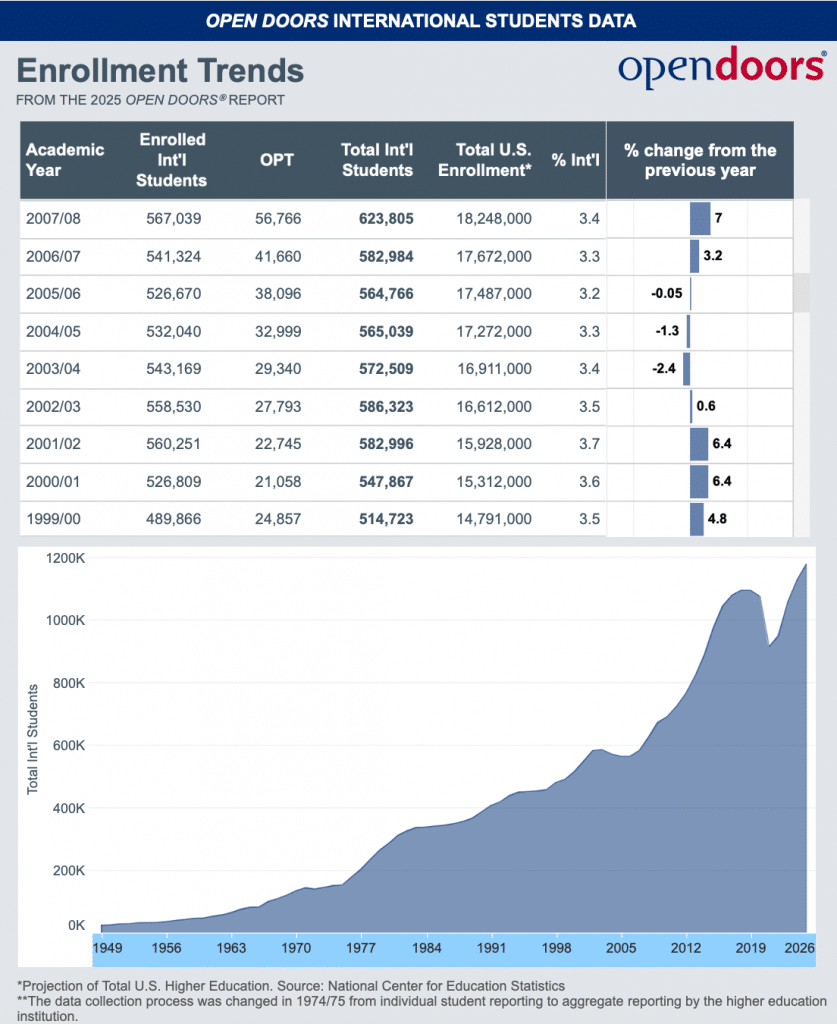
The international student housing demand USA 2026 is rising because total student numbers remain near historic highs. According to the Open Doors data, the U.S. hosted over 1.17 million international students, reflecting steady growth and continued global demand for U.S. education.

This growth directly impacts housing. International students now represent a stable and recurring demand base, contributing billions to the U.S. economy and sustaining rental markets near universities. As highlighted by the Institute of International Education, students contribute nearly $55 billion annually, reinforcing their role as a long-term economic driver.

How Does Student Growth Translate Into Real Estate Demand?

The international student housing demand USA 2026 translates into real estate demand through longer stays and higher spending power. Students are no longer short-term renters; many now remain in the U.S. for extended periods due to work opportunities like Optional Practical Training (OPT).

This extended timeline creates a more predictable housing cycle. Instead of a four-year demand window, real estate demand now spans six to ten years when including education and early career phases. This is why housing near universities is increasingly seen as a strategic investment rather than temporary accommodation.

Why Are International Families Buying Instead of Renting?

A major driver of international student housing demand USA 2026 is the shift from renting to ownership. Rising rental prices and limited availability near top universities are pushing families to explore property purchases as a more stable and cost-effective solution.

Many parents now view housing as both a necessity and an investment. As discussed in America Mortgages’ guide on long-term planning for F-1 visa students, families are aligning education decisions with housing strategies early in the process.

This shift is especially strong among foreign buyers who prefer asset ownership in stable markets like the U.S.

Which U.S. Cities Are Seeing the Most Demand Growth?

The international student housing demand USA 2026 is no longer limited to traditional gateway cities. While New York, Boston, and Los Angeles remain strong, affordability concerns are pushing demand into secondary markets.

Cities in Texas and Florida are emerging as key destinations due to lower costs and expanding universities. These markets also align with broader real estate trends identified in the 2026 U.S. Real Estate Watchlist.

This geographic diversification is making the U.S. student housing market more balanced and accessible.

How Does OPT Growth Impact Housing Demand?

The surge in OPT participation is a critical factor behind international student housing demand USA 2026. With more students staying in the U.S. after graduation, housing demand extends beyond academic timelines.

This creates a new category of tenants and buyers, young professionals transitioning from student life into full-time employment. As a result, demand shifts toward higher-quality housing, including condos and long-term rental properties near employment hubs.

What Role Do Boarding Schools and Early Education Play?

The international student housing demand USA 2026 is expanding earlier in the education cycle. Families are increasingly sending children to U.S. boarding schools before university, extending their housing needs significantly.

This trend is explained in detail in America Mortgages’ boarding school guide.

Instead of a short-term stay, families are now planning for 6–10+ years of U.S. residency, which further strengthens real estate demand.

What Does This Mean for Foreign National Buyers?

For foreign nationals, the international student housing demand USA 2026 presents a clear investment opportunity. Many buyers purchase properties near universities to house their children while also generating rental income.

As noted in a Financial Markets Network feature on cross-border homebuying, demand for specialized mortgage solutions is rising as more international families enter the market.

These buyers typically rely on documenting foreign income, assets, and credit under flexible underwriting guidelines.

How Are U.S. Expats Leveraging This Trend?

U.S. expats are also contributing to international student housing demand USA 2026 by purchasing homes for their children studying domestically. This allows them to combine education planning with long-term real estate investment.

Expats often use U.S.-based financing options while earning income abroad. A detailed breakdown of these strategies is available here.

This segment continues to grow as global mobility increases.

What Should Investors Expect in 2026?

The outlook for international student housing demand remains strong but more strategic. While enrollment growth may fluctuate slightly, total student populations remain high enough to sustain demand.

Investors should expect more informed buyers, longer holding periods, and increased competition in key university markets. The shift toward ownership and long-term planning will continue shaping the U.S. student housing market in the coming years.

Summary

  • International student housing demand USA 2026 remains strong
  • Students are staying longer, increasing housing duration
  • Families are shifting from renting to ownership
  • Secondary markets are gaining momentum
  • Real estate is becoming part of education planning

Frequently Asked Questions

Q1: What is international student housing demand USA 2026?

A: It refers to the growing need for housing driven by international students studying in the U.S. This demand is increasing due to rising enrollment and longer stays. It impacts both rental and property markets near universities.

Q2: How many international students are in the U.S. in 2026?

A: The U.S. hosts over 1.17 million international students based on the latest Open Doors data. This number reflects steady growth and continued global demand. It directly supports housing demand nationwide.

Q3: Why is housing demand increasing near universities?

A: Housing demand is rising due to high student populations and limited supply. Many students stay longer due to work opportunities. This creates sustained pressure on local housing markets.

Q4: Are international parents buying homes in the U.S.?

A: Yes, many parents are choosing to buy instead of rent. This helps reduce long-term costs and provides investment value. It is especially common among foreign national buyers.

Q5: Which cities benefit most from student housing demand?

A: Major cities like New York and Boston remain strong. However, secondary markets such as Texas and Florida are growing rapidly. These areas offer better affordability and expanding universities.

Q6: Can foreign nationals qualify for U.S. mortgages?

A: Yes, many lenders offer mortgage solutions for foreign nationals. Buyers must provide documentation of foreign income, assets, and credit. Flexible underwriting guidelines are often available.

Q7: How does OPT affect housing demand?

A: OPT allows students to stay and work after graduation. This extends their housing needs beyond school years. As a result, demand becomes more stable and long-term.

Q8: Is student housing a good investment in 2026?

A: Yes, student housing offers consistent demand and rental potential. Markets near universities tend to perform well. It is considered a stable long-term investment.

Q9: How early should families plan housing for students?

A: Ideally, families should plan housing before visa approval. Early planning helps secure better properties and financing options. It also aligns education and investment strategies.

U.S. expat living in Dubai exploring mortgage options to buy U.S. real estate

For many U.S. expats in UAE, particularly those living in Dubai and Abu Dhabi, investing in U.S. real estate is one of the most strategic financial decisions they can make. With tax-free income, strong earning potential, and global mobility, expats in the UAE are uniquely positioned to build wealth through U.S. property ownership.

The opportunity is significant. The UAE hosts over 50,000+ Americans, many of whom are high-income professionals in finance, aviation, tech, and entrepreneurship. This makes U.S. expats in UAE one of the most financially capable expat segments globally, yet many face challenges when trying to access U.S. mortgage financing.

What You Will Learn

  • How U.S. expats in UAE can qualify for U.S. mortgage financing
  • How Dubai-based income is evaluated under underwriting guidelines
  • What documents are required when applying from abroad
  • The best loan options for expats earning tax-free income
  • Which U.S. markets are attractive for U.S. real estate for expats
  • Common mistakes when buying U.S. property from Dubai
  • Why working with a specialized expat mortgage lender is critical

For a full foundation, start here: Guide to U.S. Mortgages for U.S. Expats

Why Are U.S. Expats in UAE Investing in U.S. Real Estate?

High income + tax-free earnings + global diversification.

Many U.S. expats in UAE earn strong salaries without income tax, allowing them to accumulate savings faster than in most countries. Instead of holding idle cash, many are redirecting capital into U.S. real estate for long-term growth and income generation.

Additionally, global trends show that Americans abroad prioritize real estate as a primary investment asset. According to global expat data, there are over 5.5 million Americans living overseas, many of whom actively invest in U.S. property to maintain financial ties to the U.S. market. For U.S. expats in UAE, this trend is even stronger due to higher disposable income levels.

Insights from the 2026 U.S. Real Estate Watchlist and early market signals report also highlight continued opportunities in high-growth U.S. cities.

Why Do U.S. Expats in UAE Struggle with Traditional U.S. Lenders?

The problem is structural, not financial.

Traditional U.S. lenders are built for domestic borrowers. If your income is not in U.S. dollars or supported by a W-2, your application often gets declined automatically.

For U.S. expats in UAE, this creates challenges because:

  • Salaries are paid in AED (or other currencies)
  • Employment contracts differ from U.S. formats
  • Tax-free income creates documentation gaps

This is why many qualified borrowers get rejected.

America Mortgages solves this gap. As the world’s only U.S. international mortgage lender specialist based overseas, we understand expat profiles because we are expats ourselves. Our loan programs are specifically designed for U.S. expats in UAE and other global markets.

How Can U.S. Expats in UAE Qualify for a U.S. Mortgage?

Yes, U.S. expats in UAE can qualify, and often more easily than expected with the right lender.

The process focuses on your full financial profile, including overseas income, assets, and financial consistency. One critical requirement remains: U.S. tax returns are still required, even if your income is earned in Dubai.

When applying for a U.S. mortgage from UAE, lenders convert your income into USD and evaluate its stability over time. Proper structuring is essential, which is why many borrowers rely on experts like those featured in our guide to top expat accountants for U.S. citizens living overseas.

What Makes America Mortgages Different for U.S. Expats in UAE?

This is where the biggest advantage lies.

Our mortgage solutions are specifically designed for U.S. expats in UAE, offering flexibility that traditional lenders simply cannot provide.

  • Overseas income and credit accepted
  • Up to 80% loan-to-value (LTV)
  • Loan sizes from $150K to $5M
  • 15- and 30-year fixed rates, plus ARM options
  • 30-year amortization regardless of age
  • Interest-only options for cash flow flexibility

This allows U.S. expats in UAE to access financing that mirrors U.S. standards—without being penalized for living abroad.

How Does Tax-Free Income in UAE Affect Mortgage Approval?

Tax-free income is an advantage, but requires proper documentation.

For U.S. expats in UAE, lenders focus on income stability rather than tax structure. Since UAE salaries are not taxed locally, lenders rely more heavily on:

  • Employment contracts
  • Salary certificates
  • Bank statements
  • U.S. tax filings

This is where specialized underwriting becomes critical. A standard lender may misinterpret tax-free income, while an expat mortgage lender understands how to structure it correctly.

What Are the Best Property Types for U.S. Expats in UAE?

The best choice depends on your financial goals.

Many U.S. expats in UAE focus on income-generating rental properties due to their strong savings capacity and investment mindset. Others purchase second homes or future primary residences in anticipation of returning to the U.S.

For investors, DSCR loans are especially relevant. These loans allow qualification based on property income, making them ideal for U.S. real estate for expats building portfolios from abroad.

Which U.S. Markets Are Best for U.S. Expats in UAE?

Market selection should always be strategic.

Many U.S. expats in UAE target high-growth states like Texas, Florida, and Arizona due to strong rental demand, population growth, and affordability.

When buying U.S. property from Dubai, the focus should be on long-term fundamentals rather than short-term trends. Markets with strong job growth and migration patterns tend to perform best over time.

What Is the Step-by-Step Process for U.S. Expats in UAE?

  • Define your budget and investment goals
  • Organize financial documentation
  • Get pre-approved with an expat-focused lender
  • Select your U.S. market and property
  • Submit offer and finalize financing
  • Close remotely using digital processes

This process allows U.S. expats in UAE to invest efficiently without needing to travel.

Ready to Explore Your U.S. Mortgage Options from UAE?

If you’re one of the many U.S. expats in UAE considering investing back in the U.S., the next step is understanding what you qualify for based on your overseas income and financial profile. Every expat situation is different, and having clarity early can save you time, avoid delays, and position you to act confidently when the right opportunity comes up.

At America Mortgages, we specialize in helping U.S. expats in UAE navigate cross-border financing with ease. Whether you’re buying an investment property, refinancing, or planning a future home, our team can guide you through the process. You can reach us directly, email us at [email protected], or call +1 (845) 583-0830 to discuss your options.

Summary

For U.S. expats in UAE, investing in U.S. real estate is one of the most powerful ways to convert high income into long-term wealth. With tax-free earnings, strong savings potential, and global flexibility, expats in Dubai are uniquely positioned to benefit from U.S. property ownership.

The key is working with a lender who understands your situation. With America Mortgages, U.S. expats in UAE can access tailored financing solutions that make buying U.S. property straightforward, transparent, and achievable.

Frequently Asked Questions

Q1. Can U.S. expats in UAE get a mortgage in the U.S.?

A: Yes, U.S. expats in UAE can qualify using foreign income and U.S. tax returns. Specialized lenders are designed to assess international borrowers effectively.

Q2. Do I need U.S. tax returns if I live in Dubai?

A: A: Yes, U.S. tax returns are required even if income is earned tax-free in the UAE. This is a key part of underwriting for U.S. expats in UAE.

Q3. Can tax-free income be used to qualify?

A: Yes, tax-free UAE income is accepted but evaluated based on stability and documentation. Lenders rely on contracts and bank records.

Q4. What is the minimum down payment?

A: Most U.S. expats in UAE can access up to 80% LTV, meaning a 20% down payment is typical depending on the loan structure.

Q5. Are DSCR loans suitable for Dubai-based expats?

A: Yes, DSCR loans are ideal for U.S. expats in UAE investing in rental properties because approval is based on property income.

Q6. Can I buy U.S. property remotely from Dubai?

A: Yes, most U.S. expats in UAE complete transactions remotely through digital documentation and structured closing processes.

Q7. Why do traditional banks reject expats in UAE?

A: Traditional lenders struggle with foreign income, tax-free earnings, and non-U.S. employment structures, making it harder for expats to qualify.

Q8. What types of properties are best for expats?

A: Rental properties and long-term investments are popular among U.S. expats in UAE due to income potential and flexibility.

Q9. Is now a good time to invest in U.S. real estate?

A: Yes, current market trends and financing conditions create strong opportunities for U.S. expats in UAE to invest strategically.

American expat in Paris reviewing U.S. real estate investment and mortgage options

For many U.S. expats in France, life is centered around culture, lifestyle, and long-term stability. Whether based in Paris, Lyon, or the French Riviera, the focus is often on quality of life rather than aggressive investing. But behind that lifestyle, a growing number of Americans are quietly making strategic financial decisions, especially when it comes to U.S. real estate.

There are over 60,000+ Americans living in France, many of whom are professionals, retirees, or remote workers with global income streams. While their day-to-day lives are rooted in Europe, their long-term financial thinking often remains tied to the U.S. market. For U.S. expats in France, this creates a unique opportunity: building wealth in dollars while living in euros.

What You Will Learn

  • Why U.S. expats in France approach real estate differently than other expat groups
  • How currency exposure impacts long-term wealth planning
  • What financing options exist for buying U.S. property from Europe
  • How to structure a U.S. mortgage from France effectively
  • Key considerations before buying U.S. property from France
  • Why working with an expat mortgage lender changes outcomes
  • How to align lifestyle and investment strategy as a global citizen

For a complete foundation, start with: Guide to U.S. Mortgages for U.S. Expats

Living in France but Building Wealth in the U.S.?

Yes, and many already are.

For U.S. expats in France, income and lifestyle may be euro-based, but long-term wealth strategies often remain tied to the U.S. This is largely due to familiarity, market transparency, and stronger access to financing.

Additionally, U.S. real estate offers something that European markets often do not: scalable leverage. The ability to finance property over 30 years at relatively stable rates allows U.S. expats in France to build wealth in a way that aligns with long-term financial planning. According to global housing data from organizations like the OECD, U.S. housing markets remain among the most accessible in terms of mortgage availability and structure compared to many European systems.

Why Do Many U.S. Expats in France Keep Most of Their Wealth in Euros?

This is one of the most overlooked risks.

Many U.S. expats in France unintentionally concentrate their wealth in euros, through salaries, savings, and local investments. While this feels natural, it creates long-term exposure to currency fluctuations.

Diversifying into U.S. real estate helps balance that risk. By holding assets in dollars, U.S. expats in France create a natural hedge that protects purchasing power over time. This becomes especially important for those planning to return to the U.S. or maintain financial ties there.

Can You Actually Get a U.S. Mortgage While Living in France?

Yes, but not through traditional paths.

Most U.S. banks are not designed to handle international borrowers. If your income is not U.S.-based or tied to a W-2, approval becomes difficult, even if your financial profile is strong.

This is where specialized lenders come in. America Mortgages, as the world’s only U.S. international mortgage lender specialist based overseas, works specifically with U.S. expats in France and other global borrowers. Our approach focuses on real financial strength rather than rigid domestic criteria.

Unlike traditional banks, we understand foreign income, international documentation, and cross-border financial structures.

What Do Lenders Really Look at for U.S. Expats in France?

The evaluation process is less about location, and more about consistency.

For U.S. expats in France, lenders typically assess income stability, asset strength, and financial history. U.S. tax returns remain important, even when income is earned abroad, as they provide a standardized view of earnings.

Working with professionals is key here. Many borrowers benefit from guidance found in resources like top expat accountants for U.S. citizens living overseas, ensuring their documentation aligns with lender expectations.

Why Lifestyle-Driven Expats Still Invest in U.S. Real Estate

Unlike high-income hubs like Dubai, U.S. expats in France often prioritize lifestyle first and investing second. However, that does not mean investment is ignored, it is simply approached more strategically.

Many buyers are not looking for rapid portfolio growth. Instead, they are:

  • Securing a future home in the U.S.
  • Building long-term equity
  • Creating passive income streams

For those interested in investment-focused strategies, tools like DSCR loans allow U.S. expats in France to qualify based on property income rather than personal income, offering additional flexibility.

What Most U.S. Expats in France Get Wrong About Buying Property

The biggest mistake is waiting too long.

Many U.S. expats in France delay investing because they assume financing will be too complex. Others believe they need to move back to the U.S. first, which is not true.

Another common misconception is relying solely on European financial systems. While France offers strong lifestyle benefits, it does not provide the same mortgage flexibility or leverage opportunities as the U.S.

Understanding these differences early can significantly change long-term outcomes.

Where Are U.S. Expats in France Buying Property?

There is no single answer, but patterns exist.

Many U.S. expats in France gravitate toward markets that balance affordability, rental demand, and long-term growth. Cities like Dallas, Miami, and Phoenix often come up due to strong fundamentals.

Insights from the 2026 U.S. Real Estate Watchlist and early market signals report show continued migration into these regions, supporting both rental demand and appreciation potential.

What Does the Process Look Like from France?

  • Define your investment or lifestyle goal
  • Organize financial and tax documentation
  • Get pre-approved with an expat-focused lender
  • Select a U.S. property aligned with your strategy
  • Complete purchase remotely

For U.S. expats in France, the process is fully achievable without needing to relocate. With the right guidance, transactions can be handled efficiently across borders.

Ready to Align Your Lifestyle in France with Your Financial Goals in the U.S.?

If you’re one of the many U.S. expats in France thinking about investing back in the U.S., the most important step is understanding what’s possible based on your financial profile. Whether your goal is long-term wealth, a future home, or passive income, having clarity early allows you to move with confidence rather than hesitation.

At America Mortgages, we work directly with U.S. expats in France to simplify cross-border financing. Our team understands overseas income, international documentation, and the unique challenges expats face. You can get started through our Contact page, email us at [email protected], or call +1 (845) 583-0830 to explore your options.

Summary

For U.S. expats in France, investing in U.S. real estate is less about urgency and more about strategy. It is a way to balance lifestyle with long-term financial security, diversify currency exposure, and maintain a foothold in the U.S. market.

With the right lender, the process becomes structured and achievable. For many U.S. expats in France, the question is no longer if they should invest, but when.

Frequently Asked Questions

Q1. Can U.S. expats in France get a U.S. mortgage?

A: Yes, U.S. expats in France can qualify through specialized lenders who understand international income and documentation requirements.

Q2. Do I need U.S. tax returns while living in France?

A: A: Yes, U.S. tax returns are typically required as part of underwriting, even if your income is earned abroad.

Q3. Can I buy U.S. property without moving back?

A: Yes, many U.S. expats in France purchase property remotely using digital processes and expat-focused lenders.

Q4. Is foreign income accepted for mortgage approval?

A: Yes, foreign income is accepted but evaluated for stability and consistency under underwriting guidelines.

Q5. What is the best type of property to buy?

A: Many U.S. expats in France choose rental or long-term investment properties aligned with their financial goals.

Q6. Are DSCR loans available to expats?

A: Yes, DSCR loans are a strong option for U.S. expats in France investing in income-generating properties.

Q7. Why do traditional lenders reject expats?

A: Traditional lenders struggle with foreign income, documentation, and non-U.S. employment structures.

Q8. Can I manage property from France?

A: Yes, property management services allow U.S. expats in France to manage investments remotely.

Q9. Is investing in U.S. real estate worth it for expats?

A: Yes, for many U.S. expats in France, it provides long-term growth, diversification, and financial security.