Luxury home buyer reviewing jumbo loan financing options for high-value U.S. real estate

What You Will Learn About Jumbo Loans

  • What jumbo loans are and how they work
  • Why some borrowers need financing beyond conventional loan limits
  • Who typically uses jumbo mortgage financing
  • How jumbo loans differ from traditional mortgages
  • Important considerations for luxury and international borrowers

What Are Jumbo Loans?

Jumbo loans are mortgage loans that exceed the conforming loan limits set by the Federal Housing Finance Agency (FHFA). Because these loans fall outside standard conventional lending limits, they cannot typically be purchased by Fannie Mae or Freddie Mac.

As property prices continue to rise in many U.S. real estate markets, jumbo financing has become increasingly common for:

  • Luxury primary residences
  • High-value vacation homes
  • Investment properties
  • Properties located in major metropolitan areas
  • International buyers purchasing premium U.S. real estate

In many high-cost markets, even moderately sized homes may require jumbo financing due to elevated property values.

How Do Jumbo Loans Work?

A jumbo loan functions similarly to a traditional mortgage, but the underwriting process is often more detailed because of the larger loan amount and increased lender risk.

Lenders typically evaluate:

  • Income and employment stability
  • Credit profile
  • Liquidity and reserves
  • Debt obligations
  • Property value and appraisal
  • Overall financial strength

Because loan amounts are larger, lenders may also require stronger reserve positions and more comprehensive documentation compared to standard conforming mortgage programs.

For high-net-worth borrowers, financing strategy often becomes just as important as qualification itself. Many borrowers prefer to preserve liquidity and investment positions instead of paying cash for high-value properties.

Who Actually Needs Jumbo Loans?

Borrowers generally need jumbo loans when the financing amount exceeds local conforming loan limits. However, the borrowers who most commonly use jumbo financing are often those purchasing luxury or high-value real estate.

This may include:

  • High-net-worth individuals
  • Real estate investors
  • Business owners
  • U.S. expats purchasing U.S. property
  • Foreign Nationals investing in American real estate
  • Buyers relocating to expensive housing markets

In many cases, jumbo borrowers are financially strong individuals who want financing flexibility rather than tying up significant cash reserves in a property purchase.

For example, a borrower may qualify for a jumbo mortgage even while maintaining substantial assets, investment accounts, or international business holdings.

Jumbo Loans for U.S. Expats and Foreign Nationals

For U.S. expats, jumbo financing may help support purchases of high-value U.S. property while maintaining flexibility around international income structures and global assets. Because income is often earned overseas, lenders may review foreign employment, asset documentation, reserve levels, and U.S. tax returns during the underwriting process.

For Foreign Nationals, jumbo loans can provide financing access for luxury U.S. real estate purchases without requiring full domestic financial profiles. Lenders often evaluate:

  • International income and assets
  • Global banking relationships
  • Liquidity and reserves
  • Property type and location
  • Creditworthiness and documentation quality

Because international financing scenarios can be more complex, working with a mortgage company experienced in cross-border lending is extremely important for borrowers purchasing premium U.S. properties.

At America Mortgages, we help U.S. residents, U.S. expats, and Foreign Nationals explore financing solutions for high-value U.S. real estate, including eligible jumbo mortgage programs for qualified borrowers.

Benefits of Jumbo Loans

One of the biggest advantages of jumbo loans is the ability to finance higher-value properties while preserving liquidity and broader investment flexibility.

Benefits may include:

  • Financing access beyond conforming loan limits
  • Flexibility for luxury property purchases
  • Opportunities to preserve investment capital
  • Financing solutions for international borrowers
  • Potential access to customized mortgage structures

For many high-net-worth borrowers, using financing strategically may support broader wealth management and real estate investment goals more effectively than purchasing entirely with cash.

Borrowers evaluating luxury property financing may also benefit from understanding related strategies such as asset-based mortgages and equity release when planning long-term real estate and liquidity objectives.

Important Considerations Before Applying

While jumbo loans can provide financing flexibility for high-value real estate purchases, borrowers should carefully evaluate the loan structure to ensure it aligns with their long-term financial goals.

Because jumbo mortgage amounts are larger, lenders often review liquidity, reserves, credit strength, property value, and overall financial stability more closely during underwriting. Interest rates, reserve requirements, and documentation expectations may also vary depending on the borrower profile and lender guidelines.

For international borrowers, factors such as foreign income documentation, currency considerations, cross-border tax structures, and global asset verification may also influence financing eligibility and loan structure. Working with an experienced mortgage team like America Mortgages can help borrowers compare options carefully and structure financing appropriately.

Jumbo Loans vs. Conventional Loans

The primary difference between jumbo loans and conventional mortgages is the loan size. Conventional loans remain within conforming loan limits established by the FHFA, while jumbo loans exceed those limits.

Because jumbo financing falls outside conventional agency guidelines, lenders may apply:

  • More detailed underwriting reviews
  • Higher reserve requirements
  • Additional documentation standards
  • Customized qualification structures

However, jumbo borrowers are often financially strong individuals with substantial assets, strong credit profiles, or complex global financial structures.

The right financing solution depends on the borrower’s property goals, financial strategy, liquidity preferences, and long-term investment plans.

Explore Jumbo Loan Solutions for High-Value U.S. Real Estate

Luxury and high-value real estate purchases often require financing strategies tailored to complex financial profiles and international borrower needs.

America Mortgages specializes in helping U.S. expats, and Foreign Nationals explore eligible jumbo mortgage solutions for premium U.S. properties and sophisticated real estate investment goals.

To learn more about jumbo financing options, contact America Mortgages today at [email protected] or call us directly at +65 6817 8877.

Our mortgage specialists can help you evaluate financing strategies aligned with your long-term real estate and wealth planning objectives.

Summary

Jumbo loans provide financing solutions for borrowers purchasing properties that exceed conventional mortgage limits.

As U.S. property values continue to rise, jumbo financing has become increasingly important for luxury homebuyers, high-net-worth individuals, U.S. expats, Foreign Nationals, and real estate investors seeking access to premium U.S. real estate markets.

For borrowers with strong financial profiles and long-term investment goals, jumbo mortgage financing can provide the flexibility needed to acquire high-value properties while preserving liquidity and supporting broader wealth management strategies.

Frequently Asked Questions

Q1. What are jumbo loans?

A: Jumbo loans are mortgage loans that exceed the conforming loan limits established by the Federal Housing Finance Agency (FHFA).

Q2. Who typically needs a jumbo loan?

A: Jumbo loans are commonly used by borrowers purchasing luxury or high-value properties, especially in expensive real estate markets where financing needs exceed standard conforming loan limits.

Q3. Can Foreign Nationals qualify for jumbo loans?

A: Yes. America Mortgages helps qualified Foreign Nationals explore eligible jumbo mortgage solutions depending on assets, reserves, property eligibility, documentation, and underwriting guidelines.

Q4. Are jumbo loans harder to qualify for?

A: Jumbo loans may involve more detailed underwriting because of the larger loan amount. Lenders often review liquidity, reserves, credit profile, and documentation more closely than with standard conforming loans.

Q5. Are jumbo loans only for luxury homes?

A: Not always. In some high-cost housing markets, borrowers may require jumbo financing even for moderately sized homes because local property values exceed conforming loan limits.


Borrower exploring Non-QM loan options for U.S. real estate financing

What You Will Learn About Non-QM Loans

  • What Non-QM loans are and how they work
  • Why these loans are becoming more popular among modern borrowers
  • How Non-QM loans differ from traditional mortgages
  • Which borrowers may benefit from alternative mortgage solutions
  • Important considerations before applying for a Non-QM loan

What Are Non-QM Loans?

Non-QM loans, or Non-Qualified Mortgage loans, are mortgage programs designed for borrowers who may not meet standard conventional lending requirements. Unlike traditional mortgages that rely heavily on strict income documentation and standardized underwriting models, Non-QM loans offer more flexibility in how borrowers qualify.

These loans are often used by:

  • Self-employed borrowers
  • Real estate investors
  • Business owners
  • High-net-worth individuals
  • U.S. expats
  • Foreign Nationals
  • Borrowers with non-traditional income structures

Non-QM lending has grown significantly as more borrowers earn income outside of traditional salaried employment. According to industry research from CoreLogic and Mortgage Bankers Association reporting, self-employment, gig economy work, and alternative income sources continue to increase across global markets, creating demand for more flexible mortgage qualification solutions.

Why Are Non-QM Loans Becoming More Popular?

One of the main reasons Non-QM loans are growing in popularity is that modern financial profiles no longer fit traditional lending models as neatly as they once did.

Many borrowers today earn income through:

  • Businesses
  • Investments
  • Freelancing
  • International employment
  • Rental properties
  • Contract work
  • Asset portfolios

Traditional mortgage underwriting guidelines often focus heavily on W-2 income, tax returns, and debt-to-income ratios. While these standards work well for many borrowers, they may not accurately reflect the financial strength of individuals with complex or international income structures.

As a result, Non-QM lending has become an important solution for borrowers who have strong overall financial profiles but require alternative methods of qualification.

Common Types of Non-QM Loans

There are several types of Non-QM loans available depending on the borrower’s profile and financing goals.

Bank statement loans allow self-employed borrowers to qualify using bank deposits instead of traditional tax return income calculations. This can be especially useful for entrepreneurs and business owners whose taxable income may not fully reflect cash flow.

DSCR loans (Debt Service Coverage Ratio loans) are commonly used by real estate investors. Instead of focusing primarily on personal income, lenders evaluate whether the property’s rental income can support the mortgage payment.

Some lenders also offer:

  • Asset-based mortgage programs
  • Interest-only mortgage options
  • Foreign National loan programs
  • Jumbo Non-QM financing
  • Alternative income verification loans

At America Mortgages, we help U.S. expats, and Foreign Nationals explore mortgage solutions designed around non-traditional financial profiles and international borrower needs.

Non-QM Loans for U.S. Expats and Foreign Nationals

For U.S. expats, traditional mortgage qualification can sometimes be challenging because income is earned overseas or structured differently from domestic employment. Non-QM loans may provide more flexibility for borrowers with foreign income, international businesses, or complex financial documentation.

For Foreign Nationals, Non-QM lending may offer financing pathways that better accommodate international banking relationships, foreign assets, investment income, and cross-border financial structures. Lenders often evaluate the borrower’s overall financial strength, reserves, property eligibility, and documentation quality rather than relying only on standard domestic income models.

Because underwriting guidelines vary significantly between lenders, working with a mortgage company experienced in international financing is especially important for borrowers navigating cross-border real estate transactions.

Benefits of Non-QM Loans

The biggest advantage of Non-QM loans is flexibility. These programs expand financing opportunities for borrowers who may not qualify under traditional agency lending guidelines despite having strong financial profiles.

Benefits may include:

  • Alternative income verification options
  • Financing flexibility for self-employed borrowers
  • Mortgage solutions for real estate investors
  • Qualification pathways for Foreign Nationals and expats
  • Higher loan limits for certain property types
  • More adaptable underwriting structures

For many borrowers, Non-QM financing creates opportunities to purchase or refinance U.S. real estate without being limited by traditional income documentation standards.

Borrowers exploring broader financing flexibility may also benefit from understanding strategies related to equity release and asset-based lending when evaluating long-term real estate and liquidity planning.

Important Considerations Before Applying

While Non-QM loans provide flexibility, borrowers should still review financing structures carefully to ensure the loan aligns with their long-term financial goals. Interest rates, reserve requirements, loan terms, and documentation expectations can differ from conventional mortgage programs depending on the lender and borrower profile.

Lenders may evaluate factors such as credit history, liquidity, property type, reserve levels, investment experience, and overall financial stability during the underwriting process. For international borrowers, currency considerations and cross-border documentation standards may also influence financing eligibility and loan structure.

Working with an experienced mortgage team can help borrowers compare available options, understand underwriting guidelines, and identify financing solutions that support both short-term property goals and long-term financial planning.

Non-QM Loans vs. Conventional Loans

Traditional conventional loans are designed around standardized qualification models that typically prioritize salaried income, tax returns, and debt-to-income ratios. By contrast, Non-QM loans allow lenders to evaluate borrowers using alternative documentation and more flexible underwriting approaches.

This flexibility makes Non-QM financing attractive for borrowers whose financial strength may not be fully reflected through conventional qualification methods.

For example:

  • A self-employed entrepreneur may qualify using bank statements instead of tax returns
  • A real estate investor may qualify using rental income through a DSCR loan
  • A Foreign National borrower may qualify using international income and assets
  • A high-net-worth borrower may qualify using asset-based lending structures

The right mortgage solution depends on the borrower’s financial profile, property goals, and long-term strategy.

Explore Flexible Non-QM Mortgage Solutions with America Mortgages

As borrower income structures continue to evolve globally, flexible mortgage financing solutions are becoming increasingly important for entrepreneurs, investors, expats, and international buyers.

America Mortgages specializes in helping U.S. expats, and Foreign Nationals explore Non-QM mortgage solutions designed around complex financial profiles and international lending scenarios.

To learn more about financing options for U.S. real estate, contact America Mortgages today at [email protected] or call us now at +65 6817 8877.

Our mortgage specialists can help you evaluate flexible lending solutions tailored to your financing and investment goals.

Non-QM Loans Summary

Non-QM loans are becoming increasingly popular because modern borrowers often have financial profiles that extend beyond traditional salaried employment structures.

For self-employed borrowers, real estate investors, U.S. expats, Foreign Nationals, and high-net-worth individuals, Non-QM financing can provide more flexible qualification pathways and broader access to U.S. real estate opportunities.

As alternative income structures continue to grow worldwide, Non-QM lending is expected to remain an important part of the mortgage market for borrowers seeking financing solutions that better reflect today’s global economy.

Frequently Asked Questions

Q1. What are Non-QM loans?

A: Non-QM loans are mortgage programs designed for borrowers who may not meet traditional qualified mortgage lending requirements. These loans often allow alternative income verification and more flexible underwriting.

Q2. Who benefits most from Non-QM loans?

A: Non-QM loans are commonly used by self-employed borrowers, real estate investors, entrepreneurs, U.S. expats, Foreign Nationals, and borrowers with non-traditional income structures.

Q3. Are Non-QM loans only for borrowers with poor credit?

A: No. Many Non-QM borrowers have strong credit and substantial assets but require alternative qualification methods because their income structure does not fit conventional lending standards.

Q4. Can Foreign Nationals qualify for Non-QM loans?

A: Yes. America Mortgages helps qualified Foreign Nationals explore eligible Non-QM financing solutions depending on property eligibility, reserves, documentation, and underwriting guidelines.

Q5. What is the difference between a Non-QM loan and a conventional mortgage?

A: Conventional mortgages typically rely on standardized income verification and agency guidelines, while Non-QM loans provide more flexible qualification options using alternative documentation and underwriting approaches.

High-net-worth borrower reviewing asset-based mortgage financing options for U.S. property

What You Will Learn About Asset-Based Mortgages

  • What asset-based mortgages are and how they work
  • How high-net-worth borrowers qualify using assets instead of traditional income
  • The difference between asset-based mortgages and conventional loans
  • Common documentation and eligibility requirements
  • Why asset-based lending can benefit U.S. expats, Foreign Nationals, and global investors

What Are Asset-Based Mortgages?

Asset-based mortgages are home loans that allow borrowers to qualify primarily using their liquid assets instead of relying solely on traditional employment income.

These mortgage programs are designed for high-net-worth individuals who may have substantial wealth tied to investments, savings, retirement accounts, trusts, or other financial assets but do not necessarily receive a predictable salaried income.

This structure can be especially useful for:

  • Retirees with significant assets
  • Entrepreneurs and business owners
  • Investors with complex income structures
  • U.S. expats living abroad
  • Foreign Nationals purchasing U.S. real estate

Rather than focusing only on monthly paychecks or W-2 income, lenders evaluate the borrower’s overall financial strength and available reserves when reviewing eligibility.

How Do Asset-Based Mortgages Work?

With asset-based mortgages, lenders use a borrower’s eligible assets to calculate an income stream for qualification purposes. This process is commonly referred to as “asset depletion” or “asset utilization.”

Depending on the lender and loan program, eligible assets may include:

  • Cash and savings accounts
  • Investment portfolios
  • Retirement accounts
  • Trust accounts
  • Stocks and bonds
  • Certain liquid business assets

The lender typically applies a formula to determine how much monthly qualifying income those assets can support over a specified period.

For example, a borrower with substantial liquid reserves but limited traditional income may still qualify for financing based on overall financial capacity and long-term liquidity.

Why High-Net-Worth Borrowers Use Asset-Based Mortgages

Many wealthy borrowers have financial profiles that do not fit standard underwriting models. Traditional mortgage approval often favors borrowers with straightforward salaried income, even when other applicants have substantial assets and strong financial stability.

High-net-worth borrowers may choose asset-based mortgages because they:

  • Prefer not to liquidate investments
  • Have variable or international income streams
  • Want to preserve tax strategies
  • Receive income through businesses or investments
  • Need financing flexibility for luxury or investment properties

For global borrowers, these programs can also simplify qualification when income documentation spans multiple countries, currencies, or business structures.

At America Mortgages, we help U.S. expats, and Foreign Nationals explore mortgage solutions designed around complex international financial profiles and cross-border lending scenarios.

Asset-Based Mortgages for U.S. Expats and Foreign Nationals

For U.S. expats, qualifying for a traditional mortgage can sometimes be more complex because income is earned overseas or structured differently from standard domestic employment. Asset-based lending may provide an alternative path for borrowers who have substantial liquidity, investment holdings, reserves, or international business income but do not fit conventional income verification models. In most cases, U.S. tax returns are still required even when income originates abroad.

For Foreign Nationals, lenders often focus on the borrower’s overall financial strength, including global assets, reserves, international banking relationships, investment portfolios, and property ownership history. Documentation of foreign income and creditworthiness may also play an important role during the underwriting process.

Because underwriting guidelines can vary significantly between lenders, working with a mortgage company experienced in international financing is especially important for borrowers with global financial structures and cross-border income sources.

Benefits of Asset-Based Mortgages

One of the biggest advantages of asset-based mortgages is flexibility. These programs allow borrowers to leverage financial strength without depending entirely on traditional income verification models.

Benefits may include:

  • Qualification based on assets instead of salary alone
  • Financing flexibility for complex financial profiles
  • Potential access to luxury and investment property financing
  • Preservation of investment portfolios and liquidity
  • Simplified qualification for retirees or global investors

For many high-net-worth borrowers, asset-based lending can provide access to U.S. real estate financing while maintaining broader wealth management and investment strategies.

Borrowers who want to preserve liquidity may also explore strategies related to equity release when evaluating how to use property and financial assets efficiently within a larger financial plan.

Important Considerations for High-Net-Worth Borrowers

While asset-based mortgages offer greater flexibility than traditional income-based lending, borrowers should still evaluate the financing structure carefully to ensure it supports their long-term financial goals. Lenders typically review factors such as liquidity, reserve levels, asset stability, credit profile, property type, loan-to-value ratio, and overall documentation quality during the underwriting process.

Borrowers should also consider how mortgage financing fits within broader investment, wealth management, tax, and estate planning strategies. For many high-net-worth individuals, maintaining liquidity and preserving investment positions can be just as important as securing competitive financing terms.

For international borrowers, additional considerations such as currency exposure, cross-border tax structures, and global documentation standards may also influence the overall financing approach. Working with an experienced mortgage team like America Mortgages can help borrowers compare options carefully and structure financing in a way that aligns with their broader financial objectives.

Asset-Based Mortgages vs. Traditional Mortgages

Traditional mortgages primarily focus on employment income, tax returns, and debt-to-income ratios. By contrast, asset-based mortgages place greater emphasis on overall wealth and financial reserves.

This difference makes asset-based lending particularly attractive for borrowers whose financial strength is not fully reflected through standard income documentation.

For example:

  • A retiree with millions in liquid assets but limited monthly income may qualify more easily through asset-based lending
  • An entrepreneur with fluctuating business income may benefit from asset-focused qualification
  • A Foreign National investor with global assets may prefer financing structured around liquidity and reserves

The right mortgage solution depends on the borrower’s goals, financial profile, and property strategy.

Explore Asset-Based Mortgage Solutions with America Mortgages

High-net-worth borrowers often require financing solutions that reflect the complexity of global assets, investment structures, and international income sources.

America Mortgages specializes in helping U.S. expats, and Foreign Nationals explore mortgage solutions designed for sophisticated financial profiles, including eligible asset-based mortgage programs for qualified borrowers.

To learn more about financing options for U.S. real estate, contact America Mortgages today at [email protected] or call us directly at +1 (845) 583-0830.

Our mortgage specialists can help you evaluate financing strategies tailored to your long-term real estate and wealth planning goals.

Asset-Based Mortgages Summary

Asset-based mortgages provide an alternative qualification method for high-net-worth borrowers who may not fit traditional income-based underwriting models.

By allowing borrowers to qualify using liquid assets, investments, and reserves, these mortgage programs can support financing for luxury homes, investment properties, and international real estate strategies.

For U.S. expats, Foreign Nationals, retirees, entrepreneurs, and global investors, asset-based lending may offer a more flexible approach to qualifying for U.S. real estate financing while preserving broader financial and investment strategies.

Frequently Asked Questions

Q1. What are asset-based mortgages?

A: Asset-based mortgages are loans that allow borrowers to qualify primarily using liquid assets and financial reserves rather than relying only on traditional employment income.

Q2. Who typically uses asset-based mortgages?

A: These mortgage programs are commonly used by high-net-worth borrowers, retirees, entrepreneurs, investors, U.S. expats, and Foreign Nationals with substantial assets but non-traditional income structures.

Q3. Can Foreign Nationals qualify for asset-based mortgages?

A: Yes. America Mortgages helps qualified Foreign Nationals explore eligible asset-based mortgage solutions depending on assets, reserves, documentation, property eligibility, and underwriting guidelines.

Q4. What assets can be used for qualification?

A: Depending on the lender, eligible assets may include savings accounts, investment portfolios, retirement accounts, trust assets, stocks, bonds, and other liquid financial holdings.

Q5. Are asset-based mortgages only for luxury properties?

A: Not necessarily. While commonly used for luxury real estate financing, asset-based mortgages may also be used for primary residences, second homes, and investment properties depending on the loan program and borrower profile.

International borrower reviewing cash-out refinance options for U.S. real estate

What You Will Learn About Cash-Out Refinance

  • What a cash-out refinance is and how it works
  • How international borrowers can access home equity
  • The difference between a cash-out refinance and other refinancing options
  • Common eligibility and documentation requirements
  • Risks and benefits international borrowers should understand

What Is a Cash-Out Refinance?

A cash-out refinance is a type of mortgage refinancing where a homeowner replaces their current mortgage with a new, larger loan and receives the difference in cash.

The amount available depends on the property’s value, the remaining mortgage balance, lender guidelines, and the borrower’s financial profile. Many homeowners use a cash-out refinance to access built-up home equity for renovations, investments, debt consolidation, or liquidity planning. For homeowners exploring broader ways to unlock property value, understanding equity release options can also provide additional insight into how home equity may be used strategically.

For example, if a property is worth $800,000 and the current mortgage balance is $400,000, the homeowner may be able to refinance into a larger loan and receive part of the available equity as cash, subject to underwriting guidelines and loan-to-value limits.

For international borrowers who own U.S. real estate, this can be a way to unlock capital without selling the property.

How Does a Cash-Out Refinance Work?

With a cash-out refinance, the existing mortgage is paid off and replaced with a new mortgage that reflects the revised loan amount.

Unlike a standard refinance that mainly focuses on reducing the interest rate or changing loan terms, a cash-out refinance allows the borrower to convert part of their property equity into usable funds.

The process generally includes:

  • Property valuation or appraisal
  • Income and asset review
  • Credit and liability analysis
  • Verification of ownership and property eligibility
  • Review of reserves and liquidity

Lenders also evaluate the borrower’s debt obligations, mortgage payment history, and documentation quality before approving the refinance mortgage.

Cash-Out Refinance for International Borrowers

International borrowers, including Foreign Nationals and U.S. expats, often face different documentation requirements than domestic borrowers.

For Foreign Nationals, lenders may require:

  • Foreign income documentation
  • Bank statements and reserve verification
  • Passport and visa documentation
  • International credit references where applicable
  • Ownership documents for the U.S. property

For U.S. expats, lenders commonly review:

  • U.S. tax returns
  • Foreign employment or self-employment income
  • Asset documentation
  • Currency conversion stability
  • Existing mortgage obligations

Because underwriting guidelines vary significantly between lenders, working with a mortgage company experienced in cross-border financing is extremely important.

At America Mortgages, we help U.S. expats, and Foreign Nationals explore financing solutions connected to U.S. real estate, including refinancing strategies that may help borrowers access property equity.

Benefits of a Cash-Out Refinance

One of the biggest advantages of a cash-out refinance is flexibility. Borrowers can use the funds for many different financial goals depending on their situation.

Common uses include:

  • Property renovations or upgrades
  • Purchasing additional investment property
  • Debt consolidation
  • Business or liquidity needs
  • Education expenses
  • Building financial reserves

A cash-out refinance may also allow borrowers to restructure their mortgage into a more suitable term or interest structure depending on market conditions and lender programs.

For international borrowers with substantial U.S. property equity, refinancing may provide access to capital without requiring a property sale.

Important Considerations for International Borrowers

A cash-out refinance can be a valuable financial tool when structured correctly, but borrowers should understand how the new loan fits into their long-term financial goals.

Because the refinance replaces the existing mortgage with a larger loan amount, monthly payments, loan terms, or overall borrowing costs may change depending on the structure selected.

International borrowers should evaluate:

  • Interest rate structure
  • Loan duration
  • Available equity
  • Closing costs and fees
  • Long-term property and investment plans

For borrowers earning income in foreign currencies, exchange rate movements may also play a role in future payment planning and overall affordability.

Working with an experienced mortgage team can help borrowers compare options carefully and choose a financing structure aligned with their financial objectives.

Cash-Out Refinance vs. HELOC

International borrowers often compare a cash-out refinance with a HELOC (Home Equity Line of Credit).

A cash-out refinance:

  • Replaces the existing mortgage
  • Provides a lump sum
  • Usually comes with fixed repayment terms

A HELOC:

  • Works as a revolving credit line
  • Allows flexible withdrawals
  • Often includes variable interest rates

The better option depends on the borrower’s goals, cash flow needs, and risk tolerance.

Some international borrowers prefer the predictability of a refinance mortgage, while others prefer the flexibility of a revolving credit structure.

Is a Cash-Out Refinance Right for You?

A cash-out refinance may make sense for international borrowers who have built significant equity in their U.S. property and want to use that equity strategically. Many borrowers explore refinancing to improve liquidity, consolidate higher-interest debt, fund investments, renovate property, or restructure their mortgage into a more suitable long-term financing solution. Borrowers who plan to keep the property for several years and meet lender underwriting guidelines may benefit the most from this type of refinancing.

At the same time, refinancing is not always the right fit for every situation. Borrowers planning to sell the property in the near future, those who are highly sensitive to payment changes, or applicants without stable income and reserve documentation may want to evaluate alternatives carefully before moving forward.

Every borrower’s situation is unique, especially in cross-border financing where income sources, tax structures, currency considerations, and documentation standards can vary significantly. Working with an experienced mortgage team can help international borrowers determine whether a cash-out refinance aligns with their financial goals and long-term plans.

Explore Cash-Out Refinance Options for International Borrowers

Whether you are a U.S. expat, Foreign National, or international real estate investor, understanding how to access equity from your U.S. property can help support long-term financial planning and investment goals.

America Mortgages helps international borrowers explore refinancing solutions tailored to cross-border financing needs, including cash-out refinance options for eligible U.S. properties. Our team understands the documentation, underwriting guidelines, and financing considerations involved in international mortgage lending.

To learn more about your refinancing options, contact America Mortgages today at [email protected] or call us now at +1 (845) 583-083.

Our mortgage specialists are available to help U.S. residents, U.S. expats, and Foreign Nationals navigate financing solutions for U.S. real estate.

Cash-Out Refinance Summary

A cash-out refinance allows international borrowers to access equity from U.S. real estate by replacing an existing mortgage with a larger loan and receiving the difference in cash.

For U.S. expats and Foreign Nationals, refinancing can provide liquidity, investment flexibility, or debt restructuring opportunities, but lender requirements are often more complex than standard domestic financing.

Understanding underwriting guidelines, documentation expectations, costs, and long-term financial impact is essential before moving forward.

America Mortgages helps U.S. expats, and Foreign Nationals navigate U.S. mortgage refinancing solutions designed around international borrower needs.

Frequently Asked Questions

Q1. What is a cash-out refinance?

A: A cash-out refinance replaces your current mortgage with a larger loan and allows you to receive the difference in cash using your home equity.

Q2. Can Foreign Nationals qualify for a cash-out refinance?

A: Yes. America Mortgages specializes in helping Foreign Nationals access U.S. mortgage financing solutions, including eligible cash-out refinance programs for qualified borrowers. Approval depends on factors such as property eligibility, income and asset documentation, reserves, and overall underwriting guidelines.

Q3. Do U.S. expats need U.S. tax returns for refinancing?

A: In most cases, yes. U.S. tax returns are generally required even when income is earned overseas.

Q4. Is a cash-out refinance better than a HELOC?

A: It depends on the borrower’s situation. A cash-out refinance provides a lump sum with structured repayment, while a HELOC offers flexible access to funds through a revolving credit line.

Homeowner reviewing equity release options and home equity financing documents

What You Will Learn About Equity Release

  • What equity release means for homeowners
  • How it compares with a reverse mortgage, HELOC, home equity loan, and cash-out refinance
  • The main benefits and risks of using home equity
  • What U.S. residents, U.S. expats, and Foreign Nationals should consider before applying
  • When equity release may or may not be the right move

What Is Equity Release?

Equity release is a way for homeowners to access part of the value built up in their property without immediately selling the home. In simple terms, it allows you to turn some of your home equity into cash.

Your home equity is the difference between your property’s current value and the mortgage balance or other liens owed on it. For example, if your home is worth $600,000 and you owe $300,000, you have about $300,000 in equity before transaction costs.

The phrase equity release is used more commonly in the United Kingdom, often referring to later-life mortgage products. In the United States, homeowners usually hear similar ideas described as a reverse mortgage, cash-out refinance, HELOC, or home equity loan. A federally insured reverse mortgage in the U.S. is called a Home Equity Conversion Mortgage, or HECM, and is generally available to homeowners age 62 or older through FHA-approved lenders. 

How Does Equity Release Work?

Equity release works by allowing a homeowner to borrow against the property’s value or convert part of that value into usable funds. Depending on the product, funds may be received as a lump sum, monthly payments, a line of credit, or a combination.

With a reverse mortgage, repayment is usually delayed until the borrower sells the home, moves out permanently, passes away, or fails to meet loan obligations such as property taxes, homeowners insurance, and property maintenance. The CFPB notes that reverse mortgages are special loans for homeowners 62 or older, and HUD explains that HECM borrowers may remain in the home indefinitely as long as key obligations are met. 

For homeowners who do not qualify for or do not want a reverse mortgage, alternatives may include a cash-out refinance, HELOC, or home equity loan. These options usually require monthly payments and standard underwriting guidelines, but they may offer more flexibility for younger homeowners or borrowers who want to retain a more traditional mortgage structure.

Common Equity Release Options

A reverse mortgage may suit older homeowners who want to access equity without making regular monthly mortgage payments. However, interest and fees can increase the loan balance over time, and the homeowner must still keep up with taxes, insurance, and other required property charges. The FTC warns that homeowners should compare costs carefully and watch for scams or high-pressure sales tactics. 

A cash-out refinance replaces the existing mortgage with a new, larger mortgage, allowing the homeowner to receive part of the difference in cash. This may be useful when refinancing into a better structure, consolidating debt, or funding renovations, but it also resets mortgage terms and may increase the total interest paid over time.

A HELOC is a revolving line of credit secured by the home. It can be useful for ongoing expenses, renovations, or liquidity planning because borrowers can draw only what they need. A home equity loan, by contrast, usually provides a lump sum with fixed payments, which may work better for one-time expenses.

Benefits of Equity Release

The main benefit of equity release is access to cash without selling the home. This can help homeowners fund renovations, supplement retirement income, pay off higher-interest debt, support family needs, or manage unexpected expenses.

For some homeowners, using home equity may be more practical than liquidating investments or selling a property they want to keep. This can be especially relevant for U.S. expats or Foreign Nationals who own U.S. real estate and want to evaluate whether the property can support broader financial goals.

Equity release can also provide flexibility. A HELOC may help with short-term liquidity, while a cash-out refinance may help restructure existing debt. A reverse mortgage may help older homeowners stay in their homes while accessing part of their property value.

Risks Homeowners Should Understand

Equity release is not free money. It is a financial decision secured by your home, which means the stakes are high.

With a reverse mortgage, the loan balance can grow as interest and fees are added. The FTC notes that reverse mortgages can reduce the equity left in the home and may affect what heirs receive. 

With a cash-out refinance, HELOC, or home equity loan, missed payments can put the property at risk. Borrowers should also consider closing costs, interest rate changes, repayment terms, and whether the funds are being used for a productive purpose.

Homeowners should also think about long-term plans. If you expect to sell, move abroad, transfer the property, rent it out, or leave it to heirs, equity release may affect those plans.

Equity Release for U.S. Residents, U.S. Expats, and Foreign Nationals

For U.S. residents, equity release options may depend on credit profile, income, debt-to-income ratio, property value, current mortgage balance, and intended use of funds.

For U.S. expats, lenders may review foreign income, U.S. tax returns, asset documentation, and residency details. U.S. tax returns are generally required even when income is earned overseas.

For Foreign Nationals, documentation of foreign income, assets, and credit is especially important. Because underwriting guidelines vary by lender and loan type, Foreign National borrowers should work with a mortgage team experienced in cross-border documentation.

At America Mortgages, we help U.S. residents, U.S. expats, and Foreign Nationals understand mortgage options connected to U.S. real estate, including whether tapping home equity through a refinance or other structure may fit their goals.

When Equity Release May Make Sense

Equity release may make sense when the homeowner has strong equity, a clear purpose for the funds, and a realistic repayment or exit plan. It may be worth exploring for home improvements, debt restructuring, retirement cash flow, or investment planning.

It may not make sense if the homeowner is already financially stretched, does not understand the loan terms, plans to move soon, or is using the funds for short-term spending without a long-term plan.

Before choosing any equity release option, homeowners should compare alternatives, review costs, understand tax and estate implications, and speak with qualified financial, tax, or legal professionals where appropriate. Get in touch now to learn more.

Equity Release Summary

Equity release allows homeowners to access the value built up in their property, but the right option depends on age, loan goals, income, property type, residency status, and long-term plans.

In the U.S., homeowners may compare a reverse mortgage, cash-out refinance, HELOC, or home equity loan. Each option has benefits, costs, and risks. The most important step is understanding how the loan works before using your home as collateral.

America Mortgages can help U.S. residents, U.S. expats, and Foreign Nationals evaluate mortgage options for U.S. property and understand which solutions may align with their financial goals.

Frequently Asked Questions

Q1. What is equity release?

A: Equity release is a way to access cash from the value built up in your home. In the U.S., similar options may include a reverse mortgage, cash-out refinance, HELOC, or home equity loan.

Q2. Is equity release the same as a reverse mortgage?

A: Not always. A reverse mortgage is one type of equity release-style product, usually for homeowners age 62 or older in the U.S. Other ways to access home equity include a cash-out refinance, HELOC, or home equity loan.

Q3. Can Foreign Nationals use equity release on U.S. property?

A: Foreign Nationals may be able to access home equity through certain mortgage products, depending on lender underwriting guidelines, property details, income documentation, assets, and credit profile.

Q4. Is equity release risky?

A: It can be. Since the home is used as collateral, homeowners should understand repayment terms, fees, interest, tax implications, and how the decision may affect future plans or heirs.

Q5. What is the best alternative to equity release?

A: The best alternative depends on the homeowner’s goals. A HELOC may work for flexible access to funds, a home equity loan may work for a fixed lump sum, and a cash-out refinance may work when restructuring the existing mortgage makes sense.

Asset-backed bridge loans vs conventional mortgages for HNW and international real estate investors

For high-net-worth investors, the choice between a bridge loan and a conventional mortgage is rarely about rate. It is about qualification, speed, structure, and whether the deal exists at all. The complete 2025 analysis.

For high-net-worth investors, asset-backed bridge loans and conventional mortgages are not substitutes for each other, they serve entirely different functions. Conventional mortgages require income documentation, domestic credit history, and 45–90 days to close. Asset-backed bridge loans require none of these: they qualify on property value and LTV, close in 8–21 days, and are the only viable financing structure for internationally structured HNW wealth. America Mortgages, backed by GMG Singapore, provides both, and advises clients on which structure is optimal for each specific transaction.

The most common question high-net-worth investors ask about U.S. real estate financing is deceptively simple:

“Should I get a conventional mortgage or a bridge loan?”

For the international HNW investor, this question often has a different answer than the questioner expects. Because in most cases, the conventional mortgage is not actually available. The TDSR framework, the income documentation requirements, the domestic credit history requirement, these are not obstacles that can be overcome with better paperwork. They are structural exclusions that eliminate the majority of foreign national and internationally structured HNW borrowers at the first screen.

The real question is: given that a bridge loan is often the only option, how do you structure it optimally, and does the economics work?

This guide answers that question with complete transparency.

The Complete Comparison: Asset-Backed Bridge vs Conventional Mortgage

FACTORCONVENTIONAL MORTGAGEASSET-BACKED BRIDGE LOAN
Primary qualificationIncome (W-2, DTI ratio)Property value and LTV
Income documentation2 years mandatoryNot required
SSN requiredYesNo
U.S. credit historyMinimum 620 FICONot required
Foreign incomeRarely acceptedFully accepted
Offshore entity borrowerTypically declinedAccommodated
Interest rate6.5–8% (2025)8–12% per annum
Loan tenure15–30 years12–36 months
Approval timeline45–90 days8–21 business days
Monthly paymentP&I amortisingInterest-only (or no monthly payment)
Exit requirementNone (hold to term)Sale, refinance, or liquidity event
Prepayment flexibilityVariable; some penaltiesHigh; most programs penalty-free
HNW / foreign national useDifficult; limited programsStandard; designed for this profile

When to Use a Bridge Loan (Not a Conventional Mortgage)

BRIDGE LOAN: You cannot document U.S. income

If your income is foreign, complex, or structured through offshore entities, the conventional mortgage route is typically closed. A bridge loan is not an alternative, it is the only path.

BRIDGE LOAN: You need to close in under 30 days

Competitive luxury acquisitions, auction purchases, and time-sensitive equity events cannot wait for bank approval timelines. Bridge loans close in 8–21 days. Banks take 45–90.

BRIDGE LOAN: You’re bridging between two transactions

Acquiring Property B before Property A sells. Using equity in one asset to fund another. The bridge loan provides the capital while the longer-term structure is arranged.

CONVENTIONAL: You have documentable U.S. income

U.S. residents with W-2 income and domestic credit history who want long-term, lower-rate financing. America Mortgages also provides conventional programs for this profile.

CONVENTIONAL: Long-term hold strategy

If you plan to hold the property for 5+ years with no immediate liquidity need, a conventional mortgage’s lower rate over the full term produces better economics than rolling bridge loans.

The Total Cost Analysis: Bridge Loan Economics for HNW Investors

Bridge loan economics must be assessed on total cost of funds, not just the interest rate. And total cost must be weighed against what the bridge enables, not compared in isolation to a conventional mortgage that is not actually available.

Worked Example: $5M Beverly Hills Estate, 18-Month Bridge

COST COMPONENTAMOUNTNOTES
Loan amount$3,000,00060% LTV on $5M property
Interest rate9% per annumInterest only
Total interest (18 months)$405,000$22,500/month
Origination fee (2%)$60,000Paid at closing
Legal fees (both sides)$15,000Estimate; luxury transaction
Appraisal$3,500Luxury residential specialist
Total cost of funds$483,50016.1% effective all-in rate
Property appreciation (6% annualised)$450,00018 months at conservative estimate
Net real cost of bridge~$33,500After appreciation; simplified illustration

THE REAL QUESTION
The conventional mortgage alternative for this HNW foreign national client is not available, because the income documentation does not exist in a processable form. The comparison is not bridge at 9% vs mortgage at 7%. It is bridge at 9% vs no acquisition at all. In that context, the bridge loan cost is the cost of accessing the deal, not a premium over a theoretical alternative.

Bridge-to-Permanent Strategy: The Optimal HNW Financing Path

The most sophisticated HNW real estate financing structure is the bridge-to-permanent strategy:

  1. Bridge loan closes the acquisition
    Speed advantage secures the property in 8–21 days. Asset-based qualification means no income documentation barriers.
  2. During the bridge period
    America Mortgages concurrently prepares the permanent financing application, assembling income evidence, establishing documentation trails, structuring the application for the best conventional program.
  3. Permanent financing closes (12–18 months)
    Conventional mortgage replaces the bridge. Lower long-term rate. The acquisition made possible by the bridge is now optimally financed for the hold period.

This is the strategy that allows globally mobile HNW investors to compete in time-sensitive markets while accessing the most appropriate long-term financing structure available to them.

Myths About Bridge Loan Economics for HNW Investors

MYTH: “Bridge loans are always more expensive than conventional mortgages”

For HNW foreign nationals to whom conventional mortgages are not available, the comparison is meaningless. The relevant comparison is bridge loan vs. no financing, or bridge loan vs. Lombard facility vs. private bank margin loan. In those comparisons, America Mortgages’ rates are frequently competitive.

MYTH: “A 12-month term is too short”

Bridge loans from America Mortgages are available for 12–36 months with extension options. Most HNW transactions resolve, through sale or refinance, within this window. The bridge-to-permanent strategy converts the bridge into long-term financing without selling.

MISTAKE: Choosing the lowest rate without assessing total cost of funds

A lower-rate bridge from an unfamiliar lender with high origination fees, unclear extension terms, and slow execution may cost more in total than a slightly higher-rate facility from America Mortgages that closes in 10 days with transparent, fully disclosed terms.

Frequently Asked Questions

Q1: What is the difference between an asset-backed bridge loan and a hard money loan?

A: In the HNW context, the terms describe the same product: short-term, property-secured financing approved on asset value rather than income. “Hard money” originated as market terminology and carries historical associations with higher-risk borrowers. America Mortgages uses “asset-based” or “asset-backed” terminology to reflect the institutional quality and HNW focus of its programs.

Q2: Can I convert a bridge loan to a permanent mortgage through America Mortgages?

A: Yes. The bridge-to-permanent strategy is one of the most common approaches for HNW foreign national clients. America Mortgages concurrently prepares conventional financing during the bridge period, with refinance timed to optimise the transition.

Q3: What is the minimum LTV for a bridge loan through America Mortgages?

A: There is no minimum LTV, lower LTV positions are more favourable, not a disqualifier. Maximum LTV for HNW bridge loans is typically 65–70% on prime U.S. residential and commercial assets, depending on property type and location.

Q4: How transparent are America Mortgages’ fees?

A: Complete fee disclosure is provided within three days of formal application, with no surprises at closing. This is a firm commitment, not a marketing claim. Robert Chadwick, CEO, stated at the Hubbis Forum Singapore: “There are no surprises along the way, once we have obtained approval for the mortgage.”

Singapore advantage in U.S. bridge loans for international and HNW real estate investors

Singapore is not just where Global Mortgage Group is headquartered. It is the source of the capital relationships, borrower network, and cross-border underwriting intelligence that allows America Mortgages to close what every other U.S. lender turns down.

Global Mortgage Group (GMG) is headquartered in Singapore, the financial capital of Asia and home to the world’s highest concentration of family offices, private banks, and internationally mobile HNW capital relative to GDP. This headquarters location is not incidental: it is the structural source of GMG’s competitive advantage in HNW real estate bridge lending. Singapore-based capital relationships, borrower networks embedded in the global private banking ecosystem, and decades of cross-border underwriting intelligence allow GMG and its U.S. subsidiary America Mortgages to close transactions that no domestic U.S. lender can structure or fund.

There are hundreds of private real estate lenders in the United States. There are dozens who claim to serve international and HNW borrowers.

There is one firm headquartered in Singapore with the capital relationships, the family office network, and the cross-border transaction history that the global HNW real estate market actually requires.

That firm is Global Mortgage Group (GMG), and its U.S. subsidiary America Mortgages is the expression of that advantage in the American real estate market.

Understanding why Singapore matters in global real estate bridge lending is not merely an academic exercise. It is the explanation for why America Mortgages can close transactions in 8–21 days that U.S. banks decline at the application stage, and why the world’s most sophisticated private banks refer their HNW clients to GMG rather than to a domestic lender.

  • $1.5B+ — GMG total funded since inception
  • 200+ — International lenders in GMG’s network
  • 150+ — U.S. bank and lender programs available
  • Founded in 2019 — Singapore headquarters

Singapore: The Financial Capital That Changes Everything

Singapore’s position in global finance is specific, measurable, and directly relevant to real estate bridge lending for HNW investors.

  • Singapore is the pre-eminent wealth management hub in Asia, hosting thousands of family offices from Indonesia, mainland China, Hong Kong, India, and across the region
  • As of 2024, Singapore manages approximately SGD 5.4 trillion in assets under management, more than double what it managed a decade ago
  • Singapore’s family office count has grown from under 200 in 2017 to over 1,400 by 2024, representing the most significant concentration of HNW family capital in Asia
  • Singapore hosts the Asia-Pacific headquarters of virtually every major global private bank: UBS, Credit Suisse (now UBS), DBS Private Bank, Julius Baer, Citi Private Bank, JP Morgan Private Bank, all of which refer clients to GMG
  • Singapore’s legal framework, regulatory infrastructure, and financial services ecosystem operate to the same standards as London, Zurich, and New York — the standards that HNW clients expect

GMG’s position at the centre of Singapore’s family office ecosystem means it maintains direct capital relationships that most U.S. lenders cannot access, and direct borrower relationships that most U.S. lenders will never meet.
— America Mortgages, americamortgages.com

The Capital Advantage: Why Singapore Access Produces Better Terms

The private credit market that funds HNW real estate bridge loans is global, but most U.S. lenders only access the domestic portion of it.

GMG’s Singapore headquarters provides access to:

SOURCE 1: Singapore Family Office Capital

Singapore’s 1,400+ family offices represent a concentrated pool of private credit capital with strong appetite for U.S. real estate-backed lending. GMG’s relationships within this ecosystem provide capital access that domestic lenders cannot replicate.

SOURCE 2: Asian Private Bank Referrals

Asia’s private banking ecosystem refers complex cross-border real estate financing to GMG as the trusted specialist. These are not cold referrals, they are relationships built through closed transactions and institutional trust.

SOURCE 3: Offshore and Onshore Capital

GMG deploys both onshore (domestic U.S.) and offshore capital to structure bridge loans. Offshore capital, accessed through Singapore’s financial infrastructure, enables structures and pricing that purely domestic lenders cannot offer.

SOURCE 4: International Credit Facilities

International private credit funds and institutional lenders who include U.S. real estate in their global portfolios but require a Singapore-based relationship manager as the trusted intermediary. GMG fills this role for hundreds of millions in deployed capital.

The Borrower Network Advantage

Capital access is one dimension. Borrower access is the other.

When a UHNW investor in Jakarta, Tokyo, Mumbai, or Riyadh needs U.S. bridge financing, they do not search Google for “U.S. hard money lender.” They call their private banker. Their family office advisor. Their preferred investment bank relationship.

GMG is already embedded in that conversation, because the firm has closed transactions for clients that those private bankers and family office advisors have referred over years of relationship-building.

This is why America Mortgages has served clients in 57 countries and maintains a 97% approval rate. The clients arriving through GMG’s network are well-prepared, appropriately capitalised, and exactly the borrower profile the firm was built to serve.

Need fast, reliable U.S. bridge financing that traditional banks can’t deliver? America Mortgages leverages global capital and cross-border expertise to close complex deals in as little as 8–21 days. Contact now at [email protected] | +1 (845) 583-0830

What Decades of Cross-Border Experience Actually Means

Robert Chadwick, CEO of America Mortgages and co-founder of Global Mortgage Group, presented at the Hubbis Independent Wealth Management Forum in Singapore, the most significant private banking and family office event in Asia, explaining the specific underwriting intelligence that GMG brings to HNW cross-border transactions:

  • Structures held in BVI companies, Cayman trusts, and offshore SPVs, understood and accommodated without the confusion that derails domestic lenders
  • Foreign income in HKD, IDR, SGD, AED, and other currencies, assessed by underwriters who understand these financial ecosystems
  • Family office capital allocation logic, understood as investment strategy, not as complexity to be avoided
  • Private banking referral relationships, managed with the discretion and professionalism that private bankers require from their partners

This is not experience that can be replicated by a U.S. domestic lender who occasionally receives an international inquiry. It is the institutional knowledge built over hundreds of cross-border HNW transactions.

GMG by the Numbers: A Track Record of Global Execution

METRICFIGURECONTEXT
Total funded since inception$1.5 billion+Across US, UK, Australia, Singapore, Thailand, and other markets
Funded in a single year (America Mortgages)$480 million+US bridge and mortgage transactions
Countries served57Borrowers representing 57 countries of origin
Approval rate97%For applications reaching formal review stage
Minimum close time achieved3 business daysExceptional; standard 8–21 days
Average GMG bridge drawdownUnder 14 daysFebruary 2025 monthly funding report
Largest single bridge closed$112 millionThailand hotel portfolio; cross-border structure
US lender programs available150+Onshore and offshore programs
International lenders in network200+Outside the US

Frequently Asked Questions

Q1: Where is Global Mortgage Group headquartered?

Global Mortgage Group (GMG) is headquartered in Singapore, the financial capital of Asia and the pre-eminent global wealth management hub for internationally mobile HNW capital. America Mortgages is a wholly-owned U.S. subsidiary of GMG.

Q2: When was GMG founded?

A: Global Mortgage Group was founded in 2019. Since inception, GMG has facilitated over $1.5 billion in funded loans across the US, UK, Australia, Singapore, Thailand, and other international markets.

Q3: Why does GMG’s Singapore location matter for U.S. bridge loans?

A: Singapore is home to thousands of family offices, private banks, and institutional investors with direct exposure to U.S. real estate. GMG’s position within this ecosystem provides access to capital sources and borrower relationships that purely domestic U.S. lenders cannot replicate. This translates directly into better pricing, faster closing, and the ability to structure complex cross-border transactions.

Q4: Is America Mortgages regulated?

A: America Mortgages, Inc. is a licensed U.S. mortgage broker. NMLS disclosure is available upon request. All transactions comply with applicable U.S. regulatory requirements. GMG operates in Singapore under Singapore’s financial services regulatory framework.

Top U.S. cities for student housing investment near universities with high international student demand

What You Will Learn

  • Which U.S. cities have the strongest international student housing demand
  • How student demand translates into real estate opportunities
  • What investors (U.S. residents, expats, and Foreign Nationals) should consider

Why International Student Demand Matters for Property Buyers

International students continue to play a major role in shaping rental demand across U.S. university markets. According to Open Doors 2025, the U.S. hosted over 1.17 million international students in the 2024/25 academic year. A large portion of these students are enrolled in graduate and STEM programs, which typically extend their stay and increase demand for off-campus housing.

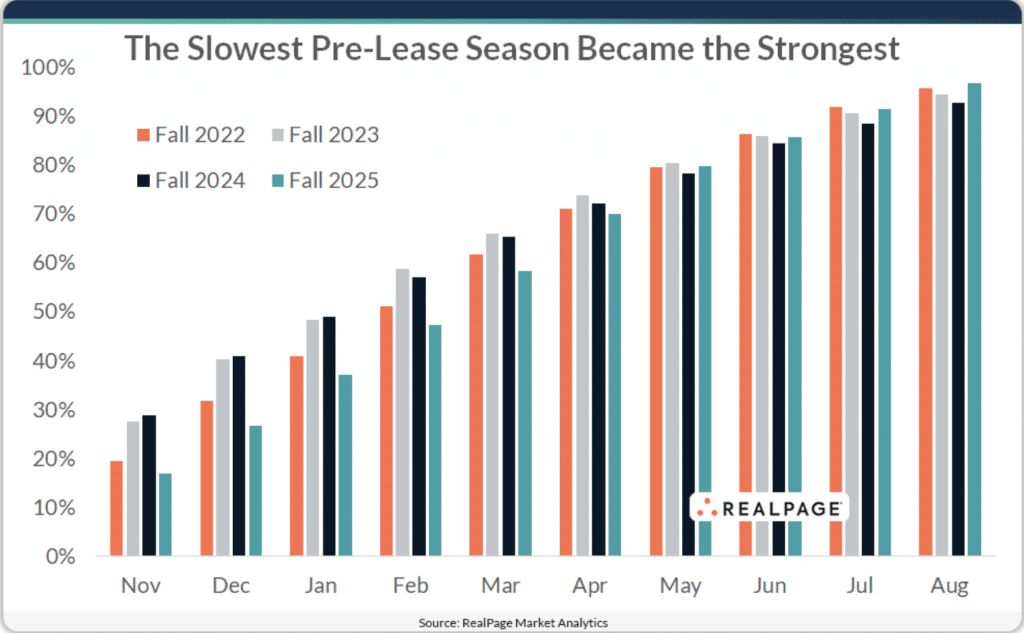
This demand is not limited to campus proximity. Many international students transition into Optional Practical Training (OPT), which creates housing needs near employment hubs as well. Data from RealPage shows that 96.5% of student housing was already leased for Fall 2025, highlighting how tight and competitive this segment can be.

For property buyers, this creates a relatively consistent renter pool, especially in cities where universities, transportation, and job markets overlap.

Top U.S. Cities to Buy Property Based on International Student Demand

New York City, New York

New York City remains one of the most powerful markets due to its sheer scale and global appeal. Universities like NYU and Columbia attract tens of thousands of international students annually, creating continuous demand across multiple neighborhoods. The city also benefits from strong public transit, allowing students to live beyond immediate campus areas.

However, investors must balance demand with higher property prices and stricter building regulations. While rental demand is deep, entry costs and compliance requirements require careful planning.

Boston-Cambridge, Massachusetts

Boston stands out as one of the best cities for student rental property because of its dense concentration of globally ranked institutions. Harvard, MIT, Boston University, and Northeastern collectively create a stable and diversified demand base that is less dependent on any single university.

This layered demand often results in strong occupancy rates and long-term rental resilience. That said, property prices are among the highest in the country, so investors need to focus on long-term appreciation alongside rental income.

Dallas-Fort Worth, Texas

Dallas-Fort Worth offers a different investment profile by combining strong international student demand with relative affordability. Universities like UT Dallas and the University of North Texas attract a growing international student base, supported by Texas’ expanding population and economy.

Unlike coastal markets, DFW provides more flexibility in pricing and property types. This makes it appealing for investors seeking balance between entry cost and rental demand.

Los Angeles, California

Los Angeles is one of the largest international student hubs in the country, supported by institutions such as USC and UCLA. The city’s global reputation, combined with strong academic and entertainment industries, makes it highly attractive for international students.

Despite strong demand, investors must carefully evaluate local rent regulations, neighborhood dynamics, and pricing. The market offers opportunity, but it requires a more strategic approach compared to smaller cities.

Chicago, Illinois

Chicago offers a well-balanced investment environment with a mix of strong universities and relatively accessible property pricing compared to coastal cities. Institutions like the University of Chicago and Northwestern contribute to a steady international student presence.

The city’s diversified economy and infrastructure further support long-term rental demand. This makes Chicago a practical option for investors looking for stability without extreme pricing pressure.

Tempe-Phoenix, Arizona

The Tempe-Phoenix area is heavily driven by Arizona State University, which hosts one of the largest international student populations in the country. This creates a highly concentrated rental market with strong demand near campus.

In addition, Phoenix’s growing job market allows for continued housing demand beyond graduation. This combination makes it particularly attractive for investors targeting both student and early-career renters.

Pittsburgh, Pennsylvania

Pittsburgh has emerged as a strong niche market, especially for STEM-focused investment. Carnegie Mellon and the University of Pittsburgh attract a steady flow of international students, particularly in technology and research fields.

Compared to larger metro areas, Pittsburgh offers lower entry prices while still maintaining solid demand. This makes it appealing for investors looking for value-driven opportunities.

Seattle, Washington

Seattle benefits from a combination of strong academic institutions and a thriving technology sector. The University of Washington attracts a significant international student population, while nearby tech employers support post-graduation housing demand.

This overlap between education and employment creates a more stable rental ecosystem. However, investors should consider pricing levels and local housing policies.

Atlanta, Georgia

Atlanta is a growing hub for both education and business, with universities like Georgia Tech and Emory attracting international students from around the world. The city’s infrastructure and connectivity further support its appeal.

The diversity of demand, from students to young professionals, makes Atlanta a flexible market for long-term investment strategies.

Raleigh-Durham-Chapel Hill, North Carolina

The Research Triangle is one of the most balanced markets in the U.S., combining strong academic institutions with a growing biotech and technology sector. Universities such as Duke, UNC, and NC State create consistent student demand.

This is complemented by job opportunities that retain graduates in the area, supporting long-term rental stability. For investors, this creates a more sustainable demand cycle compared to purely student-driven markets.

International Student Demand by City (Data Snapshot)

City / Metro AreaState Ranking (Intl. Students)Total Intl. Students (State)Key UniversitiesNotable Student CountsInvestment Insight
New York City, NY#2137,799NYU, ColumbiaNYU (27,532), Columbia (20,733)Deep demand, high entry prices, strong transit-driven rental zones
Boston-Cambridge, MA#484,097Northeastern, BU, Harvard, MITNortheastern (22,465), BU (12,845), Harvard (8,110), MIT (5,456)Multi-university demand, premium pricing, strong long-term stability
Dallas-Fort Worth, TX#397,043UNT, UT Dallas, UT ArlingtonUNT (12,982), UT Dallas (10,280), UT Arlington (7,864)Balanced affordability + job growth + student demand
Los Angeles, CA#1139,351USC, UCLA, UC Berkeley, UCSD, UCIUSC (17,884), UC Berkeley (12,020), UCLA (10,769)Massive demand, regulatory complexity, high price points
Chicago, IL#566,635UIUC, UChicago, Northwestern, UICUIUC (16,144), UChicago (7,634), Northwestern (7,019)Strong ecosystem with relatively better pricing vs coastal cities
Tempe-Phoenix, AZ#1131,386Arizona State UniversityASU (20,368)Concentrated demand, strong rental base, growing metro
Pittsburgh, PA#650,848Carnegie Mellon, UPenn, Penn State, PittCMU (9,836), UPenn (9,143), Penn State (8,739)STEM-driven demand, lower entry costs, niche strength
Seattle, WA24,640University of WashingtonUW (10,962)Tech + education overlap, strong post-grad rental demand
Atlanta, GA28,882Georgia Tech, Georgia State, EmoryGeorgia Tech (8,756), Georgia State (4,222)Diverse demand, growing metro, flexible pricing tiers
Raleigh-Durham-Chapel Hill, NC26,097Duke, NC State, UNCDuke (7,439), NC State (5,560), UNC (3,365)Research + biotech hub, long-term growth stability

Data Sources & References

What Makes These Cities Strong for Student Property Investment

The cities listed above share more than just high international student enrollment, they reflect deeper structural advantages that support long-term real estate performance. Markets with multiple universities tend to distribute demand more evenly, reducing reliance on a single institution and creating more consistent occupancy patterns.

Another important factor is the presence of graduate and STEM programs, which typically lead to longer stays and higher-quality tenants. When combined with limited on-campus housing, this pushes students into surrounding neighborhoods, strengthening rental demand in nearby residential areas.

Perhaps most importantly, cities that combine education with employment opportunities, such as Dallas, Seattle, and Raleigh, tend to outperform over time. These markets support not just student renters, but also graduates transitioning into the workforce, creating a more stable and extended demand cycle.

Why Financing Strategy Matters as Much as Location

While location drives demand, financing determines whether an investment is actually viable. Different borrower profiles face different challenges, and understanding these early can significantly impact deal success.

U.S. residents typically have access to conventional financing but must meet debt-to-income and reserve requirements. U.S. expats often need to provide U.S. tax returns even when earning abroad, which can add complexity. Foreign Nationals, on the other hand, are evaluated based on international income, assets, and credit, which requires lenders familiar with global borrower profiles.

In competitive student-driven markets, having the right financing structure is just as important as choosing the right property. It can affect purchasing power, speed of execution, and long-term returns.

America Mortgages: A Strategic Lending Partner for Global Buyers

When investing in markets driven by international student housing demand, working with a lender experienced in cross-border scenarios becomes essential. America Mortgages focuses specifically on Foreign Nationals, U.S. expats, and global investors looking to enter the U.S. real estate market.

Their approach is built around understanding international financial profiles, including foreign income, global assets, and non-U.S. credit backgrounds. This allows them to structure mortgage solutions that align with real-world investor situations rather than forcing them into rigid frameworks.

As Leading Experts in Foreign National and U.S. Expat Mortgage Loans, America Mortgages provides a practical pathway for investors targeting university-driven markets. Whether you’re buying near Boston, Dallas, or Seattle, aligning financing with your strategy can significantly improve your investment outcome. Get in touch now through email or call us now to learn more.

Summary

The top U.S. cities to buy property based on international student demand are those that combine strong university presence with long-term economic fundamentals. While major cities like New York and Boston lead in demand, emerging markets like Dallas, Phoenix, and Raleigh offer a more balanced mix of affordability and growth.

Ultimately, successful investment depends on aligning three key elements: market selection, rental demand, and financing strategy. When these factors work together, student-driven markets can offer both stability and long-term potential.

Frequently Asked Questions

Q1. What is the best U.S. city to buy property near international students?

A: Cities like New York, Boston, and Los Angeles offer the highest demand, while Dallas, Phoenix, and Raleigh provide more balanced affordability and growth potential.

Q2. Are international students reliable renters?

A: International students often create consistent demand near universities and employment hubs, but proper screening and property management remain important.

Q3. Should Foreign Nationals invest in U.S. student housing?

A: Yes, provided they work with lenders who understand international income and asset structures under applicable underwriting guidelines.

Q4. How can investors maximize returns in student housing markets?

A: Investors can improve returns by focusing on properties located within close proximity to major universities, public transit, and student-friendly amenities. Targeting markets with multiple universities and strong job opportunities can also help maintain consistent occupancy. Additionally, choosing the right financing structure and aligning the property with long-term rental demand can significantly enhance overall investment performance.

Foreign national investor securing a U.S. real estate bridge loan without SSN or income documentation

You own valuable U.S. real estate. The American banking system was not built to serve you. America Mortgages, the only U.S. lender exclusively focused on foreign nationals and expats, was.

Foreign nationals can access U.S. real estate bridge loans without a Social Security Number, W-2 income, U.S. tax returns, or domestic credit history. America Mortgages, a wholly-owned subsidiary of Singapore-headquartered Global Mortgage Group (GMG), provides asset-based bridge financing exclusively for non-resident foreign nationals and U.S. expats, approved on the U.S. property’s value and LTV ratio. America Mortgages has a 97% approval rate and has funded over $480 million serving clients in 57 countries, with closings in as few as 8 business days.

Foreign nationals collectively own hundreds of billions of dollars in American real estate.

Manhattan condominiums. Beverly Hills estates. Miami waterfront properties. San Francisco tech corridor investments. These assets were purchased with international capital, held for years or decades, and have appreciated enormously.

And yet, when their owners want to release equity, bridge to a new acquisition, or access the capital their U.S. properties represent, the American banking system tells them no.

The reason is structural, not personal. U.S. banks are designed for domestic borrowers. They require SSN, W-2 income documentation, U.S. tax returns, and domestic credit history. For a Singapore family office, an Indonesian entrepreneur, a Hong Kong business family, or a UAE investor, this documentation simply does not exist in the required form.

This is the gap that America Mortgages was built to fill, as the only U.S. lender focused exclusively on non-resident foreign nationals and U.S. expats, backed by the global capital network of Global Mortgage Group (GMG), headquartered in Singapore.

  • 57 – Countries of foreign national borrowers served
  • 97% – Approval rate for qualified applications
  • $480M+ – Funded by America Mortgages in a single year
  • 150+ – U.S. lender and bank programs available

If you’re a foreign national or expat looking to access U.S. real estate financing, you can speak directly with our team at America Mortgages.

Why Foreign Nationals Cannot Use Conventional U.S. Banks

The obstacles are institutional , not individual. The U.S. mortgage underwriting system was built around domestic borrowers with predictable income documentation. Foreign nationals are excluded by design, not by intent.

  • No Social Security Number: SSN is the foundational identifier for U.S. credit systems. Without it, most banks cannot process an application
  • No U.S. credit history: Credit Bureau systems (Equifax, Experian, TransUnion) reflect domestic financial activity. Foreign nationals have no profile, not bad credit, no credit
  • Foreign income structures: HKD income from a Hong Kong limited company, IDR business income from an Indonesian entity, SGD investment income, all legitimate and substantial, but not processable under standard U.S. underwriting frameworks
  • Offshore entity as borrower: Most U.S. banks will not lend to a BVI company, a Cayman trust, or an offshore SPV, even if the underlying beneficial owner is creditworthy
  • Timeline: U.S. bank mortgage approvals take 45–90 days. Competitive real estate markets do not operate on 90-day timelines

The America Mortgages Solution: Asset-Based, Globally Structured

America Mortgages replaces the income-first underwriting framework with an asset-first framework. The loan is approved on the U.S. property’s value, not the borrower’s documentation profile.

REQUIREMENTU.S. BANKAMERICA MORTGAGES (ASSET-BASED)
Social Security NumberRequiredNot required
W-2 / Tax returns2 years mandatoryNot required
U.S. credit historyMinimum 620 FICONot required
Foreign incomeRarely acceptedFully accepted; all structures
Offshore entity borrowerTypically declinedAccommodated; GMG expertise
Approval timeline45–90 days24–48 hours indicative; 8–21 days close
U.S. bank account requiredOften requiredNot required
Minimum property valueMarket dependent$500,000

Country-Specific Profiles: How GMG Serves Global HNW Investors

SINGAPORE: Family Offices & HNW Investors

Singapore has the world’s highest concentration of family offices relative to GDP. GMG is headquartered in Singapore, providing in-person advisory, local market knowledge, and direct access for Singapore-based HNW U.S. property owners. Primary U.S. concentrations: Manhattan, Hawaii, San Francisco.

HONG KONG: Business Families & Investors

Hong Kong business families represent some of the deepest concentrations of U.S. property ownership globally, particularly in Manhattan (Tribeca, Upper East Side, Billionaires’ Row), Beverly Hills, and Pacific Heights SF. HKD income and HK company structures fully accommodated.

INDONESIA / SOUTHEAST ASIA: Business Leaders & Entrepreneurs

Indonesian, Malaysian, and Southeast Asian business leaders with Beverly Hills, Manhattan, and Miami holdings. Business income structures, often through Indonesian PT companies or Malaysian Bhd entities, are fully processed without U.S. documentation requirements.

MIDDLE EAST: Family Offices & Sovereign-Adjacent

UAE, Saudi, and regional GCC investors with Manhattan, Miami, and Los Angeles holdings. Complex ownership structures through holding companies and family office vehicles accommodated. Rapid-close capability for time-sensitive acquisitions.

Real Transactions: Foreign National Bridge Loans Closed by GMG

Singapore Family Office — Manhattan Equity Release

A Singapore-based family office held a $6.5M Manhattan condominium outright through an offshore SPV. They required $3M for a co-investment closing in 25 days. No U.S. income. No SSN. Standard bank: declined at the application stage. America Mortgages: closed a first-charge asset-based bridge in 18 business days. Interest-only. 18-month term.

Hong Kong Business Family — Beverly Hills Estate Refinance

A Hong Kong family held a $9M Beverly Hills estate purchased through a BVI company in 2011. The estate had appreciated significantly. They wanted to release $4M without selling. All income was HKD from a Hong Kong company, unqualifiable by U.S. banks. America Mortgages structured an asset-based facility at 44% LTV. Completed in 14 business days.

UAE Investor — Miami Waterfront Acquisition

A UAE-based investor identified a $7.5M Miami waterfront opportunity. The seller required a 3-week close. No U.S. credit history. Income from UAE business structures. America Mortgages provided a committed bridge facility with closing in 12 business days, allowing the UAE investor to close at a speed that competing domestic buyers could not match.

Frequently Asked Questions

Q1: Can a foreign national get a real estate bridge loan in the U.S.?

Yes. America Mortgages provides asset-based bridge loans to foreign nationals in 57 countries. No SSN, no W-2, and no U.S. credit history are required. The loan is approved on the U.S. property’s value and LTV ratio.

Q2: Can I borrow through a foreign company or trust?

Yes. America Mortgages and GMG have specific expertise in structuring U.S. asset-based loans for BVI companies, Cayman trusts, offshore SPVs, and family limited partnerships. This is one of the firm’s core differentiators from domestic U.S. lenders.

Q3: Do I need to travel to the U.S. to close?

Not necessarily. America Mortgages has structured transactions for clients who completed the entire process remotely through their Singapore and international offices. Remote closing procedures are available subject to legal requirements in specific states.

Q4: What U.S. property types qualify for foreign national bridge loans?

All property types: single-family luxury residences, condominiums, multi-family properties, commercial properties, and mixed-use assets. Minimum value $500,000. America Mortgages specialises in HNW transactions of $3M and above.