2026 FIFA World Cup: How Successful Investors Time Real Estate Opportunities

2026 FIFA World Cup real estate investment timeline and strategy
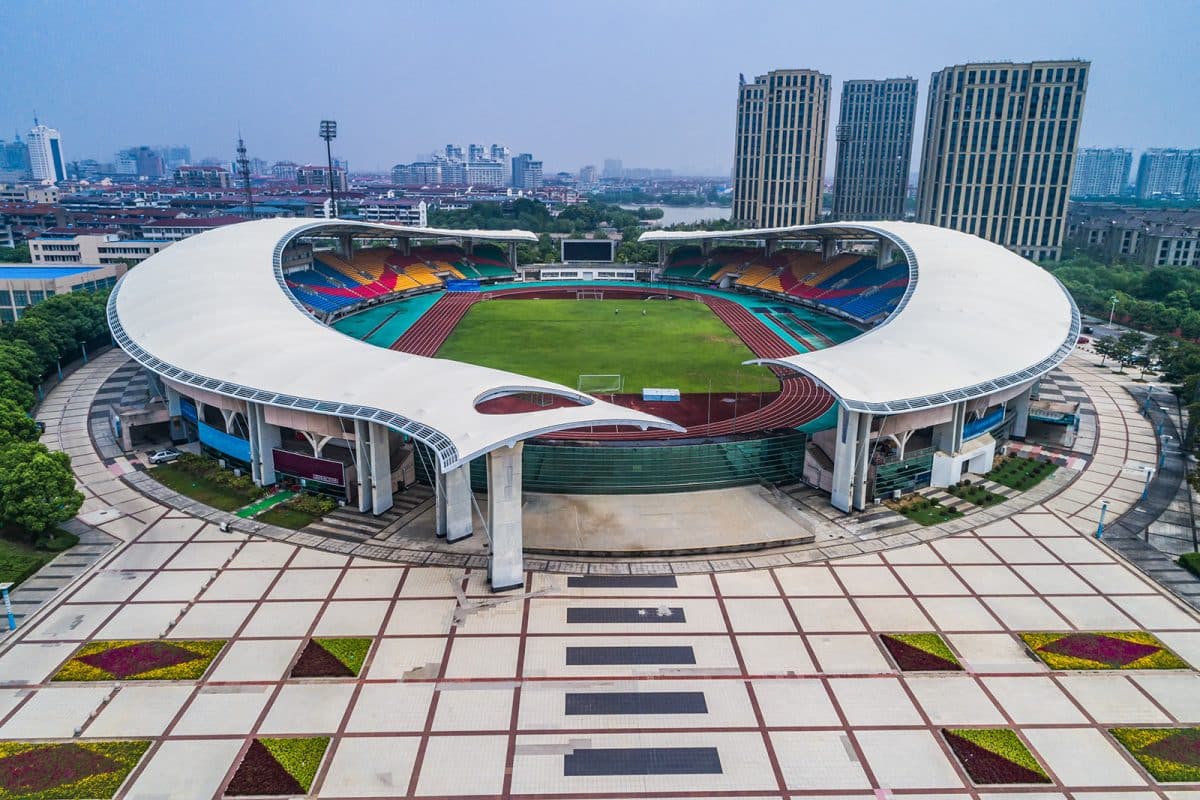
Sports center

What You Will Learn

  • How to structure a real estate investment timeline before, during, and after the 2026 FIFA World Cup
  • When investors historically capture the strongest returns around FIFA World Cup host cycles
  • Which strategies support long-term appreciation versus short-term income
  • How financing and liquidity planning affect FIFA World Cup-driven investments
  • Common mistakes investors make when timing real estate purchases around global events

2026 FIFA World Cup Real Estate Investment Timeline and Strategy

For real estate investors, the 2026 FIFA World Cup is not a single moment. It represents a multi-year investment cycle that begins well before kickoff and continues long after the final match.

Investors researching World Cup real estate investment opportunities in host countries often focus too narrowly on event timing. In practice, successful outcomes depend on when capital is deployed, how risk is managed, and whether post-event fundamentals remain strong.

This guide breaks the World Cup investment window into a practical, investor-grade timeline, supported by lessons from previous tournaments and current U.S. housing conditions.

How World Cup Investment Cycles Typically Play Out

Across past tournaments, real estate markets follow a familiar pattern:

  • Early movers benefit from infrastructure announcements and rezoning
  • Mid-cycle buyers face rising prices and compressed yields
  • Late entrants often encounter peak pricing with limited upside

Research from the Lincoln Institute of Land Policy’s assessment of mega-event infrastructure impacts shows that long-term property gains are most consistent when event-related infrastructure spending reinforces existing employment centers, transport connectivity, and housing demand, rather than relying primarily on short-term tourism activity.

This pattern was visible in Brazil’s 2014 World Cup cycle, where price growth accelerated years before the tournament in select cities and normalized afterward once speculative demand faded.

Phase 1: Early Positioning (18–36 Months Before 2026)

This is the phase where institutional capital and disciplined private investors typically move first.

What Happens in This Phase

  • Infrastructure budgets and transit corridors become defined
  • Redevelopment zones gain clarity
  • Financing conditions still allow negotiation leverage

Investors often anchor decisions using macro indicators highlighted in the U.S. real estate market outlook for 2026, ensuring the World Cup acts as a catalyst rather than the sole investment thesis.

Best strategies in Phase 1

  • Buy-and-hold residential assets
  • Value-add properties in growth corridors
  • Multifamily near employment hubs

Primary risk: misjudging infrastructure delivery timelines

Phase 2: Pre-Event Acceleration (6–18 Months Before 2026)

This phase attracts broader investor attention and rising competition.

What Changes

  • Media coverage expands
  • Pricing increasingly reflects future expectations
  • “World Cup proximity” narratives gain traction

Investors searching for real estate strategies for investors during World Cup tournaments often enter here, but discipline is critical. Paying for speculative upside rather than proven demand can reduce long-term performance.

This is also when many overseas buyers evaluate financing options. Contrary to common assumptions, cash is not always required. Structured lending remains available, including programs explained in how U.S. expats buy real estate back home without U.S. income or credit.

Best strategies in Phase 2

  • Defensive acquisitions in proven neighborhoods
  • Locking longer-term financing to preserve liquidity

Primary risk: overpaying based on short-term narratives

Phase 3: Tournament Window (During 2026)

During the World Cup itself, visibility peaks, but fundamentals do not change overnight.

Short-Term Effects

  • Temporary rental demand increases
  • Elevated transaction inquiries
  • Increased international buyer interest

Data from Qatar’s 2022 cycle shows rental prices surged in the lead-up to the event before stabilizing. Similar patterns occurred during Brazil 2014, reinforcing that short-term income does not guarantee long-term appreciation.

For investors focused on maximizing rental yields in world cup host cities, this phase may supplement income but should not define the investment thesis.

Best strategies in Phase 3

  • Stabilize operations
  • Maintain pricing discipline
  • Avoid emotional buying decisions

Phase 4: Post-Event Consolidation (1–5 Years After)

This phase often delivers the most reliable long-term outcomes.

Why This Phase Matters

  • Speculative demand exists
  • True housing demand becomes clearer
  • Infrastructure investments are fully operational

The long-term property price effects after hosting the FIFA World Cup depend on sustained job growth, population inflows, and housing supply constraints. Markets with global liquidity and premium demand often retain value well beyond the event, a trend also reflected in why global investors continue buying U.S. luxury property.

Best strategies in Phase 4

  • Refinance where appropriate
  • Optimize long-term tenancy
  • Consider selective exits in highly liquid markets

Financing Strategy Across the World Cup Timeline

Financing should evolve alongside the investment cycle:

  • Early phase: flexibility and leverage matter most
  • Pre-event: rate protection and loan structure become critical
  • Post-event: refinancing and equity optimization take priority

Extended amortization discussions, including those explored in what 50-year mortgage proposals could mean for investors, highlight how financing structure can influence long-term affordability and exit strategies.

Align Your Timing, Market, and Financing Strategy

Successful World Cup real estate investments are rarely about speed. They are about entering at the right phase, in the right market, with financing that supports long-term ownership.

America Mortgages works with international investors and U.S. expats to structure financing strategies aligned with multi-year investment timelines. To explore your options ahead of 2026, visit America Mortgages, connect through our contact page, or email [email protected] for a confidential discussion.

Summary

The 2026 FIFA World Cup creates a multi-year real estate investment cycle, not a single opportunity. Investors who focus on early positioning, disciplined underwriting, and post-event fundamentals are best positioned to benefit. Timing, financing, and market selection consistently matter more than short-term demand spikes.

Frequently Asked Questions

Q1: When is the best time to invest before the 2026 FIFA World Cup?

Historically, the strongest positioning occurs 18–36 months before the event, when infrastructure plans are clear but pricing has not fully adjusted.

Q2: Do property prices peak during the World Cup?

In many past host cities, prices peaked before the event and stabilized afterward. Long-term growth depends on local fundamentals.

Q3: Is short-term rental income reliable during the FIFA World Cup?

Rental demand can spike temporarily, but regulation and normalization risks make long-term strategies more stable.

Q4: Can international investors finance U.S. properties during this cycle?

Yes. Many programs allow financing using foreign income or asset-based structures, even without U.S. credit history.

Best 2026 FIFA World Cup Host Cities for Real Estate Investors

2026 FIFA World Cup host cities real estate investing

What You Will Learn

  • How hosting the 2026 FIFA World Cup impacts local housing markets (and what does not change at all)
  • The best 2026 FIFA World Cup host cities for real estate investors based on fundamentals, not hype
  • What to look for in infrastructure corridors, job growth, and supply constraints
  • Real-world lessons (with stats) from Brazil 2014 and Qatar 2022 that investors can apply to 2026
  • How international investors and U.S. expats can structure financing ahead of 2026

Best 2026 FIFA World Cup Host Cities for Real Estate Investors

The 2026 FIFA World Cup will bring global attention to 16 host cities across North America. But for real estate investors, the tournament itself is rarely the “return.” The return comes from what the event accelerates: infrastructure timelines, neighborhood regeneration, job concentration, and long-term demand that continues after the final match.

If you are researching 2026 world cup real estate investment hotspots, treat this as a market selection exercise, not a tourism story. Below is a practical way to compare host cities like an investor, using lessons from prior World Cups and the realities of U.S. housing in 2026.

For the official host city list and tournament context, use FIFA’s official host-city coverage as your baseline reference. FIFA’s World Cup 2026 host cities overview is a helpful starting point for verifying which metros are in play.

How Hosting the 2026 FIFA World Cup Impacts Local Housing Markets

When people search how hosting the FIFA World Cup impacts local housing markets, they usually expect one answer: “prices go up.” Reality is more specific.

In most host markets, real estate shifts in three phases:

  1. Pre-event repositioning (years before): developers, city agencies, and capital move first
  2. Build-up (12–36 months before): infrastructure and mixed-use areas show visible progress
  3. Post-event (multi-year): only cities with strong fundamentals keep compounding

The key is that the World Cup tends to magnify what is already true about a market. A city with sustained job growth and a limited housing supply often keeps appreciating. A city relying on event tourism alone can cool quickly.

What Past World Cups Teach Investors

The best “World Cup real estate strategy” is to copy what worked in prior cycles and avoid what did not.

World Cup Real Estate Stats Investors Can Actually Use

Host & CycleWhat movedWhy it matters for 2026
Rio de Janeiro (Brazil cycle around 2014)Rio’s annual house price growth peaked at 45% (Oct 2011) and was still 13% by Apr 2013 (FIPE ZAP, via Savills)Rapid run-ups happen early, but they normalize. Buy based on fundamentals, not peak momentum.
Rio and São Paulo (pre-event years)Average house price growth over the prior five years averaged 23% per year in Rio and 17% per year in São Paulo (Savills)Mega-event attention can accelerate demand in already-liquid, globally visible cities.
Doha (Qatar 2022 build-up)Doha recorded a 23% increase in average rental prices (H1 2021 vs H1 2022) and a 27% increase per sqm in advertised sale prices (Property Finder report)Rental surges can happen, but investors still need regulation checks and post-event demand plans.

These numbers support one simple conclusion: the “World Cup effect” is strongest when it rides on top of strong baseline demand and a credible investment pipeline.

The Investor Framework: How to Rank 2026 FIFA World Cup Host Cities

To identify World Cup catalyst cities for long-term real estate appreciation, compare host markets using five investor-grade filters:

  1. Population and inbound migration trends
  2. Job growth, concentration, and wage growth
  3. Housing supply constraints and permitting pace
  4. Infrastructure corridors that change commute patterns
  5. Exit liquidity (depth of buyer pool, resale velocity, financing availability)

Now let’s apply that to the cities investors ask about most.

Best 2026 FIFA World Cup Host Cities for Real Estate Investors

Below are investor-style takes, written for long-term performance, not short-term hype.

Miami: Global Liquidity + Long-Term Demand

Miami consistently attracts global capital and lifestyle migration, which supports both resale liquidity and rental demand across multiple price tiers. For investors, the World Cup is not the reason to buy Miami. It is a visibility accelerant for a market already driven by international demand.

This aligns with why many overseas buyers remain active in premium segments, as covered in U.S. luxury property investments and why global investors are buying, especially when they want long-term capital preservation alongside appreciation.

Best fit for: condos in prime submarkets, high-quality long-term rentals, select multifamily
Investor watch-out: insurance costs, HOA rules, and short-term rental restrictions in specific buildings

Dallas: Scale, Jobs, and Repeatable Rental Demand

Dallas is a fundamentals city. Investors like it because demand can be repeatable: employment, household formation, and long-run rental absorption. For a long-term buyer, Dallas is often a “boring in a good way” market where the World Cup does not have to carry the investment thesis.

Best fit for: single-family rentals, build-to-rent exposure, stable multifamily
Investor watch-out: supply pipeline (new deliveries can soften rent growth in certain submarkets)

Los Angeles: Scarcity Premium + Deep Global Buyer Pool

Los Angeles is expensive, but scarcity is real. In supply-constrained metros, even “normal” demand can support resilient pricing over long holds. For international investors, LA also tends to have deeper exit liquidity because global buyers understand the market.

Best fit for: long-hold strategies, scarcity-driven appreciation plays, select multifamily
Investor watch-out: rent regulation complexity and operating cost inflation

New York/New Jersey: Liquidity and Defensive Demand

The New York region tends to behave like a capital market as much as a housing market: strong liquidity, steady international interest, and long-term demand drivers. If a reader is comparing global gateway cities, New York real estate investment and why global investors choose the Empire State is a useful reference point for the demand story and investor rationale.

Best fit for: defensive allocations, long-term holds, global buyer demand
Investor watch-out: taxes and building-level rules that affect net returns

Seattle: High-Income Demand, Tech Influence, Tight Supply Pockets

Seattle can work well when investors buy near employment hubs and transit access, especially in supply-tight neighborhoods. The key is avoiding “event proximity” logic and instead underwriting tech-driven demand and housing constraints.

Best fit for: high-quality long-term rentals, appreciation-oriented buys
Investor watch-out: neighborhood-level volatility and regulatory complexity

Atlanta: Population Growth and Scalable Rental Demand

Atlanta offers a balanced investment profile for real estate investors evaluating 2026 FIFA World Cup host cities through a long-term lens. The metro continues to attract inbound migration and job growth across logistics, technology, healthcare, and professional services, supporting steady housing demand well beyond the tournament.

Rather than stadium-driven upside, Atlanta’s strength lies in its scale, relative affordability, and transit-connected employment corridors. Investors often focus on neighborhoods tied to job centers and infrastructure improvements, where rental absorption remains consistent.

Best fit for: single-family rentals, build-to-rent strategies, and mid-market multifamily
Investor watch-out: localized oversupply in select submarkets and reassessment-driven property tax increases

Real Estate Strategies for Investors During World Cup Tournaments

If your reader wants tactics, here are strategies that hold up in real markets:

1) Invest in “Corridors,” Not Stadium Rings

Stadium-adjacent demand spikes are real, but they are temporary. Corridors tied to transit, employment hubs, and long-term regeneration tend to outperform because they keep attracting residents after tourism fades.

2) Use the 2026 Outlook to Stress-Test Your Deal

Rates, affordability, and supply matter more than match schedules. If you need a macro lens for underwriting assumptions, anchor your analysis in the U.S. real estate market outlook for 2026 and build conservative base-case rent and vacancy assumptions.

3) Keep Liquidity by Financing, Not Overpaying in Cash

Many international investors assume major U.S. markets require all-cash offers. Often, that is not necessary. If you are a U.S. citizen living abroad, how U.S. expats buy real estate back home without U.S. income or credit explains realistic paths to qualification using overseas income documentation and lender programs designed for expats.

4) Watch Policy Shifts in Mortgage Structure

Long-run affordability shapes demand. That is why investors track products and proposals that could change buyer behavior over time, including what a 50-year mortgage proposal could mean for investors, especially in expensive gateway markets.

Build Your 2026 FIFA World Cup Host City Plan With the Right Financing

If you are evaluating the best 2026 FIFA World Cup host cities for real estate investors, the highest ROI step is usually not “picking the hottest city.” It is matching the right city to your hold period, property type, and financing structure so your investment still works when the World Cup headlines are gone.

To discuss financing for a U.S. purchase as an international investor or U.S. expat, start at the America Mortgages or reach our team directly through the contact page. You can also email [email protected] for a private, scenario-based review.

Summary

The 2026 FIFA World Cup is a visibility event, but real estate performance is driven by fundamentals. Investors should rank host cities using migration, job growth, supply constraints, infrastructure corridors, and exit liquidity, then underwrite conservatively using post-event demand assumptions. Prior World Cup cycles show early price acceleration can happen, but durable returns are typically earned in markets where demand remains strong long after the tournament ends.

Frequently Asked Questions

Q1: Which 2026 FIFA World Cup host city has the best long-term real estate upside?

A: It depends on your strategy. Miami and Los Angeles often fit long-hold appreciation and global liquidity. Dallas can fit scalable rental portfolios. New York/New Jersey tends to fit defensive, high-liquidity allocations.

Q2: Do property prices always rise in World Cup host cities?

A: No. Past cycles show some markets spike early and normalize. Long-term performance is strongest where housing demand, jobs, and supply constraints remain strong after the event. Savills PDF

Q3. Are short-term rentals near stadiums a safe strategy for 2026?

A: They can produce a temporary revenue spike, but they carry regulation, HOA, and seasonality risk. Many investors prefer transit corridors and employment hubs for more stable long-term demand.

Q4: Can U.S. expats qualify for a mortgage from overseas?

A: Yes, many expats qualify using foreign income documentation and lender programs designed for overseas borrowers, even when they do not have current U.S. income.

Q5: How early should I start planning a 2026 FIFA World Cup host city investment?

A: Earlier is usually better because infrastructure and redevelopment pricing often get bid up ahead of the event. Planning early also gives you time to structure financing and underwriting conservatively.