
Yes, buying property in Texas for rental income can be a profitable long-term investment. There is a diverse housing market, well-developed employment areas, and a lot of tenants available in Texas. However, the actual amount of profit will depend on the price of buying properties, rental demand, taxes, insurance, and maintenance costs.
There are numerous options to choose from among such cities as Houston, Dallas, Austin, San Antonio, and Fort Worth. These cities have different property costs, demographics of tenants, and rental income expectations. It would also be useful to know about Texas real estate investment opportunities.
Foreign investors as well as US citizens who want to invest in Texas need to choose proper financing. America Mortgages can help you to find out financing solutions for your Texas property investment.
Why Is Texas an Attractive Market for Rental Property Investors?
Texas attracts rental property investors through its growing population, its job market, and its number of tenants. The state provides varied housing and investment markets in its major cities. However, investors must be informed about the affordability of housing and demand for rentals before investing in property.
Key Factors Supporting Texas Rental Property Investment
| Market factor | Why it matters to investors |
| Established renter population | Creates an existing market for residential rentals |
| Housing affordability | Makes rental options important for many households |
| Flexible living arrangements | Attracts tenants experiencing lifestyle changes |
| Diverse housing options | Supports demand for apartments and single-family rentals |
| Financial limitations | Makes homeownership less accessible for some households |
| Changing family needs | Creates demand for different rental property types |
According to the Texas Real Estate Research Center, almost one third of Texas residents rent their homes, which is equivalent to more than four million occupied rental units in Texas. Moreover, 53% of Texas residents who rent spend more than 30% of their household incomes on their rent.
Moreover, this research also brings out some differences between the two modes of living, that is, renting versus ownership, in Texas’s big cities. The median rent of an apartment is less than 20% of the household income. A single family rental unit takes up about 25%.
Which Texas Cities Offer Opportunities for Rental Income?
Houston, San Antonio, Dallas, Fort Worth, and Austin present unique options for real estate investors looking for rental properties. Each market is characterized by different costs, tenant profiles, and rental environments. Investors need to weigh local demand and affordability factors prior to deciding where to invest.
Here are five cities in Texas worth considering:
- Houston: Houston has many opportunities for investors because of its healthcare, energy, logistics, and manufacturing sectors. Investors can look into mature residential and suburban communities with proximity to employment centers.
- San Antonio: San Antonio provides opportunities for investors who want relatively inexpensive residential homes. The military bases, healthcare providers, education sector, and tourism can be considered part of San Antonio’s local economy.
- Dallas: Dallas has many professionals coming in due to its corporate offices, financial service firms, technology companies, and business centers. Investors can check out homes in areas close to employment centers and mature residential areas.
- Fort Worth: Fort Worth has many opportunities for investors in suburban and developing residential areas. Families looking for more space to live in can be considered a market for tenants. Accessibility to employment centers and transportation can also affect the market for rentals.
- Austin: Austin is home to technology professionals, students, and other people who are employed. However, since the cost of acquisition is higher, careful financial planning must be considered.
According to Realtor.com Economic Research, October 2026, the median listing price in Houston was $319,000 and the monthly rent cost $1,800. In San Antonio, the median listing price was $289,450 and the rent cost $1,615. The median listing price in Dallas was $435,000 and the rent cost $1,675, whereas that in Fort Worth was $342,495 and the rent cost $1,720. Austin had the highest median listing price of $525,000, with the rent of $1,949.
What Costs and Risks Should Investors Consider Before Buying?
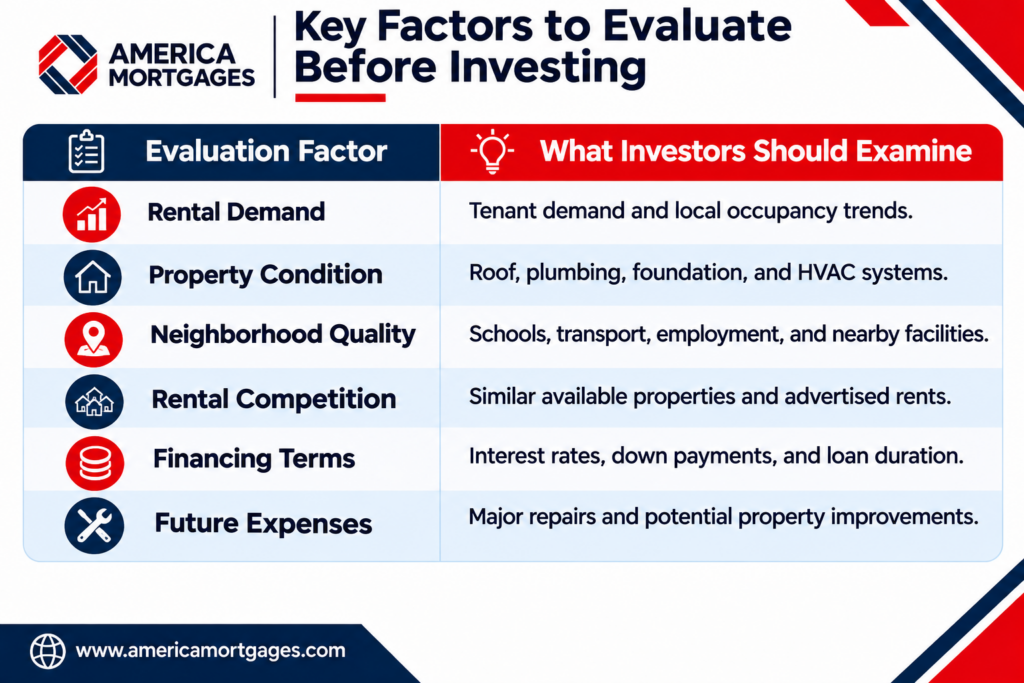
Investors should consider taxes, insurance, maintenance, and other factors before buying real estate for rent in Texas. In some cases, such payments will affect the monthly profitability of the investment.
Property Taxes and Tax Assessments
Property taxes in Texas could substantially raise the cost of annual ownership. They depend on counties, school districts, and local taxation entities. It is vital to examine current tax assessments and calculate future costs before estimating the rental profit.
Insurance Costs and Weather Damage
Texas real estate might be threatened with hurricanes, hail, bad weather, and floods. The cost of insurance will depend on the geographical location of the asset, its condition, and the type of coverage. It is important to get landlord insurance quotes and determine whether additional flood insurance is required.
Maintenance and Repair Costs
Rentals usually need to be maintained and sometimes repaired. The costs might arise due to roofing, plumbing, electric systems, and HVAC. Depending on the age of the property, additional capital should be provided.
Vacancy and Tenant-Related Risks
An unoccupied building earns no rental money but still accrues costs associated with its ownership. Rent arrears, turnover of tenants, and lengthy repairs could be issues for the cash flow. It is important for investors to study occupancy rates in the region and have enough reserves for any possible rent interruptions.
The Texas Department of Insurance states that typical homeowners’ policies usually do not cover flooding. Hence, it might be necessary to purchase separate flood insurance coverage. The insurance will also differ depending on the insurance policy terms and location of the property. Coverage restrictions and exceptions related to flooding are explained in the Texas Department of Insurance Home Insurance Guide.
Before making an offer on the property, receive the insurance quotes and schedule the inspection. Additionally, check the regional tax assessment and calculate your expenses.
How Can Investors Evaluate Rental Profitability?
Investors can consider the profitability of rentals through a comparison of income potential with ownership expenses and the prevailing market environment. There are various metrics that assist in gauging whether a property is able to earn sustained profits. Some of these include gross rental yield, net operating income, and cash on cash return.
Calculate the Gross Rental Yield
Gross Rental Yield = (Annual Rental Income ÷ Property Purchase Price) × 100
For instance, let us take the case of a property valued at $250,000 in Texas. The property earns $2,000 per month, which equates to $24,000 per year.
($24,000 ÷ $250,000) × 100 = 9.6% gross rental yield.
Calculate the Net Operating Income
Suppose annual operational expenses are $9,000. This includes taxes, insurance, maintenance costs, management fees, and vacancies.
Net Operating Income = Annual Rental Income − Operating Expenses
$24,000 − $9,000 = $15,000 annually.
Therefore, the property’s net operating income yield is:
($15,000 ÷ $250,000) × 100 = 6%.
The figures have not taken into account mortgage payments, income taxes, and capital improvements. Thus, investors need to evaluate their financial terms separately. Cash-on-Cash return is useful in calculating the annual pre-tax cash flow with respect to the total amount invested.
Additionally, check out similar rental ads and be sure of what rent prices you can actually get locally. Investors can find out how to qualify for financing investment property with rental income.
Case Study: How America Mortgages Helped a Singapore Investor Acquire a 32-Unit Texas Property in 2026
America Mortgages helped an investor from Singapore to purchase a 32 unit multi-family property in Texas. The investor had very limited US credit history and the seller was requiring a 14 day close. America Mortgages financed the transaction through an $5.2 million asset based bridge loan at LTV of approximately 70%.
The business plan included the improvement of occupancy rates and net operating income through property improvements. The exit strategy included a refinance of the property into permanent DSCR financing within 12-18 months. This is an example of how proper financing can assist international investors in Texas rental property transactions.
Find Your Next Texas Rental Property Investment with America Mortgages
Discover Texas property investment opportunities by planning your financing. Review property costs, study your chances for rentals, and get familiar with mortgages before investing.
America Mortgages helps foreign nationals, US expatriates, and international investors in acquiring financing via over 150 US lender schemes. No matter whether you’re thinking of buying a single family home or a multifamily property, our company will assist you in finding appropriate mortgage solutions.
Wish to buy property in Texas? Contact America Mortgages right away to receive individual financing advice. You can call us at +1 (845) 583-0830 or email hello@americamortgages.com.
FAQs
Q1: What is a good rental yield for investment property in Texas?
A rental yield of 6% to 8% can be attractive for Texas investors. However, the right level of profitability will depend on the area and state of the property. It is necessary to make sure that annual rent will cover the cost of acquisition of the property.
Q2: Can foreigners buy rental property in Texas?
Yes, foreign nationals can generally buy a rental property in Texas. It is important to note that they are not required to be citizens or permanent residents of the U.S. It is advisable to get well versed with financing needs and tax liabilities.
Q3: Are rental properties in Texas subject to state income tax?
In Texas, there is no personal state income tax on income earned from renting property. However, a tenant should not forget about paying income tax at the national level. Generally speaking, income from renting should be reported to the Internal Revenue Service.
Q4: Is it better to buy a single-family home or multifamily property in Texas?
Single-family houses appeal to those who want more privacy and open space. Multifamily housing is capable of earning money through several tenants living within the same house. But they might need higher maintenance and management. Compare purchase prices, rental demand, operating costs, and financing before selecting either option.
Q5: How long does it take for a rental property in Texas to become profitable?
Cash flow from a rental investment can be positive in its first year. But, profitability will depend on several factors such as cost of purchase, financing terms, occupancy rates, and costs. There may also be an improvement in profitability over time as the mortgage is paid off and the value of the property increases.
Share this article
Ready to get started?
Speak with our U.S. mortgage specialists today and discover your options.
Schedule a call