What Is the European Investment Shift Toward U.S. Real Estate?
The European investment shift toward U.S. real estate refers to the growing trend of capital from Europe moving into American property markets. This shift includes both foreign investors and Americans living overseas who continue to invest in property within the United States.
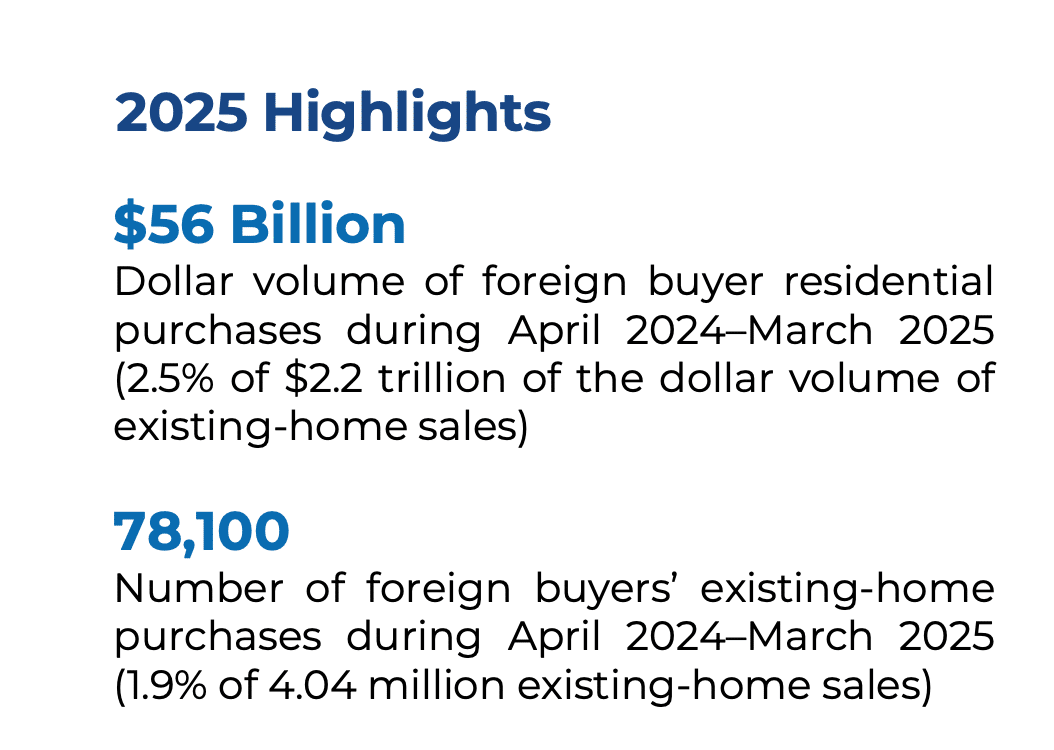
According to the National Association of Realtors international transactions report, foreign buyers purchased approximately $56 billion worth of U.S. residential real estate between April 2024 and March 2025, representing about 78,100 homes. These purchases reflect a broader global pattern in which investors allocate capital toward markets that offer liquidity, transparency, and long-term stability.
Within this trend, the European investment shift toward U.S. real estate is particularly notable because Europe contains both major institutional investors and large populations of American expatriates who maintain financial connections to the U.S. housing market.
Why Is Capital From Europe Moving Into U.S. Real Estate?
The European investment shift toward U.S. real estate is largely driven by economic diversification and the relative stability of the U.S. housing market.
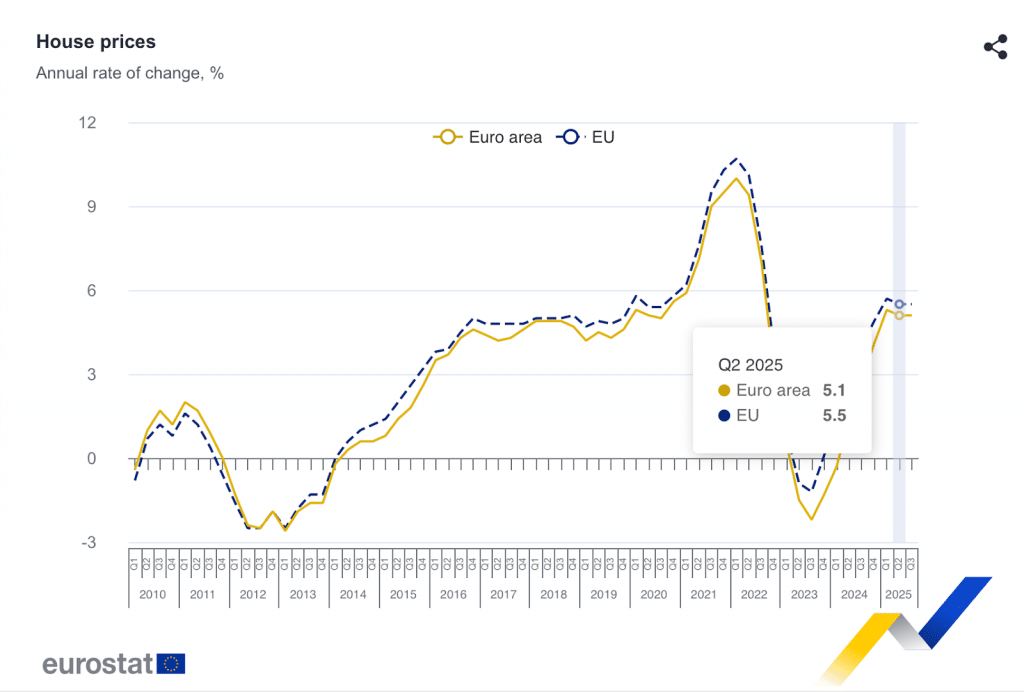
Housing costs across Europe have increased significantly over the past decade. According to Eurostat housing data, residential property prices across the European Union rose 5.5% year over year in 2025, while rental prices have also continued climbing in many urban markets.
At the same time, affordability pressures have intensified. Eurostat reports that a significant share of residents across Europe face housing costs that exceed a large percentage of their disposable income. These pressures have encouraged investors and expatriates to diversify their real estate holdings internationally.
For many investors, the United States offers a unique combination of factors that reinforce the European investment shift toward U.S. real estate. The U.S. market provides deep rental demand, transparent property ownership structures, and access to financing systems that are among the most developed in the world.
Are U.S. Expats in Europe Driving the European Investment Shift Toward U.S. Real Estate?
Yes. One of the most important drivers behind the European investment shift toward U.S. real estate is the population of Americans living abroad.
Millions of U.S. citizens reside overseas, including large communities throughout the United Kingdom, Germany, France, Switzerland, Spain, and the Netherlands. While many of these Americans live and work abroad for years, they often continue to maintain financial ties to the United States.
For these expatriates, purchasing property in the United States serves multiple strategic purposes. Some buyers are planning for an eventual return to the country, while others seek rental income or long-term investment exposure to the American housing market.
This group plays a significant role in the European investment shift toward U.S. real estate because expats typically already understand the U.S. financial system, maintain U.S. tax filings, and often prefer to hold property in a market they know well.
Which U.S. Markets Are Most Attractive to European Buyers?
Several U.S. states consistently attract buyers participating in the European investment shift toward U.S. real estate. These markets offer strong rental demand, economic growth, and global connectivity, making them appealing to both U.S. expats living in Europe and foreign nationals investing in American property.
- Florida
Florida remains one of the most prominent destinations for European buyers because of its international connectivity, tourism-driven economy, and year-round rental demand. Cities such as Miami, Orlando, and Tampa attract both long-term investors and buyers seeking vacation or second homes. - Arizona
Arizona has gained increasing attention among international investors due to strong population growth and expanding technology and logistics sectors. Markets like Phoenix and Scottsdale offer relatively affordable property prices compared to coastal cities while still benefiting from strong rental demand. - California
California continues to draw global capital because of the size and liquidity of its real estate markets. Cities such as Los Angeles and San Francisco remain attractive for investors looking for long-term appreciation in major international gateway markets. - New York
New York remains one of the world’s most recognized real estate markets and continues to attract European capital seeking stability and global prestige. Investors are often drawn to the city’s large rental market and its status as a financial and cultural hub. - Texas
Texas has emerged as a major destination for investors seeking high-growth metropolitan areas and relatively affordable property prices. Cities such as Austin, Dallas, and Houston combine population growth with expanding job markets, making them attractive for long-term real estate investment.
For additional insights into how global demand intersects with domestic market cycles, see this analysis on early market signals shaping U.S. real estate trends.
How Do U.S. Expats Living in Europe Finance U.S. Property?
Financing plays an important role in the European investment shift toward U.S. real estate, particularly for Americans living in Europe who earn income overseas but want to invest in property back home.
Many traditional U.S. lenders struggle with international borrowers because they are not structured to evaluate foreign currency income, non-U.S. credit histories, or international tax documentation. As a result, expats often encounter difficulties when applying through standard domestic lending channels.
America Mortgages specializes in mortgage programs designed specifically for Americans living abroad. These programs are structured to accommodate international financial profiles while still following U.S. underwriting guidelines.
Key features of expat mortgage programs may include:
- Overseas income and credit accepted
Salaries paid in foreign currencies and international credit histories can often be reviewed as part of the underwriting process when properly documented. - Up to 80% loan-to-value (LTV)
Financing may be available for purchases, refinancing, or equity release depending on the property and borrower profile. - Flexible loan programs
Borrowers may choose from 15-year or 30-year fixed-rate mortgages, as well as 5- or 7-year adjustable-rate options, depending on long-term investment goals. - Loan sizes from $150,000 to $5 million
Programs are structured to support both entry-level investors and buyers acquiring higher-value properties. - 30-year amortization regardless of borrower age
This allows expats to maintain long-term financing structures even while living overseas. - Interest-only options available
Some programs offer 10-year interest-only structures that later convert to a 30-year principal-and-interest loan, helping borrowers manage cash flow while maintaining rate stability.
For investors purchasing rental property, financing may also be structured around the property itself. Programs such as DSCR loans, explained in this guide on DSCR loans for investment property investors, evaluate the rental income generated by the property rather than relying solely on personal income.
For U.S. expats exploring property purchases from Europe, working with lenders experienced in cross-border mortgage lending can help simplify documentation requirements and provide access to financing programs specifically designed for international borrowers.
Do Foreign Nationals in Europe Also Participate in the European Investment Shift Toward U.S. Real Estate?
While American expatriates represent an important segment, the European investment shift toward U.S. real estate also includes foreign nationals living across Europe.
Many European investors view U.S. property as a diversification strategy that balances their exposure to domestic housing markets. Rental properties in the United States are often perceived as long-term income assets that can complement investment portfolios containing equities, bonds, or European real estate.
Some international investors also consolidate multiple properties under structured financing arrangements designed for portfolio ownership. A practical example of this strategy can be seen in this portfolio financing case study involving multiple U.S. properties.
Why Is U.S. Real Estate Considered a Global Safe-Haven Asset?
The European investment shift toward U.S. real estate is reinforced by the structural characteristics of the American housing market.
According to the National Association of Realtors existing home sales data, the median price of existing homes in the United States reached approximately $398,000 in early 2026, reflecting the long-term resilience of the housing market despite cyclical fluctuations.
Investors are often attracted to U.S. real estate because of the transparency of property rights, the depth of the mortgage market, and the scale of the country’s rental housing demand. These characteristics create an investment environment that many international buyers view as predictable and stable.
Together, these factors continue to support the European investment shift toward U.S. real estate as part of a broader pattern of global capital allocation.
How Do Investors Move Quickly in Competitive U.S. Property Markets?
Speed can be critical when opportunities appear in competitive markets.
In situations where traditional mortgage underwriting may take weeks, some investors rely on financing structures that prioritize the value of the property itself. Asset-based lending is one such strategy, allowing borrowers to move quickly when acquiring investment properties or development sites.
A detailed explanation of this structure can be found in this guide on asset based bridge loans for real estate investors.
Explore U.S. Property Opportunities While Living in Europe
For many Americans living abroad and international investors, the European investment shift toward U.S. real estate represents an opportunity to diversify globally while maintaining exposure to one of the world’s most established housing markets.
Whether you are considering a rental investment, second home, or long-term property strategy, understanding how financing works for international borrowers is an important first step. Programs designed for U.S. expats and foreign nationals can accommodate overseas income, international documentation, and investment-focused financing structures.
America Mortgages works with borrowers worldwide who are exploring U.S. property opportunities from abroad. If you are evaluating potential purchases, refinancing options, or investment strategies while living in Europe, speaking with a lender experienced in cross-border mortgage lending can help clarify the financing structures available to you.
To explore your options or discuss your situation with a U.S. loan specialist, you can visit the our contact page, email the team directly at [email protected], or call +1 (845) 583-0830 to speak with a loan expert. You can also submit your details through the online inquiry form to schedule a consultation and learn more about financing options designed for global borrowers.
Frequently Asked Questions
Q1: Why are European investors buying U.S. real estate?
A: European investors often allocate capital to U.S. property for diversification, rental income potential, and exposure to dollar-denominated assets. The size and transparency of the American housing market make it an attractive destination for global capital.
Q2: Can Americans living in Europe buy property in the United States?
A: Yes. U.S. citizens living abroad can purchase property in the United States and often qualify for mortgages while earning income overseas. Many expats continue filing U.S. tax returns, which helps lenders evaluate their eligibility.
Q3: Do U.S. expats qualify for mortgages while living overseas?
A: Specialized mortgage programs allow U.S. expats to qualify using foreign income documentation, international employment records, and U.S. tax filings. These programs are designed specifically for borrowers who live outside the country.
Q4: Which U.S. states attract the most European buyers?
A: Florida, Arizona, California, Texas, and New York consistently attract European investors because of strong rental demand, international connectivity, and large property markets.
Q5: What is a DSCR loan and why do investors use it?
A: A DSCR loan qualifies borrowers based primarily on rental income from the property rather than personal income. This structure is commonly used by real estate investors who own income-producing properties.
Q6: Do foreign nationals need U.S. credit history to buy property?
A: Not always. Some lending programs evaluate borrowers using international credit reports, bank statements, and asset documentation rather than relying solely on U.S. credit scores.
Q7: Why is U.S. real estate considered a stable global investment?
A: The United States has one of the world’s largest and most transparent property markets. Strong legal protections, deep mortgage financing systems, and consistent housing demand make U.S. real estate attractive to international investors.
Q8: What types of properties do European investors typically purchase?
A: European buyers frequently invest in single-family rental homes, vacation properties, and multifamily buildings. Many investors focus on markets with strong population growth and long-term rental demand.
Q9: Will the European investment shift toward U.S. real estate continue?
A: Most analysts expect the European investment shift toward U.S. real estate to continue as investors diversify internationally. Currency exposure, rental demand, and the scale of the U.S. housing market make it a long-term destination for global property investment.