
One can purchase real estate in North Carolina as a non-resident through selection of the property, financing, due diligence process, and closing. First, identify budget and objectives. Second, determine whether you qualify and finance before placing an offer.
Third, select a local real estate agent that is familiar with your target area. Examine the physical condition of the property, taxes, insurance, title, and rental regulations carefully. In case you need financing, identify appropriate programs.
Once approved, plan the inspections, appraisals, title checks, and closing papers. The buyer who lives remotely can typically take care of more than one step while remaining outside of the country. Yet, different lenders have different criteria for their transactions. Consider how you would manage the property once you leave the country after purchasing it.
Thinking about how you will finance your real estate purchase in North Carolina? Feel free to get in touch with America Mortgages to talk about your plans.

Can a Non-Resident Buy Real Estate in North Carolina?
Yes, non-residents can buy real estate in North Carolina, but the way they finance, pay taxes, document, and use property may vary. Purchasers must take all these aspects into account prior to bidding.
| Consideration | What It Means |
| Eligibility | Foreign buyers can generally purchase residential property. |
| Financing | Specialized mortgage programs may be available. |
| Documentation | Lenders may request identity and financial records. |
| Taxes | Ownership can create federal and state tax obligations. |
| Closing | Local professionals can coordinate the transaction. |
First, you should look for a suitable property for purchase. You may consider either your personal house, vacation property, or something to rent out. Second, evaluate the location, condition of the property, insurances, taxes, and restrictions.
The financing process should be considered prior to making the offer. There are special mortgage programs for non-US residents aimed at international buyers. Such products could include DSCR loans, bank statement programs, and other non-QM solutions.
What Financing Options Are Available for Non-Residents?
There are various ways through which non-residents can get funding to purchase property in North Carolina. This may be through DSCR loans, foreign nationals mortgages, bank statements loans, and asset based lending.
Some common lending methods are:
- DSCR Loans: The primary emphasis is on rental income and liabilities of the property being financed.
- Foreign National Mortgages: Overseas income and assets can be taken into account if there isn’t much U.S. credit history.
- Bank Statement Loans: Bank deposits are considered to prove income, which can be useful for self-employed applicants.
- Asset-Based Lending: Eligible liquid assets can be used if income cannot be proved through regular documentation.
- Bridge Loans: These are temporary lending options for some investments or refinancing situations.
An article published in the Journal of Housing Economics analyzed the history of 20,117 commercial loans. The analysis included the following ratios: DSCR, LTV, and mortgage default risk. The results show that these ratios may be useful for commercial mortgage risk evaluation. However, there are other considerations for lenders.
Prior to selecting the program, it is important to compare rates, down payment, reserves, documentation and property requirements. The lender will be able to analyze your situation and determine which programs suit you.
What Costs and Taxes Should Non-Residents Expect?
Nonresidents need to prepare to pay closing costs, property taxes, insurance, maintenance, and possible income taxes. There could be a tax obligation on both federal and North Carolina levels from rental ownership as well. The amount to pay will depend on property value, financing, location, and usage.
Closing and Purchase Expenses
There are more expenses apart from purchase price when buying a property. Some expenses can be charged by a lender, appraiser, inspector, title company, recorder, and others. The exact amount will depend on each transaction.
Property Taxes and Insurance
One needs to take into account property taxes in the area and adequate insurance coverage. Expenses will depend on each county, property value, location, and coverage level.
Rental Income Tax
A nonresident who generates rental income may have tax liabilities in the USA. The general practice is that the Internal Revenue Service charges 30% of income generated in the USA for certain types of real property. But there could be another treatment for qualifying rental activities.
Taxation in North Carolina
It is permissible for North Carolina to tax income from any property located in North Carolina. The income from such property can give rise to the filing of a tax return by nonresidents who qualify for that income from North Carolina.
Taxation During Sale
Selling the property later can lead to other tax concerns. FIRPTA provides for the withholding of 15% from the total amount realized when a foreigner disposes of property located in the United States. There could be some exceptions to this.
Tax planning should be done prior to buying. Document expenses associated with the purchase, improvement, rental, and sales process. For financing tips, check out mortgage solutions for foreigners prior to creating your budget.
How Can You Complete the Purchase From Overseas?
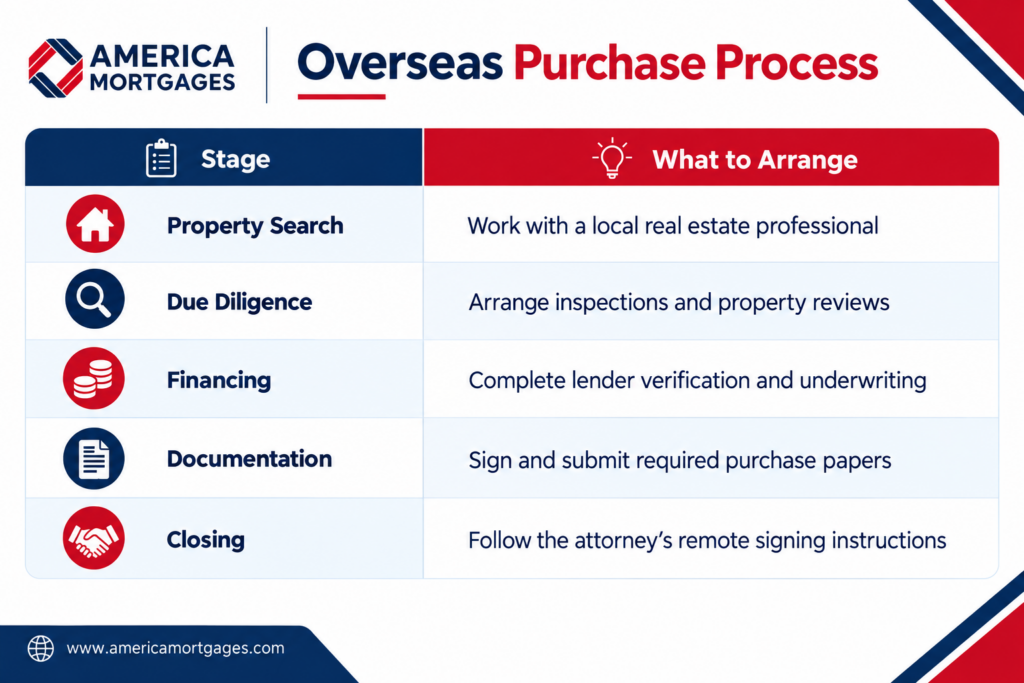
Yes, you can buy property in North Carolina even when you are out of the country. However, such transactions should be done through well-coordinated efforts between various individuals and entities.
The NAR’s report from 2026 indicates that there is ongoing international involvement in U.S. real estate. Foreign buyers bought 67,100 existing houses between April 2025 and March 2026. Buyers residing outside the country comprised 29,500 transactions.
In order to facilitate the transaction remotely, build up your professional team. Then, conduct the identity verification, funding, home inspections, and title searches. You may consult your attorney handling the closing for information on signing options.
After completing all the processes, you may move the money via approved channels. Save signed documents and money transfer proof. Besides, set up local property management in case you are staying abroad after the closing.
Recent Case Study: Buying a U.S. Home From Overseas
An American expat residing in Singapore wished to acquire another property in the U.S. She had income sourced from abroad, and she lacked a W-2 from the U.S.. America Mortgages analyzed her foreign income, assets, and international financial documentation. This mortgage process was done while she still resided in Singapore.
The above case serves to demonstrate that foreign buyers can secure their U.S. property financing even when all processes are not handled from within the U.S.
Get Started With America Mortgages for North Carolina Real Estate Financing
Purchasing properties abroad might seem daunting at times. But having the right team for financing will make it simple for you. America Mortgages helps foreign nationals and expats in the United States living outside of the country.
Begin by talking about your objectives, location of the property, type of loan you want, and your financial standing. They can advise on the programs they have and tell you what you need to present. You can even find out what financing options you have without making an offer first.
Contact America Mortgages today to discuss your North Carolina property financing needs. You can call at +1 (845) 583-0830 or [email protected] to connect with a U.S. mortgage specialist.
FAQs
Q1: Can a foreigner buy a house in North Carolina?
Yes, foreigners can purchase houses in North Carolina. Yet, there are some rules that apply to particular foreign individuals and property. Hence, one needs to consider their ability to buy, the location of the property, and other requirements.
Q2: Can I get a DSCR loan in North Carolina as a foreign national?
Yes, there may be some foreigners who would be eligible to apply for a DSCR loan in North Carolina. This type of loan is more interested in the cash flow that will be produced from renting the property.
Q3: How much down payment do non-residents need to buy U.S. property?
The non-resident may require a bigger down payment than the regular US buyer. However, this is determined by several factors, such as the lender, property, loan type, and the buyer’s profile. There may be specialized programs offering other criteria.
Q4: What documents do foreign buyers need to purchase property in North Carolina?
Typically, foreign buyers would require their IDs, income statement, bank statement, asset statement, tax documentation, and loan documentation. The lender could ask for other information such as credit history, employment information, and availability of funds.
Q5: Do I need a U.S. bank account to buy real estate in North Carolina?
No, but having an account with a bank in the U.S. is not always a requirement when purchasing property in North Carolina. However, some banks may demand that one have such an account when financing a property. This applies to individuals making purchases out of pocket.
Share this article
Ready to get started?
Speak with our U.S. mortgage specialists today and discover your options.
Schedule a call